TEKS ELAR 1.8.C
The Standard
describe plot elements, including the main events, the problem, and the resolution, for texts read aloud and independently
Texas Essential Knowledge and Skills for English Language Arts and Reading
Teacher's field guide
What This Standard Means
What Students Need to Do
- Students explain the key actions in a story in the order they happen. They tell what challenge the character faces and how the story ends or gets settled.
What Mastery Looks Like
- Students retell the key actions in a clear order. They identify what the character faces and explain how the story ends or how the situation is settled.
Common Misconceptions
- Students may list every detail instead of choosing the events that drive the story. They may confuse the story’s challenge with its ending or say the ending is always a happy one.
How to Assess It
- Read a short story, then ask students to draw and label three boxes: what happened, what went wrong, and how it ended. Check for accurate details in each box.
Lesson moves
Ways to Teach It
Give pairs picture cards from a familiar story to sort into key actions, the character’s challenge, and the ending.
Ask students to complete three prompts: First something happened, the character faced, and in the end.
Play Plot Freeze: pause during a read-aloud and have students point to cards labeled action, challenge, or ending.
Use a lost lunchbox scenario and ask students to tell what could happen, what the difficulty is, and how it might be solved.
Free download
Printable 1.8.C Worksheet
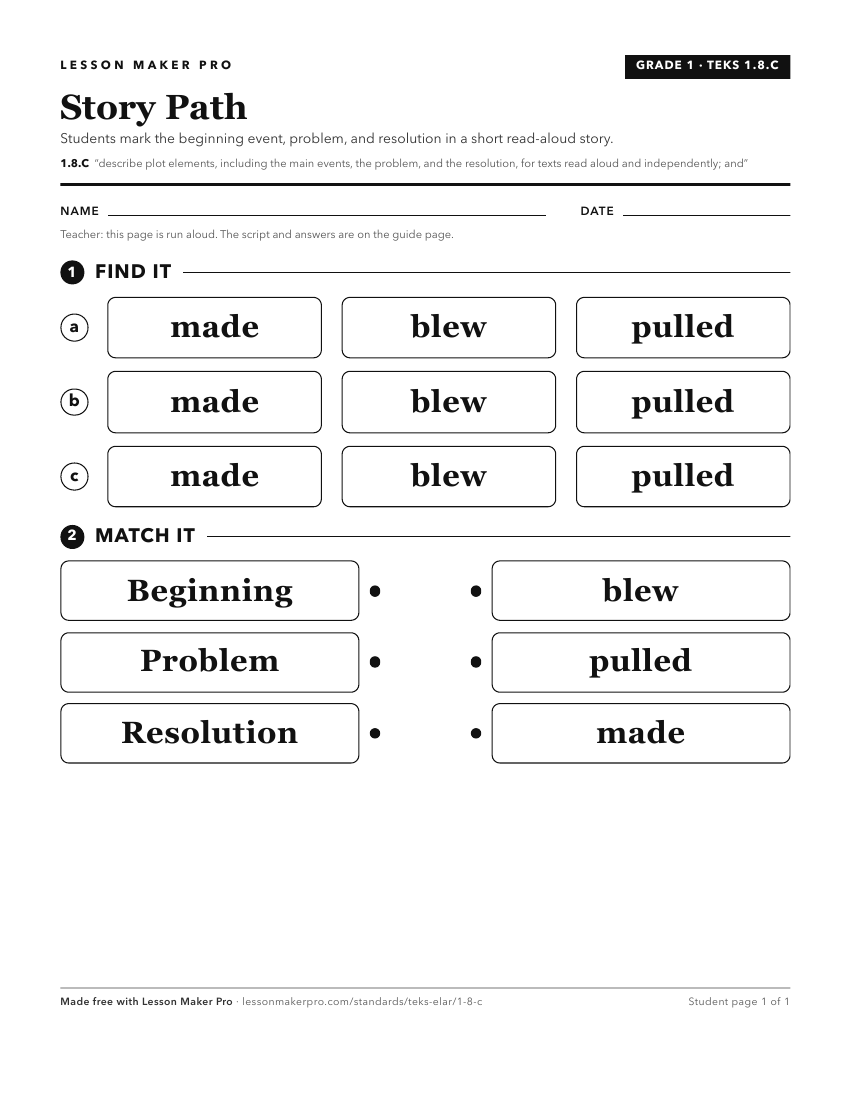
A ready-to-print activity worksheet aligned to 1.8.C, with an answer key for the teacher on its own page. No account needed.
PDF, US Letter, prints cleanly in black and white.
Download the worksheetKeep exploring
Related Standards
- 5.8.C
analyze plot elements, including rising action, climax, falling action, and resolution; and
- K.7.C
describe the elements of plot development, including the main events, the problem, and the resolution for texts read aloud with adult assistance; and
- 3.8.C
analyze plot elements, including the sequence of events, the conflict, and the resolution; and
- 2.8.C
describe and understand plot elements, including the main events, the conflict, and the resolution, for texts read aloud and independently; and
Turn this exact standard into a lesson
Grade, subject, topic, and the complete standard are prefilled. Create one free, no account needed.
Also for this standard:Make a WorksheetMake a QuizMake a Sub Lesson