TEKS ELAR 3.8.C
The Standard
analyze plot elements, including the sequence of events, the conflict, and the resolution
Texas Essential Knowledge and Skills for English Language Arts and Reading
Teacher's field guide
What This Standard Means
What Students Need to Do
- Students identify the key events in a story and place them in order. They explain the main problem, how characters respond, and how the ending addresses the problem.
What Mastery Looks Like
- Students can retell the beginning, middle, and end while leaving out minor details. They can point to events that develop the problem and explain how the ending addresses it.
Common Misconceptions
- Students may call any exciting event the main problem or treat every event as equally important. They may confuse the turning point with the resolution or name the ending without connecting it to the problem.
How to Assess It
- Give students five event cards from “The Lion and the Mouse.” Ask them to order the cards, identify the main problem, and explain how the ending solves it.
Lesson moves
Ways to Teach It
Give pairs six event cards from a familiar story to order, then label the problem, character attempts, turning point, and ending.
After reading a short story, ask students to write which event matters most to the ending and defend their choice with evidence.
Play Plot Match by having teams pair problem cards with resolution cards, then explain why each pair makes sense.
Students map a real classroom problem, the steps taken to address it, and the outcome, then compare that pattern with a story.
Free download
Printable 3.8.C Worksheet
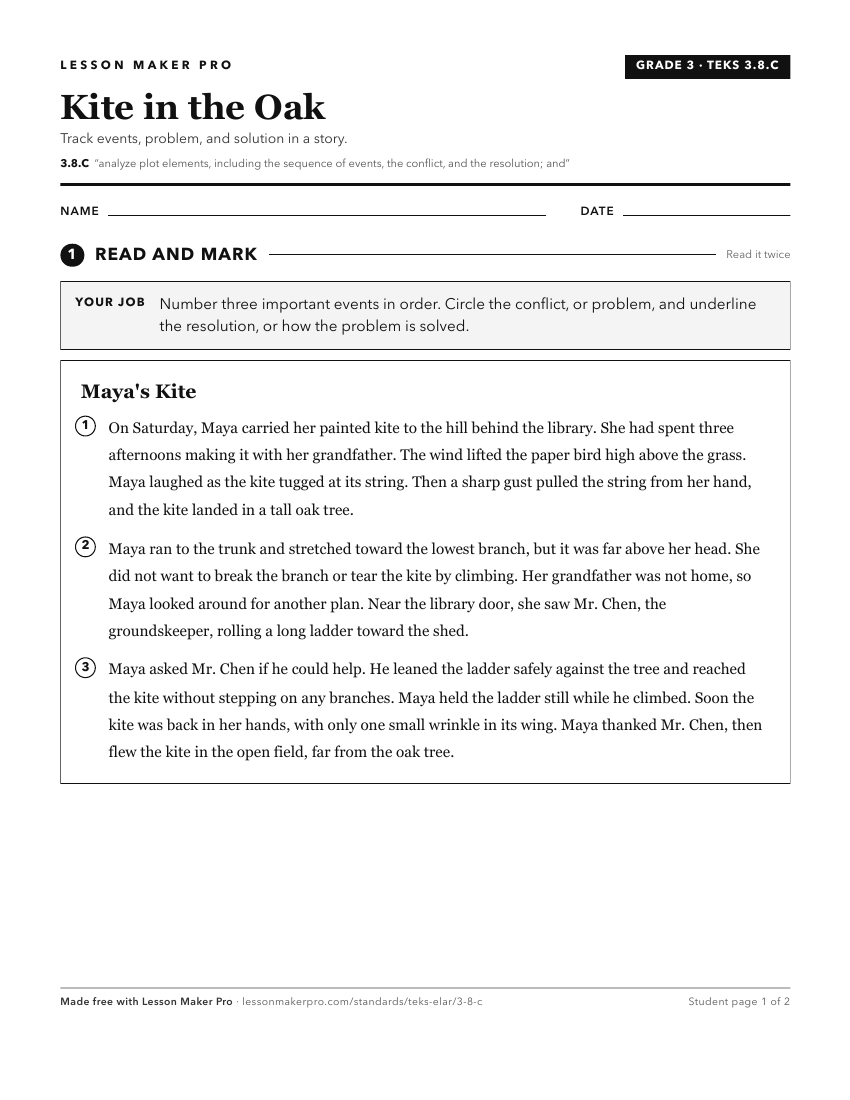
A ready-to-print activity worksheet aligned to 3.8.C, with an answer key for the teacher on its own page. No account needed.
PDF, US Letter, prints cleanly in black and white.
Download the worksheetKeep exploring
Related Standards
- 5.8.C
analyze plot elements, including rising action, climax, falling action, and resolution; and
- 6.7.C
analyze plot elements, including rising action, climax, falling action, resolution, and non-linear elements such as flashback; and
- 1.8.C
describe plot elements, including the main events, the problem, and the resolution, for texts read aloud and independently; and
- 4.8.C
analyze plot elements, including the rising action, climax, falling action, and resolution; and
Turn this exact standard into a lesson
Grade, subject, topic, and the complete standard are prefilled. Create one free, no account needed.
Also for this standard:Make a WorksheetMake a QuizMake a Sub Lesson