South Dakota ELA 11-12.W.3
Standard Cluster
Write narratives or other creative texts (e.g., poetry, digital composition, graphic stories, memoirs) to develop real or imagined experiences or events using effective technique and established voice, well-chosen details, and well-structured event sequences. Engage and orient the reader by setting out a problem, situation, or observation and its significance, establishing one or multiple point(s) of view, and introducing a narrator and/or characters; create an intentional progression of experiences or events. Use a variety of literary or narrative techniques or poetic devices. Use a variety of techniques to sequence events to create a coherent whole and build toward a particular tone and outcome. Use strong, effective word choice and figurative language. Establish a clear, engaging voice. Craft an effective conclusion, when appropriate to the genre.
South Dakota English Language Arts Standards (2025)
Cluster contents
Standards in This Cluster
11-12.W.3 is a cluster heading. These are the individual standards under it.
- 11-12.W.3.a
Engage and orient the reader by setting out a problem, situation, or observation and its significance, establishing one or multiple point(s) of view, and introd...
- 11-12.W.3.b
Use a variety of literary or narrative techniques or poetic devices.
- 11-12.W.3.c
Use a variety of techniques to sequence events to create a coherent whole and build toward a particular tone and outcome.
- 11-12.W.3.d
Use strong, effective word choice and figurative language.
- 11-12.W.3.e
Establish a clear, engaging voice.
- 11-12.W.3.f
Craft an effective conclusion, when appropriate to the genre.
Teacher's field guide
What This Cluster Means
What Students Need to Do
- Students make a story, memoir, poem, or graphic piece about a moment that matters. They pick a speaker, decide what to show first, and choose details that suit the mood. They shape an ending that feels earned.
What Mastery Looks Like
- Readers can tell who is speaking, what is at stake, and how the moment changes. Time shifts are easy to follow, and the details sound like they belong to that speaker. The last line leaves an effect rather than simply stopping.
Common Misconceptions
- Students may list events in order without showing why any moment matters. They may switch from "I" to "she" by accident, use metaphors that clash with the mood, or end with "and then I woke up."
How to Assess It
- Exit ticket: Write 100 words about a missed bus from the view of someone hiding a secret. Use one time jump and one sensory detail; end with a line that changes what the missed bus means.
Lesson moves
Ways to Teach It
Give pairs cards labeled "find wallet," "read ID," "remember rent," and "return wallet"; have them compare two possible orders.
Ask students to write the same cafeteria argument from each person's view, then discuss which details each narrator leaves out.
Play a revision relay: teams replace flat lines like "I was scared" with a physical detail, then vote on the strongest voice.
Draft a 100-word college or scholarship essay about a small setback; revise its last line to show what changed without announcing a lesson.
Free download
Printable 11-12.W.3 Worksheet
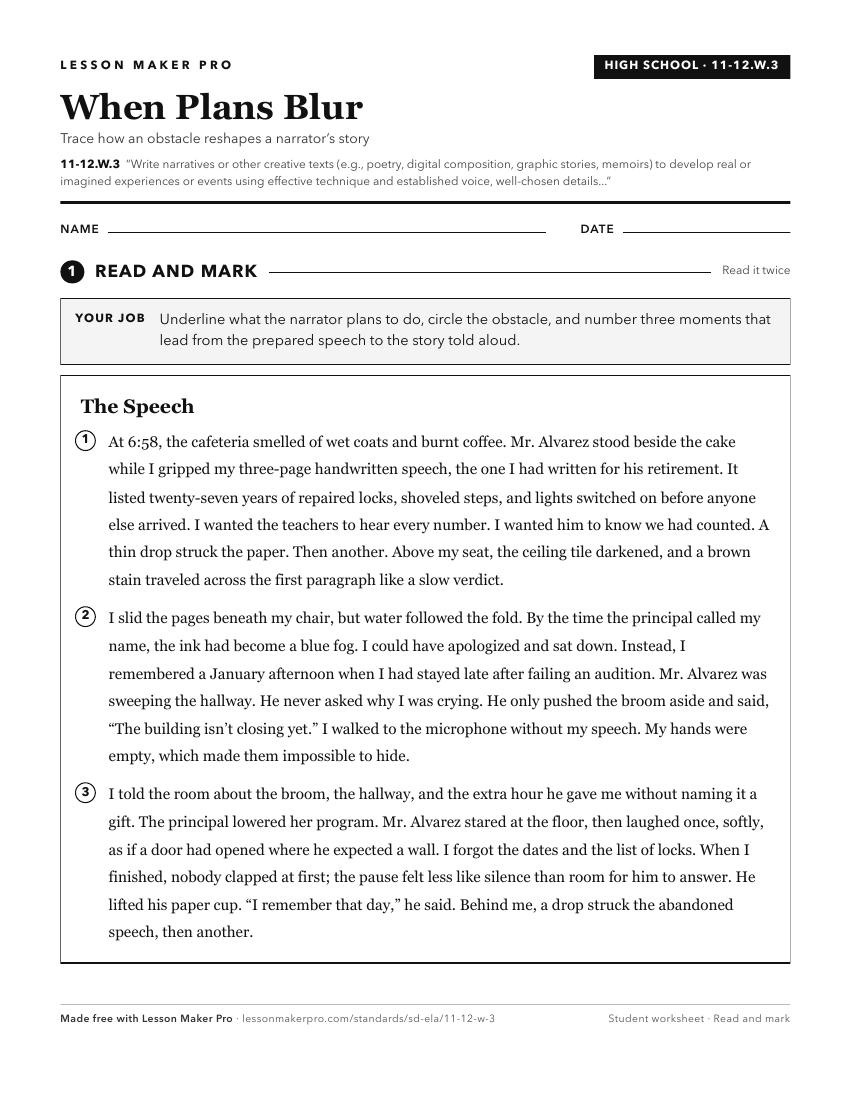
A ready-to-print activity worksheet aligned to 11-12.W.3, with an answer key for the teacher on its own page. No account needed.
PDF, US Letter, prints cleanly in black and white.
Download the worksheetKeep exploring
Related Standards
- 6.W.3
Write narratives and other creative texts (e.g. poetry, graphic stories, digital compositions, memoirs) to develop real or imagined experiences or events using ...
- 7.W.3
Write narratives and other creative texts (e.g. poetry, graphic stories, digital composition, memoirs) to develop real or imagined experiences or events using e...
- 9-10.W.3
Write narratives or other creative texts (e.g., poetry, digital composition, graphic stories, memoirs) to develop real or imagined experiences or events using e...
- 8.W.3
Write narratives and other creative texts (e.g., poetry, digital composition, graphic stories, memoirs) to develop real or imagined experiences or events using ...
Turn this cluster into a lesson
Grade, subject, topic, and the complete cluster are prefilled. Create one free, no account needed.
Also for this cluster:Make a WorksheetMake a QuizMake a Sub Lesson