South Dakota ELA 11-12.W.3.b
The Standard
- 11-12.W.3
- Write narratives or other creative texts (e.g., poetry, digital composition, graphic stories, memoirs) to develop real or imagined experiences or events using effective technique and established voice, well-chosen details, and well-structured event sequences.
Use a variety of literary or narrative techniques or poetic devices.
South Dakota English Language Arts Standards (2025)
Teacher's field guide
What This Standard Means
What Students Need to Do
- Students write a story or poem using more than one technique, such as dialogue, imagery, flashback, or repetition. They choose techniques that shape what readers notice or feel.
What Mastery Looks Like
- A student can use two different techniques to create a clear mood or effect. They can point to each choice and explain what it adds.
Common Misconceptions
- Students may add dialogue that repeats what the narration already says. They may pile on metaphors or repetition without changing the mood or meaning.
How to Assess It
- Write five sentences about missing a bus. Use two different techniques, underline each one, and write one sentence explaining what each adds.
Lesson moves
Ways to Teach It
Give pairs sentence strips from a plain scene, then have them add dialogue and sensory details before arranging the strips for suspense.
Compare 'The hallway was empty' with 'My shoes squeaked down the empty hallway,' and discuss how the sound changes the mood.
Draw two cards labeled dialogue, flashback, imagery, or repetition, then revise 'I missed the bus' into a five-sentence scene using both.
Write a school newspaper lead about a game or concert using sensory detail and a brief quote to draw readers in.
Free download
Printable 11-12.W.3.b Worksheet
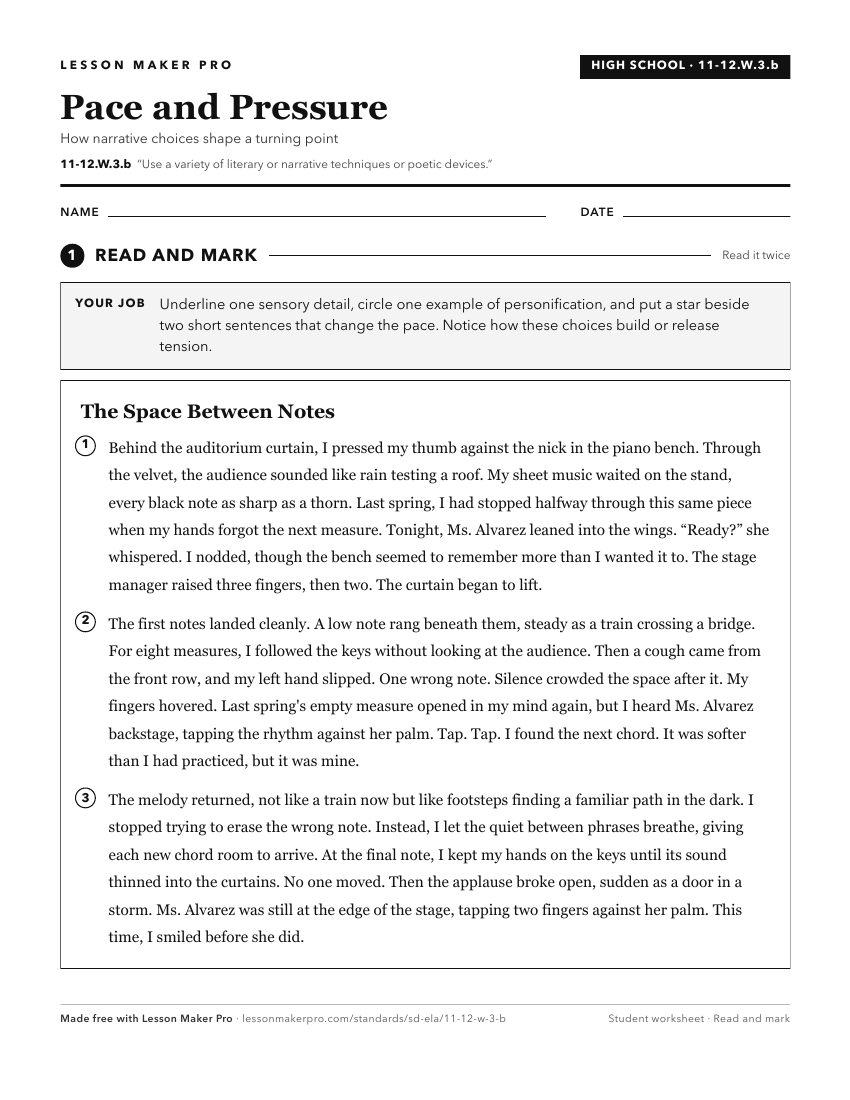
A ready-to-print activity worksheet aligned to 11-12.W.3.b, with an answer key for the teacher on its own page. No account needed.
PDF, US Letter, prints cleanly in black and white.
Download the worksheetKeep exploring
Related Standards
- 7.W.3.b
Use narrative and literary techniques, such as dialogue, pacing, rhythm, description, and poetic devices to develop experiences, events, and/or characters.
- 6.W.3.b
Use literary and narrative techniques, such as dialogue, pacing, rhythm, description, and poetic devices to develop experiences, events, and/or characters.
- 9-10.W.3.b
Use narrative or literary techniques or poetic devices, such as dialogue, pacing, rhythm, description, reflection, and multiple plot lines, to develop experienc...
- 8.W.3.b
Use narrative and literary techniques, such as dialogue, pacing, rhythm, description, and reflection, to develop experiences, events, and/or characters.
Turn this exact standard into a lesson
Grade, subject, topic, and the complete standard are prefilled. Create one free, no account needed.
Also for this standard:Make a WorksheetMake a QuizMake a Sub Lesson