South Dakota ELA 9-10.W.3.b
The Standard
- 9-10.W.3
- Write narratives or other creative texts (e.g., poetry, digital composition, graphic stories, memoirs) to develop real or imagined experiences or events using effective technique and voice, well-chosen details, and well-structured event sequences.
Use narrative or literary techniques or poetic devices, such as dialogue, pacing, rhythm, description, reflection, and multiple plot lines, to develop experiences, events, and/or characters.
South Dakota English Language Arts Standards (2025)
Teacher's field guide
What This Standard Means
What Students Need to Do
- Students shape a scene or poem with dialogue, description, pacing, or rhythm. They choose details that show what a character feels and why an event matters.
What Mastery Looks Like
- A student slows a tense choice with a brief pause, a telling detail, and a line of dialogue. Readers can tell what the character wants and what changes.
Common Misconceptions
- Students may name a feeling without showing it through words or actions. They may add dialogue that repeats the narration or switch between storylines without making the link clear.
How to Assess It
- Exit ticket: Write 80 to 100 words about someone deciding whether to admit a mistake. Use one line of dialogue and one detail that slows the moment; underline both.
Lesson moves
Ways to Teach It
Give pairs six printed sentence strips from a scene; have them reorder the strips, then add a pause before the character’s choice.
Ask students to write two versions of a missed-bus scene, one rushed and one slow, then discuss how the mood changes.
Run a revision relay: pass a plain paragraph around groups; each student adds dialogue, a sensory detail, or a line of reflection.
Give students a school game score; have them write a player’s account of the final minute using crowd noise and a pause.
Free download
Printable 9-10.W.3.b Worksheet
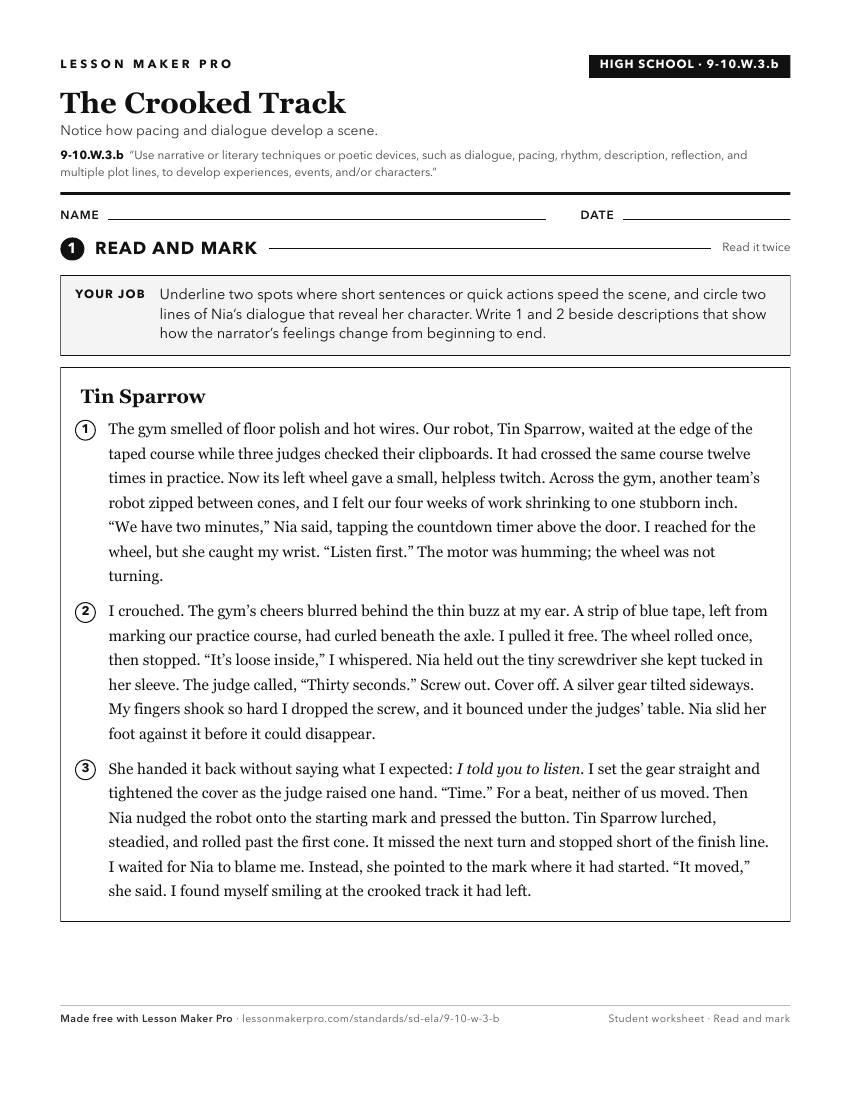
A ready-to-print activity worksheet aligned to 9-10.W.3.b, with an answer key for the teacher on its own page. No account needed.
PDF, US Letter, prints cleanly in black and white.
Download the worksheetKeep exploring
Related Standards
- 7.W.3.b
Use narrative and literary techniques, such as dialogue, pacing, rhythm, description, and poetic devices to develop experiences, events, and/or characters.
- 6.W.3.b
Use literary and narrative techniques, such as dialogue, pacing, rhythm, description, and poetic devices to develop experiences, events, and/or characters.
- 8.W.3.b
Use narrative and literary techniques, such as dialogue, pacing, rhythm, description, and reflection, to develop experiences, events, and/or characters.
Turn this exact standard into a lesson
Grade, subject, topic, and the complete standard are prefilled. Create one free, no account needed.
Also for this standard:Make a WorksheetMake a QuizMake a Sub Lesson