Oklahoma Social Studies MWH.C.2.3.D
The Standard
- MWH.C.2
- Analyze patterns of social, economic, political, and cultural changes during the Late Middle Ages to the Age of Exploration.
- MWH.C.2.3
- Summarize the causes of and influence of the theological movements of the Reformation and how those movements subsequently transformed society.
Trace the spread of Protestantism across Europe, including Lutherans, Reformed (Calvinist) Church of England, Anabaptists, and the effects on European society (e.g., idea and practice of religious tolerance, Calvinist work ethic).
Oklahoma Academic Standards for Social Studies (2026) · MWH.C.2.3
Teacher's field guide
What This Standard Means
What Students Need to Do
- Students trace Lutheran, Reformed, Church of England, and Anabaptist communities on a map of Europe. They explain how rulers and printing helped some groups spread while others faced persecution. They connect these changes to limited religious tolerance and Calvinist views of work.
What Mastery Looks Like
- Students place Lutherans in German lands and Scandinavia, Reformed churches in Switzerland and the Netherlands, the Church of England in England, and Anabaptists in central Europe. They explain one reason a group spread. They describe limited tolerance and Calvinist ideas about disciplined work without claiming work earned salvation.
Common Misconceptions
- Students may think every Protestant group rejected infant baptism, though Anabaptists differed from the others on this point. Some think Henry VIII joined Luther’s church or that Calvinists believed hard work earned salvation. Limited tolerance did not mean everyone could worship freely.
How to Assess It
- On a blank map, label one region for each of the four groups. Then name one limit on religious tolerance and explain what Calvinists taught about work.
Lesson moves
Ways to Teach It
Hand pairs a blank Europe map and four church cards; have them mark early centers and areas where each group took hold.
Give students two clauses from the Edict of Nantes on worship; ask where Huguenots could worship and where they could not.
Run a four-corner sort with church names on the walls; students carry place, ruler, and belief cards to the matching corner.
Put a sample religious holiday request on the board; have students compare modern workplace rules with worship rules under a 1500s state church.
Free download
Printable MWH.C.2.3.D Worksheet
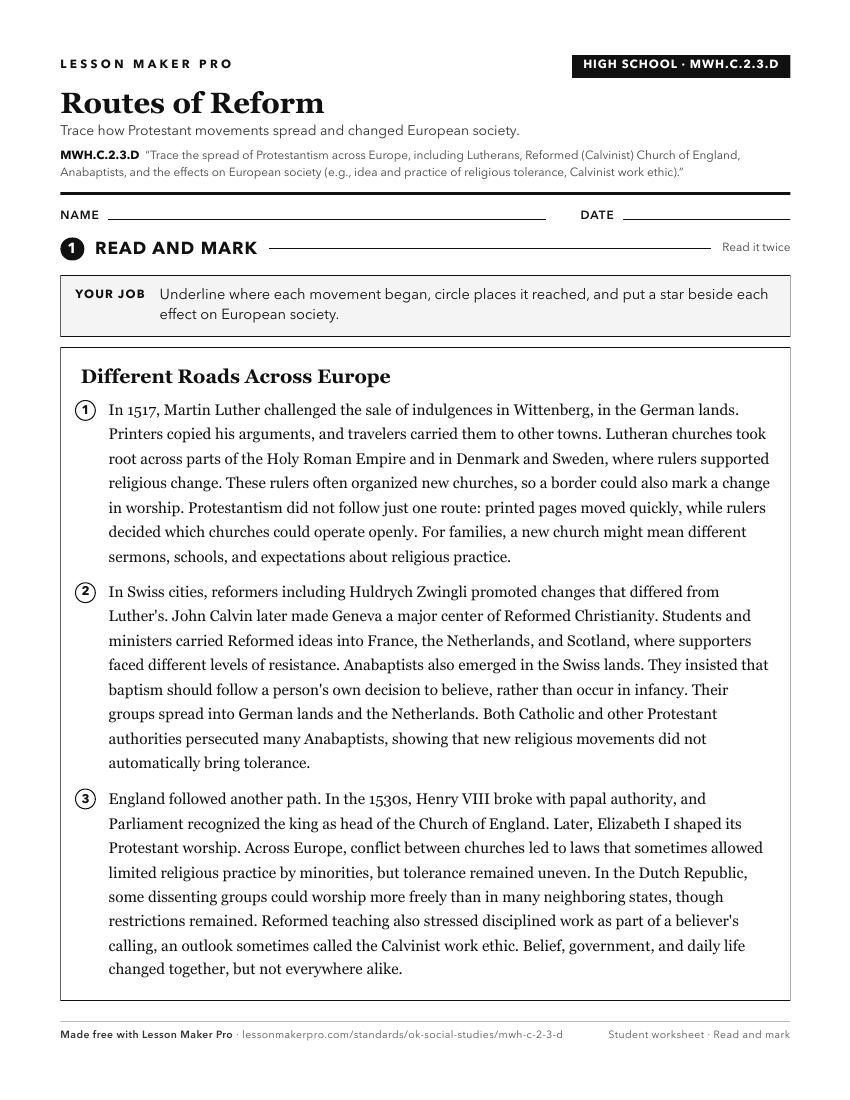
A ready-to-print activity worksheet aligned to MWH.C.2.3.D, with an answer key for the teacher on its own page. No account needed.
PDF, US Letter, prints cleanly in black and white.
Download the worksheetKeep exploring
Related Standards
- AWH.C.9.2
Explain the growth and influence of Christianity and the Catholic Church in medieval society, including the significance of Europe’s network of medieval pilgrim...
- MWH.C.2.3
Summarize the causes of and influence of the theological movements of the Reformation and how those movements subsequently transformed society.
- MWH.C.2.3.A
Explain reasons for the growing discontent with the Catholic Church, including the main ideas of Martin Luther and John Calvin, and the role of William Tyndale.
- MWH.C.2.3.C
Describe tensions between religious and secular authorities contributing to the English Reformation.
Turn this exact standard into a lesson
Grade, subject, topic, and the complete standard are prefilled. Create one free, no account needed.
Also for this standard:Make a WorksheetMake a QuizMake a Sub Lesson