Oklahoma Social Studies 4.C.2.5
Standard Cluster
- 4.C.2
- Apply the tools and concepts of geography to examine the physical and human geography of the United States of America.
Analyze how humans interact with their environments in order to meet their needs and wants. Explain how humans adapt to the physical environment (e.g., food, shelter, earning a living) by identifying historical and contemporary examples. Describe how humans modify the environment to meet their needs (e.g., clearing of forests, crop rotation and irrigation, conservation, extraction of fossil fuels, construction of housing additions and businesses). Identify major projects in which Americans have modified the environment for the development of regions (e.g., Mississippi River levees, Hoover Dam, Golden Gate Bridge, Colorado River Aqueduct, Trans-Alaska Pipeline, New York skyline). Identify ways in which economic activities can affect ecosystems (e.g., clearing forests,draining wetlands, diverting waterways) by examining present-day issues related to the use of resources and the importance of supporting human development while being responsible with resources.
Oklahoma Academic Standards for Social Studies (2026) · 4.C.2
Cluster contents
Standards in This Cluster
4.C.2.5 is a cluster heading. These are the individual standards under it.
- 4.C.2.5.A
Explain how humans adapt to the physical environment (e.g., food, shelter, earning a living) by identifying historical and contemporary examples.
- 4.C.2.5.B
Describe how humans modify the environment to meet their needs (e.g., clearing of forests, crop rotation and irrigation, conservation, extraction of fossil fuel...
- 4.C.2.5.C
Identify major projects in which Americans have modified the environment for the development of regions (e.g., Mississippi River levees, Hoover Dam, Golden Gate...
- 4.C.2.5.D
Identify ways in which economic activities can affect ecosystems (e.g., clearing forests,draining wetlands, diverting waterways) by examining present-day issues...
Teacher's field guide
What This Cluster Means
What Students Need to Do
- Students explain how people use local resources for food, shelter, and work. They identify ways people change land and water, using examples from the past and today. They explain how large projects can help people and affect habitats.
What Mastery Looks Like
- A student can explain how Plains settlers used sod for shelter and how Hoover Dam changed a river. They can name a benefit of the dam, a possible effect on wildlife, and a way to use water more carefully.
Common Misconceptions
- Students may call every change to land an adaptation and miss how irrigation or dams alter water flow. They may think a bridge or pipeline helps people without affecting nearby habitats.
How to Assess It
- On an exit ticket, ask: “How did settlers use sod to build homes, and how did Hoover Dam change a river? Name one benefit to people and one possible effect on wildlife.”
Lesson moves
Ways to Teach It
Build a levee in a foil-lined tray with clay, pour in water, and sketch where the water goes.
Show photos of a sod house and Hoover Dam; ask, “How did people use local materials, and how did they change the river?”
Sort picture cards of sod houses, irrigation canals, wetland drainage, and pipelines by the needs they meet and the changes they cause.
Show a photo of a nearby new road or store; list one need it meets and one possible effect on water or wildlife.
Free download
Printable 4.C.2.5 Worksheet
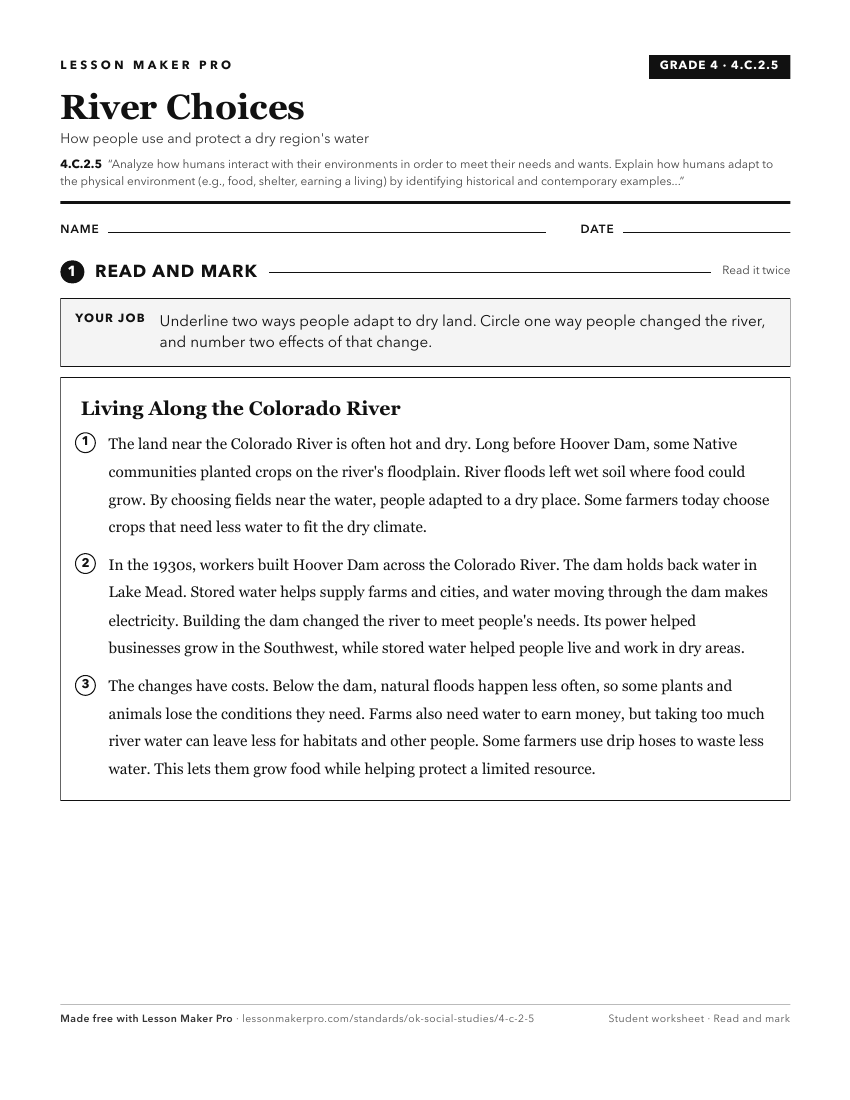
A ready-to-print activity worksheet aligned to 4.C.2.5, with an answer key for the teacher on its own page. No account needed.
PDF, US Letter, prints cleanly in black and white.
Download the worksheetKeep exploring
Related Standards
- 7.C.4
Analyze the interactions of humans and their environment.
- 6.C.4
Analyze the interactions of humans and their environment in the Western Hemisphere.
- 2.C.3.9
Explain and describe human interaction with the environment by describing how humans both adapt to (e.g., clothing, housing, food choices) and modify it (e.g., ...
- 3.C.2.3.A
Explain that people both adapt to and modify their environment in order to meet their basic needs and wants.
Turn this cluster into a lesson
Grade, subject, topic, and the complete cluster are prefilled. Create one free, no account needed.
Also for this cluster:Make a WorksheetMake a QuizMake a Sub Lesson