Oklahoma Social Studies 4.C.2.5.D
The Standard
- 4.C.2
- Apply the tools and concepts of geography to examine the physical and human geography of the United States of America.
- 4.C.2.5
- Analyze how humans interact with their environments in order to meet their needs and wants.
Identify ways in which economic activities can affect ecosystems (e.g., clearing forests,draining wetlands, diverting waterways) by examining present-day issues related to the use of resources and the importance of supporting human development while being responsible with resources.
Oklahoma Academic Standards for Social Studies (2026) · 4.C.2.5
Teacher's field guide
What This Standard Means
What Students Need to Do
- Students explain how building, farming, or logging can change nearby land and water. They weigh what people gain against what plants and animals may lose. They suggest ways to use resources with less harm.
What Mastery Looks Like
- Given a plan to build a road through a wetland, a student can name a benefit for people and describe what could happen to wildlife and water. The student can suggest a change to the plan that reduces harm.
Common Misconceptions
- Students may think a drained wetland is useless because it looks like empty land. Some assume a project is either good for people or good for nature, with no way to change the plan.
How to Assess It
- Show a sketch of a wetland where a store might be built. Ask students to name one benefit, one possible harm, and one change that would reduce the harm.
Lesson moves
Ways to Teach It
Pour water onto two tilted trays, one with a sponge wetland and one with foil pavement, and compare the runoff collected below.
Show a photo of a cleared forest beside a new road. Ask who benefits, what animals lose, and how builders could reduce the damage.
Give pairs logging, wetland draining, and river diversion cards. Have them match each activity to a card showing a likely ecosystem effect.
Give students a printed map of a nearby creek and road. Have them mark where runoff might enter the creek and add a planted buffer.
Free download
Printable 4.C.2.5.D Worksheet
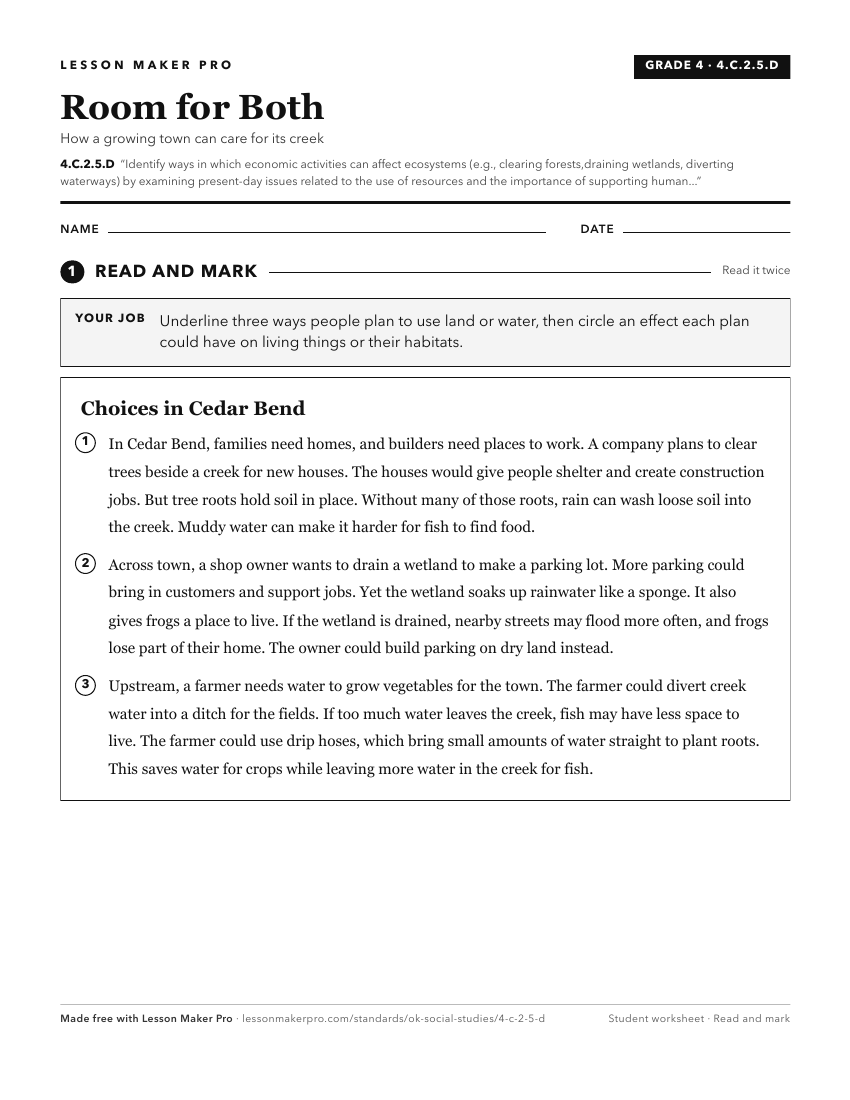
A ready-to-print activity worksheet aligned to 4.C.2.5.D, with an answer key for the teacher on its own page. No account needed.
PDF, US Letter, prints cleanly in black and white.
Download the worksheetKeep exploring
Related Standards
- 6.C.4.4
Identify environmental challenges (e.g., air pollution, acid rain, deforestation) and explain how they can impact a region (e.g., oil spills, Amazonia’s ranchin...
- WG.C.5.3
Examine the impact of agricultural practices (e.g., irrigation, levees, terraced farming, crop rotation, conservation, and deforestation) on the environment and...
- MWH.P.2.3.C
Evaluate the extent to which political and economic decisions have had significant impact on human and physical environments of various places and regions.
- OKH.P.2.3.C
Evaluate the extent to which political and economic decisions have had significant impact on human and physical environments of various places and regions.
Turn this exact standard into a lesson
Grade, subject, topic, and the complete standard are prefilled. Create one free, no account needed.
Also for this standard:Make a WorksheetMake a QuizMake a Sub Lesson