NY Next Generation ELA 8SL3
The Standard
Delineate a speaker's argument and specific claims, evaluating for sound reasoning, and the relevance and sufficiency of the evidence; identify when irrelevant evidence is introduced.
New York State Next Generation English Language Arts Learning Standards
Teacher's field guide
What This Standard Means
What Students Need to Do
- Students delineate a speaker’s argument and claims. They evaluate reasoning, evidence relevance and sufficiency, and identify irrelevant evidence.
What Mastery Looks Like
- The student maps the argument and evaluates each support with precise criteria. The student identifies irrelevant evidence and explains why it fails to advance the claim.
Common Misconceptions
- Students may reject evidence because it challenges their view. They may call repetition sufficient support or confuse emotional impact with logical relevance.
How to Assess It
- Play an argument with one valid reason, one insufficient support, and one irrelevant detail. Ask students to map and evaluate each part.
Lesson moves
Ways to Teach It
Color-code a recorded argument for claims, reasoning, relevant evidence, gaps, and irrelevant details.
Ask students what evidence would make the argument sufficient.
Play Audio Argument Audit with short speeches and evaluation cards.
Evaluate a recorded advertisement or civic proposal for reasoning and evidence quality.
Free download
Printable 8SL3 Worksheet
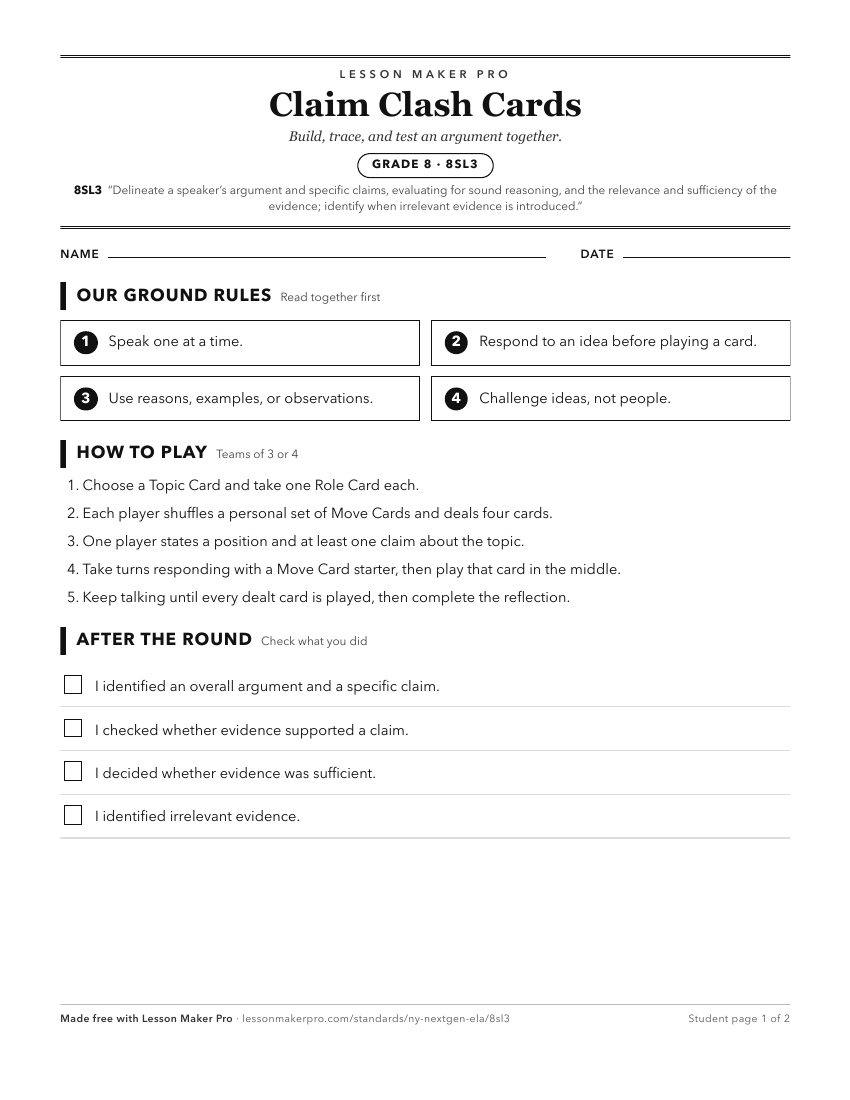
A ready-to-print activity worksheet aligned to 8SL3, with an answer key for the teacher on its own page. No account needed.
PDF, US Letter, prints cleanly in black and white.
Download the worksheetKeep exploring
Related Standards
- 6SL3
Delineate a speaker's argument and specific claims, distinguishing claims that are supported by reasons and evidence from claims that are not.
- 5SL3
Identify and evaluate the reasons and evidence a speaker provides to support particular points.
- 7SL3
Delineate a speaker's argument and specific claims, evaluating for sound reasoning, and the relevance and sufficiency of the evidence.
- 9-10SL3
Evaluate a speaker’s point of view, reasoning, and use of evidence and rhetoric; identify any fallacious reasoning or exaggerated or distorted evidence.
Turn this exact standard into a lesson
Grade, subject, topic, and the complete standard are prefilled. Create one free, no account needed.
Also for this standard:Make a WorksheetMake a QuizMake a Sub Lesson