NY Next Generation ELA 5R6
The Standard
In literary texts, explain how a narrator's or speaker's point of view influences how events are described. In informational texts, analyze multiple accounts of the same event or topic, noting important similarities and differences in the point of view they represent.
New York State Next Generation English Language Arts Learning Standards
Teacher's field guide
What This Standard Means
What Students Need to Do
- In literature, students explain how narrator or speaker viewpoint affects event descriptions. In informational text, they compare multiple accounts and their differing perspectives on the same topic.
What Mastery Looks Like
- The student identifies language or selected details that reveal a viewpoint. The student explains a meaningful similarity or difference between accounts and how it shapes understanding.
Common Misconceptions
- Students may assume narrator and author always share a viewpoint. They may list factual differences without analyzing perspective or selection.
How to Assess It
- Provide two brief accounts of the same event. Ask students to compare viewpoints and explain how each account’s language or details shape the description.
Lesson moves
Ways to Teach It
Highlight viewpoint clues in two colors across paired literary or informational accounts.
Ask students why two observers might describe the same event differently.
Play Viewpoint Evidence Match with excerpts, speakers, and selected details.
Compare a participant’s account of a school event with a newsletter report.
Free download
Printable 5R6 Worksheet
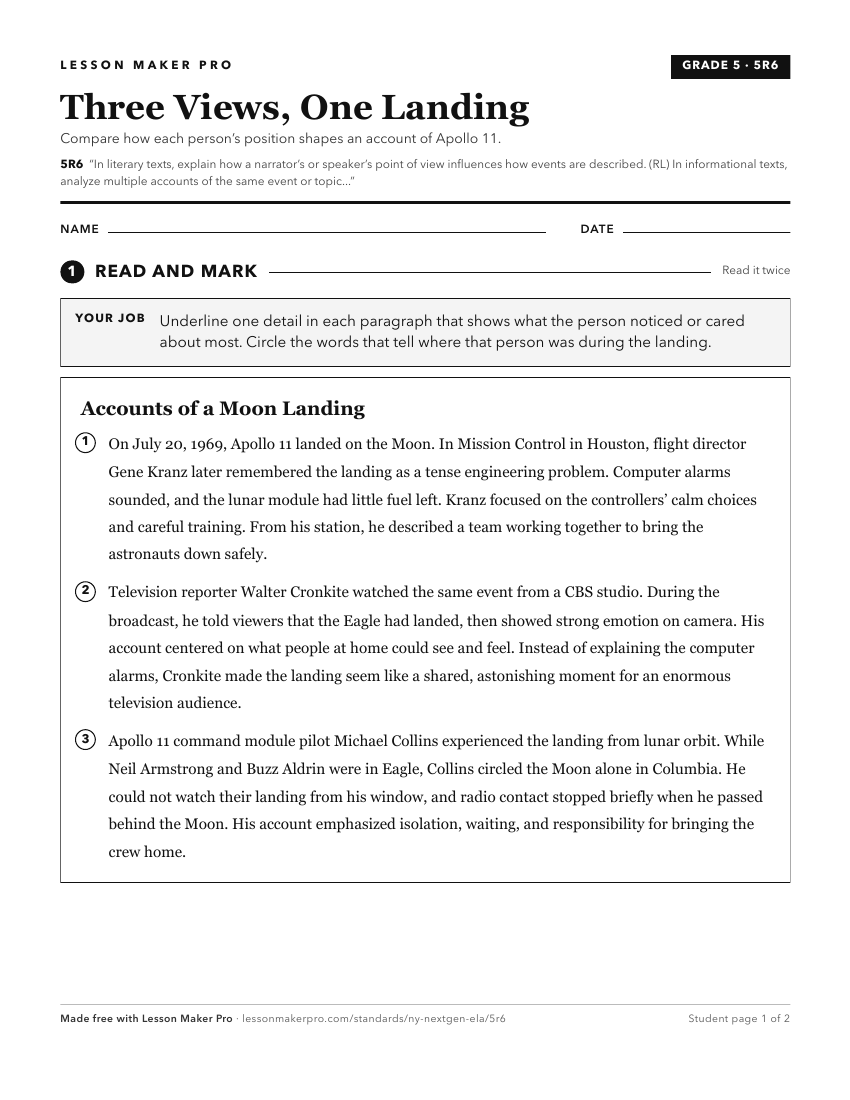
A ready-to-print activity worksheet aligned to 5R6, with an answer key for the teacher on its own page. No account needed.
PDF, US Letter, prints cleanly in black and white.
Download the worksheetKeep exploring
Related Standards
- 3R6
Discuss how the reader's point of view or perspective may differ from that of the author, narrator or characters in a text.
- 8R6
In literary texts, analyze how the differences between the point of view, perspectives of the characters, the audience, or reader create effects such as mood an...
- 4R6
In literary texts, compare and contrast the point of view from which different stories are narrated, including the difference between first- and third-person na...
- 7R6
In literary texts, analyze how an author develops and contrasts the point of view and the perspectives of different characters or narrators. In informational te...
Turn this exact standard into a lesson
Grade, subject, topic, and the complete standard are prefilled. Create one free, no account needed.
Also for this standard:Make a WorksheetMake a QuizMake a Sub Lesson