NY Next Generation ELA 5L3.b
The Standard
Compare and contrast the varieties of English (e.g., dialects, registers) used in stories, dramas, or poems.
New York State Next Generation English Language Arts Learning Standards
Teacher's field guide
What This Standard Means
What Students Need to Do
- Students compare dialects and registers used in stories, dramas, and poems. They notice patterns in vocabulary, grammar, formality, and voice, then consider what those patterns reveal in the text.
What Mastery Looks Like
- A student can describe similarities and differences between two language varieties without labeling either as inferior. The student explains how each choice fits a character, narrator, relationship, setting, or purpose.
Common Misconceptions
- Students may call a dialect incorrect because it differs from formal written English. They may identify an unusual word but overlook broader patterns or make unsupported claims about a speaker.
How to Assess It
- Give students two short character passages using different registers or dialects. Ask them to compare two features and explain what each contributes to the text.
Lesson moves
Ways to Teach It
Annotate two dialogue excerpts with cards for vocabulary, grammar, formality, setting, relationship, and speaker purpose.
Ask, ‘How do these speakers use English differently, and what does each pattern reveal in context?’
Play Register Match by pairing dialogue cards with likely relationships and settings, then defending each match.
Compare language in a family story and a formal ceremony script, treating each variety with respect.
Free download
Printable 5L3.b Worksheet
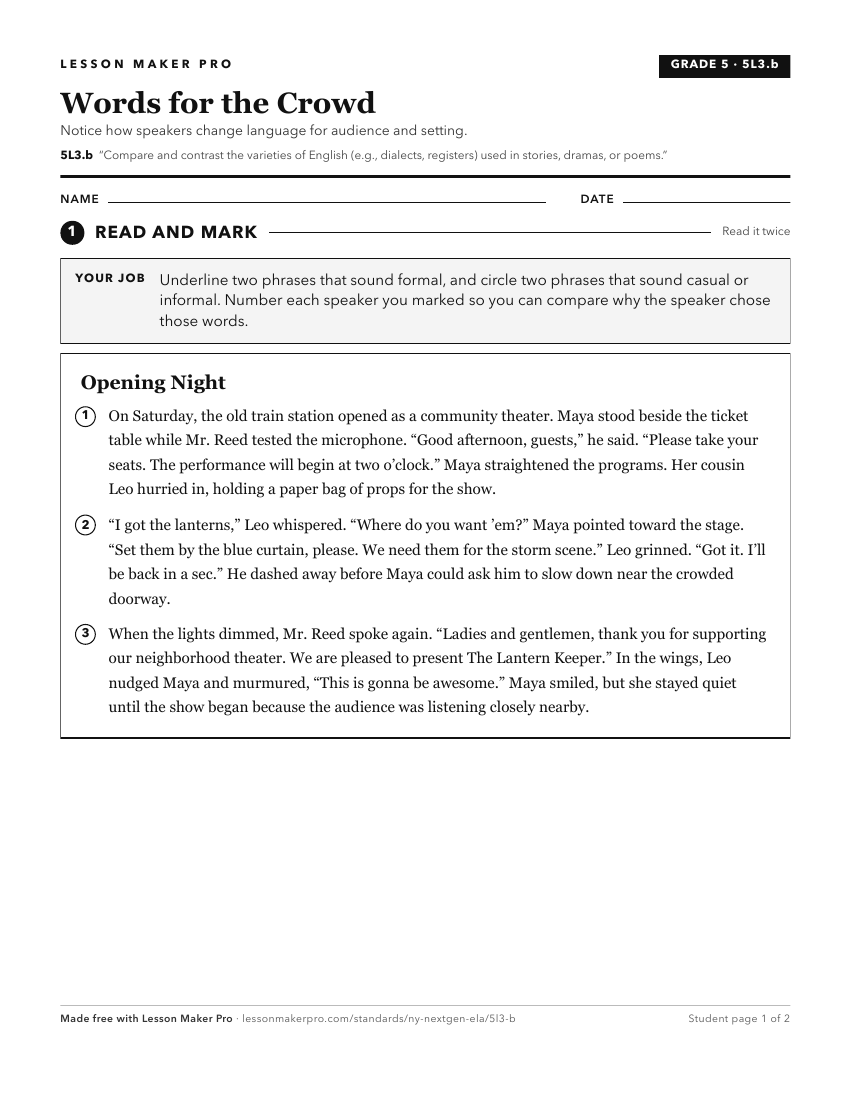
A ready-to-print activity worksheet aligned to 5L3.b, with an answer key for the teacher on its own page. No account needed.
PDF, US Letter, prints cleanly in black and white.
Download the worksheetKeep exploring
Related Standards
- 5R3
In literary texts, compare and contrast two or more characters, settings, and events, drawing on specific details in the text. In informational texts, explain t...
- 7R7
Compare and contrast a written text with audio, filmed, staged, or digital versions in order to analyze the effects of techniques unique to each media and each ...
- 4R6
In literary texts, compare and contrast the point of view from which different stories are narrated, including the difference between first- and third-person na...
- 2L3.a
Compare academic and conversational uses of English.
Turn this exact standard into a lesson
Grade, subject, topic, and the complete standard are prefilled. Create one free, no account needed.
Also for this standard:Make a WorksheetMake a QuizMake a Sub Lesson