NGSS MS-LS2-5
The Standard
Evaluate competing design solutions for maintaining biodiversity and ecosystem services.
Next Generation Science Standards
Teacher's field guide
What This Standard Means
What Students Need to Do
- Students compare proposed ways to protect species and benefits such as clean water, healthy soil, and nutrient cycling. They use evidence, criteria, and constraints to recommend a plan.
What Mastery Looks Like
- Students compare two or more plans using clear criteria, such as habitat protection, cost, feasibility, and community impact. They support a recommendation with evidence and explain its tradeoffs.
Common Misconceptions
- Students may assume the plan that protects the most species is automatically best. They may ignore cost, community needs, unintended effects, or the difference between a claim and supporting evidence.
How to Assess It
- Give students two plans for reducing stream erosion. Ask them to choose one and justify it with evidence, one constraint, and one tradeoff.
Lesson moves
Ways to Teach It
Build two erosion trays with bare and planted soil, pour equal water, and compare runoff clarity and soil loss.
Write a recommendation choosing between habitat restoration and water treatment, using evidence and naming one economic or social tradeoff.
Play a constraint card challenge, ranking three conservation plans after drawing budget, community, and scientific evidence cards.
Examine a local park or watershed plan and identify who benefits, what ecosystem service improves, and what costs remain.
Free download
Printable MS-LS2-5 Worksheet
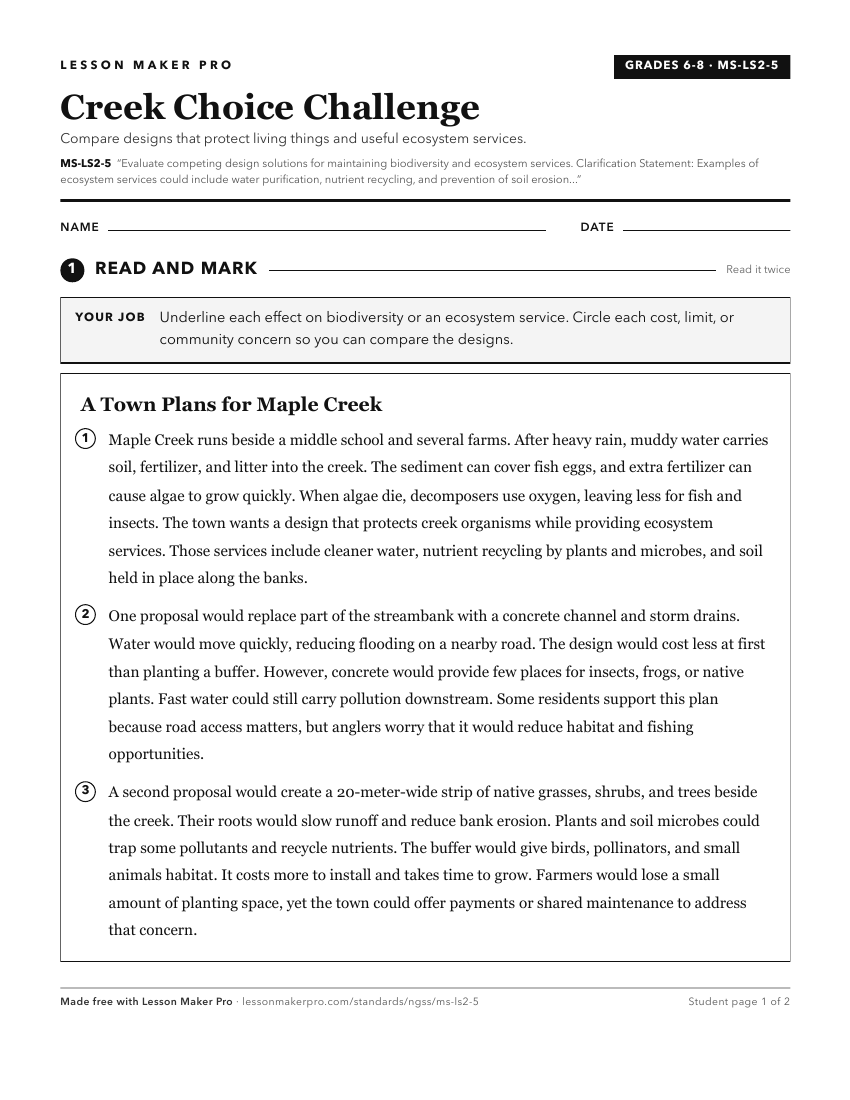
A ready-to-print activity worksheet aligned to MS-LS2-5, with an answer key for the teacher on its own page. No account needed.
PDF, US Letter, prints cleanly in black and white.
Download the worksheetWhat This Unlocks
Mastery here sets students up for these next.
- HS-LS2-7
Evaluating biodiversity solutions in middle school supports high school design and refinement of solutions to reduce human environmental impacts.
- HS-LS2-6
Evaluating biodiversity solutions gives students practice using ecosystem change and stability evidence, which supports judging high school ecosystem interaction claims.
- HS-LS2-2
Understanding biodiversity and ecosystem services supports explaining how ecosystem factors change biodiversity and populations across scales.
Keep exploring
Related Standards
- HS-ESS3-2
Evaluate competing design solutions for developing, managing, and utilizing energy and mineral resources based on cost-benefit ratios.
- MS-ETS1-2
Evaluate competing design solutions using a systematic process to determine how well they meet the criteria and constraints of the problem.
- 4-ESS3-2
Generate and compare multiple solutions to reduce the impacts of natural Earth processes on humans.
Turn this exact standard into a lesson
Grade, subject, topic, and the complete standard are prefilled. Create one free, no account needed.
Also for this standard:Make a WorksheetMake a QuizMake a Sub Lesson