Mississippi Science P.K.5A.1
The Standard
- P.K.5A
- Students will demonstrate an understanding of the solid and liquid states of matter.
Generate questions and investigate the differences between liquids and solids and develop awareness that a liquid can become a solid and vice versa.
2026 Mississippi College- and Career-Readiness Standards for Science · Organization of Matter and Chemical Interactions
Teacher's field guide
What This Standard Means
What Students Need to Do
- Students compare water and ice by looking, touching, and trying to move each one. They ask questions about what happens when ice warms and water freezes.
What Mastery Looks Like
- A student can show that water takes the shape of a new cup, while ice keeps its shape. They can explain that ice melts into water and that water can freeze into ice.
Common Misconceptions
- Some students think ice disappears when it melts. Others think water keeps the shape of the cup it came from.
How to Assess It
- Show an ice cube and a cup of water. Ask: 'Which keeps its shape? What question could we test about warming the ice? How could we turn the water back into ice?'
Lesson moves
Ways to Teach It
Give pairs an ice cube and water in separate cups; have them pour the water, move the ice, and ask what might change.
Ask students to draw an ice cube before and after it sits on a warm table, then tell how to change it back.
Sort picture cards of juice, ice, rocks, and cooking oil into solids and liquids; explain one choice.
Show a frozen juice pop and a melted one; ask why it drips outside the freezer and how to make it solid again.
Free download
Printable P.K.5A.1 Worksheet
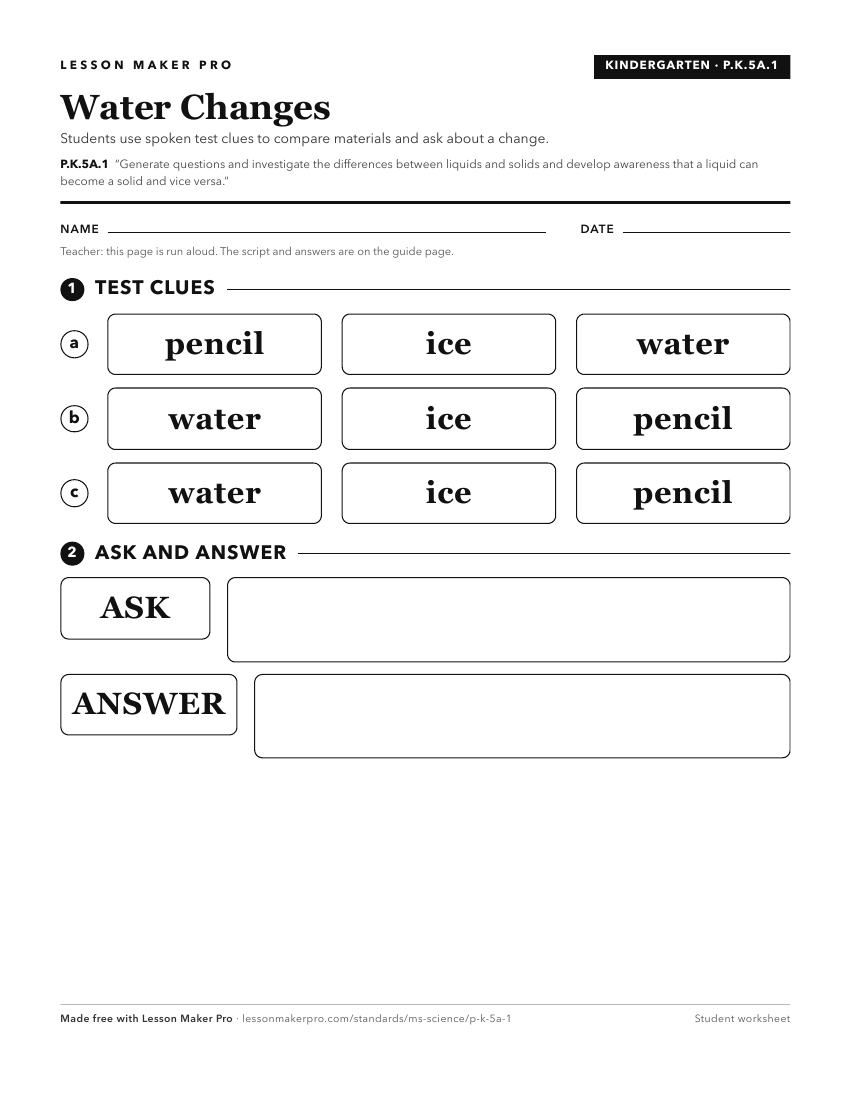
A ready-to-print activity worksheet aligned to P.K.5A.1, with an answer key for the teacher on its own page. No account needed.
PDF, US Letter, prints cleanly in black and white.
Download the worksheetKeep exploring
Related Standards
- P.K.5A
Students will demonstrate an understanding of the solid and liquid states of matter.
- PHS.1.5
Design and conduct an investigation using graphical analysis (e.g., line graph) to determine the density of liquids and/or solids.
- P.3.5
Students will demonstrate an understanding of the physical properties of matter to explain why matter can change states between a solid, liquid, or gas dependen...
- P.2.5.1
Conduct a structured investigation to collect, represent, and analyze categorical data to classify matter as solid, liquid, or gas. Report findings and describe...
Turn this exact standard into a lesson
Grade, subject, topic, and the complete standard are prefilled. Create one free, no account needed.
Also for this standard:Make a WorksheetMake a QuizMake a Sub Lesson