Kentucky Reading and Writing C.2.3
Standard Cluster
Compose narratives, using writing and digital resources, to develop real or imagined experiences or multiple events or ideas, using effective technique, descriptive details and clear sequences. With guidance and support from adults, produce writing in which the development and organization are appropriate to task and purpose. Recount a single event or multiple events, memories or ideas. Include details which describe actions, thoughts and/or emotions. Use temporal words and phrases to signal event order. Create a sense of closure. With guidance and support from peers and adults, develop and strengthen writing as needed by planning, revising and editing.
Kentucky Academic Standards for Reading and Writing (2025) · Text Types and Purpose
Cluster contents
Standards in This Cluster
C.2.3 is a cluster heading. These are the individual standards under it.
- C.2.3.a
With guidance and support from adults, produce writing in which the development and organization are appropriate to task and purpose.
- C.2.3.b
Recount a single event or multiple events, memories or ideas.
- C.2.3.c
Include details which describe actions, thoughts and/or emotions.
- C.2.3.d
Use temporal words and phrases to signal event order.
- C.2.3.e
Create a sense of closure.
- C.2.3.f
With guidance and support from peers and adults, develop and strengthen writing as needed by planning, revising and editing.
Teacher's field guide
What This Cluster Means
What Students Need to Do
- Students write about one event or several linked events, real or made up. They put events in order, describe actions and feelings or thoughts, and give the story an ending. With help, they plan, revise, and edit on paper or a device.
What Mastery Looks Like
- A reader can follow what happened first, next, and last. The student includes a specific action and a thought or feeling, then writes an ending that fits. After a partner's suggestion, they improve a detail or fix an error.
Common Misconceptions
- Students may list events without showing when each happened. They may stop after the last action without showing how the story ends. They may think revising only means fixing spelling, not adding or moving details.
How to Assess It
- Exit ticket: Write four sentences about a lost mitten, real or made up. Use two time words, include a thought or feeling, and add an ending. Ask a partner to suggest one improvement before turning it in.
Lesson moves
Ways to Teach It
Give pairs four picture cards showing spilled paint; have them order the cards, then write one sentence for each.
Ask, "What did you think when something you made broke?" Have students tell a partner, then write the moment with one action and feeling.
Play a time-word swap game: replace "then" in a four-sentence story with "later," "after lunch," or "at last" where each fits.
Have students type a story about yesterday's recess for someone at home, then revise the ending after a partner reads it.
Free download
Printable C.2.3 Worksheet
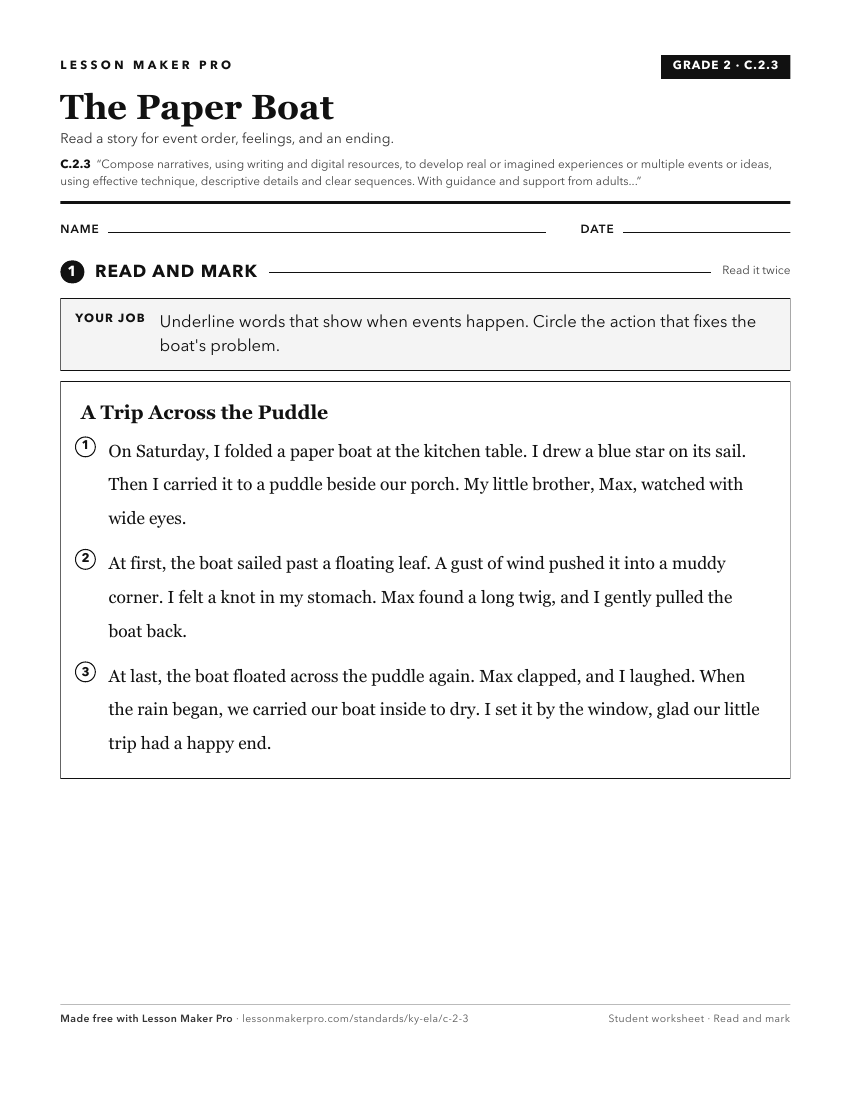
A ready-to-print activity worksheet aligned to C.2.3, with an answer key for the teacher on its own page. No account needed.
PDF, US Letter, prints cleanly in black and white.
Download the worksheetKeep exploring
Related Standards
- C.5.3
The 5th Grade version of this standard.
- C.1.3
Compose narratives, using a combination of drawing, dictating, writing and digital resources, to develop real or imagined experiences or multiple events or idea...
- C.4.3
The 4th Grade version of this standard.
- C.3.3
Compose narratives, using writing and digital resources, to develop real or imagined experiences or multiple events or ideas using effective technique, descript...
Turn this cluster into a lesson
Grade, subject, topic, and the complete cluster are prefilled. Create one free, no account needed.
Also for this cluster:Make a WorksheetMake a QuizMake a Sub Lesson