Indiana Social Studies WH.6.6
The Standard
Explain the causes and consequences of the Cold War, and describe the role it played in ethnic or nationalistic conflicts in various parts of the world.
2026 Indiana Academic Standards: K-12 Social Studies
Teacher's field guide
What This Standard Means
What Students Need to Do
- Students explain how postwar distrust, competing political systems, and the struggle for influence led to the Cold War. They trace effects such as the arms race and wars in Korea and Vietnam, where national goals became tied to superpower support.
What Mastery Looks Like
- A student can connect a Cold War cause to a specific consequence. They can explain how US and Soviet support intensified fighting over Korean reunification or Vietnamese independence without claiming the superpowers started every conflict.
Common Misconceptions
- Students may think the US and Soviet Union fought each other directly in Korea or Vietnam. They may also miss that people in those countries had their own goals, apart from superpower rivalry.
How to Assess It
- Ask students: How did Cold War rivalry affect the fight over Vietnamese independence? Name one Vietnamese goal and one way a superpower shaped the war.
Lesson moves
Ways to Teach It
Give pairs a blank map to mark divided Germany, Korea, and Vietnam, then label which governments received US or Soviet support.
Ask: Did superpower support create the fight over Korean reunification or make it harder to settle? Use two facts to defend your answer.
Have groups sort twelve event cards into Cold War causes, events, and consequences, then explain two choices.
Use a current map of North and South Korea to locate the border and identify one lasting effect of Cold War division.
Free download
Printable WH.6.6 Worksheet
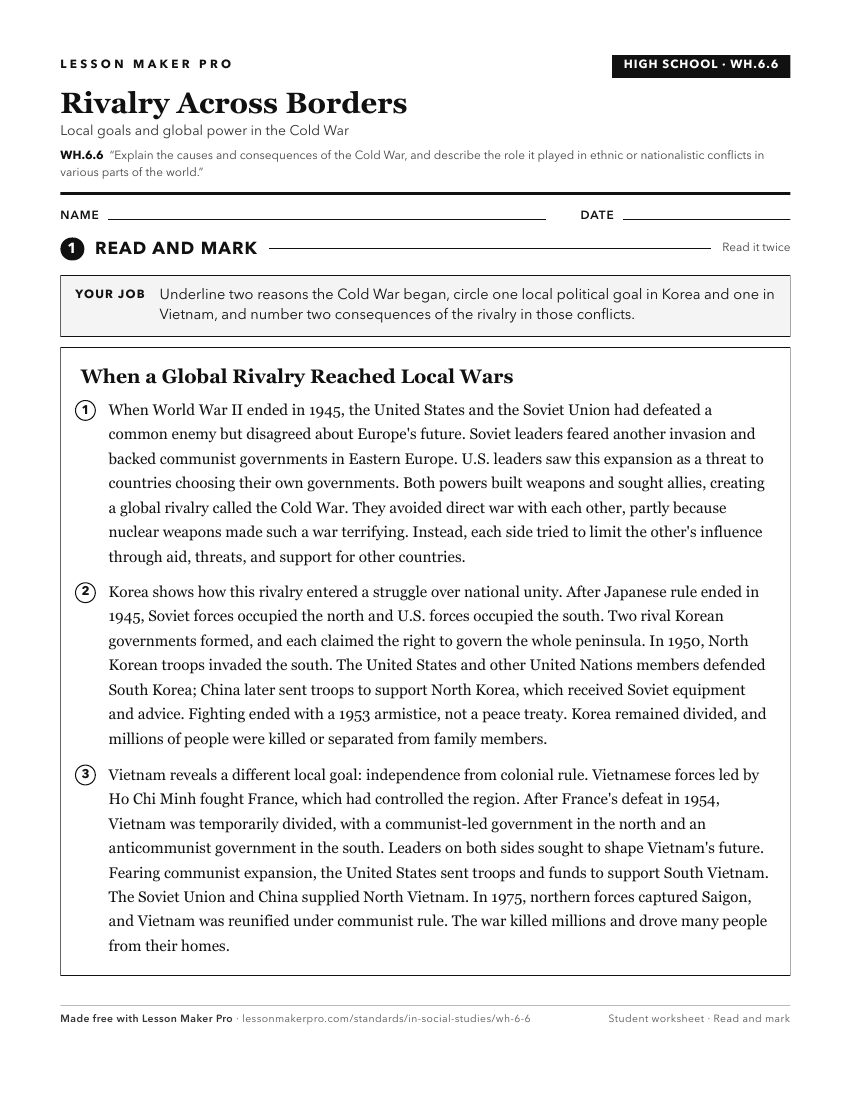
A ready-to-print activity worksheet aligned to WH.6.6, with an answer key for the teacher on its own page. No account needed.
PDF, US Letter, prints cleanly in black and white.
Download the worksheetKeep exploring
Related Standards
- USH.6.3
Explain the origins and cultural, economic, and political implications of the Cold War.
- WH.6.1
Identify and explain the impact of nationalism, imperialism, militarism, and alliances on relationships between countries.
- USH.6.4
Explain and analyze U.S. foreign policies and conflicts during the Cold War, including relations between the United States and the Soviet Union.
- 7.H.14
Analyze the causes of modern global conflicts from 1945 to the present, and evaluate the responses of individual nations and international organizations in addr...
Turn this exact standard into a lesson
Grade, subject, topic, and the complete standard are prefilled. Create one free, no account needed.
Also for this standard:Make a WorksheetMake a QuizMake a Sub Lesson