Indiana Social Studies P.2.3
The Standard
Describe the structure and function of the neuron and the basic process of neurotransmission, including the effect of neurotransmitters (e.g., serotonin, dopamine, norepinephrine, endorphins) and the effect on human behavior.
2026 Indiana Academic Standards: K-12 Social Studies
Teacher's field guide
What This Standard Means
What Students Need to Do
- Students identify the dendrites, cell body, axon, and terminals, and explain each part's job. They trace an electrical signal through one neuron and a chemical message across the gap to another. They explain how serotonin, dopamine, norepinephrine, and endorphins can affect mood, motivation, alertness, and pain.
What Mastery Looks Like
- Given a drawing of two neurons, a student traces a signal from the dendrites to the terminals, then shows neurotransmitters binding to receptors on the next neuron. They can explain, for example, how norepinephrine may increase alertness without claiming one chemical controls a person's behavior.
Common Misconceptions
- Students may think an electrical signal jumps across the gap between neurons, rather than chemicals carrying the message across it. They may also call dopamine a happiness chemical or assume one neurotransmitter always causes one specific behavior.
How to Assess It
- On an exit ticket, draw two neurons with a gap between them and ask students to label the main parts and show how the message crosses the gap. Have them name one neurotransmitter and one possible effect on behavior.
Lesson moves
Ways to Teach It
Build two neurons from pipe cleaners, then use colored beads to show neurotransmitter release, receptor binding, and reuptake.
Ask students to write two sentences explaining why dopamine might affect motivation but cannot fully explain a person's choice.
Give pairs neuron-part cards and function cards to match, then have them sequence electrical signaling, release, and receptor binding.
Give students a runner's account of feeling less pain during a race, then ask how endorphins could affect the runner's response.
Free download
Printable P.2.3 Worksheet
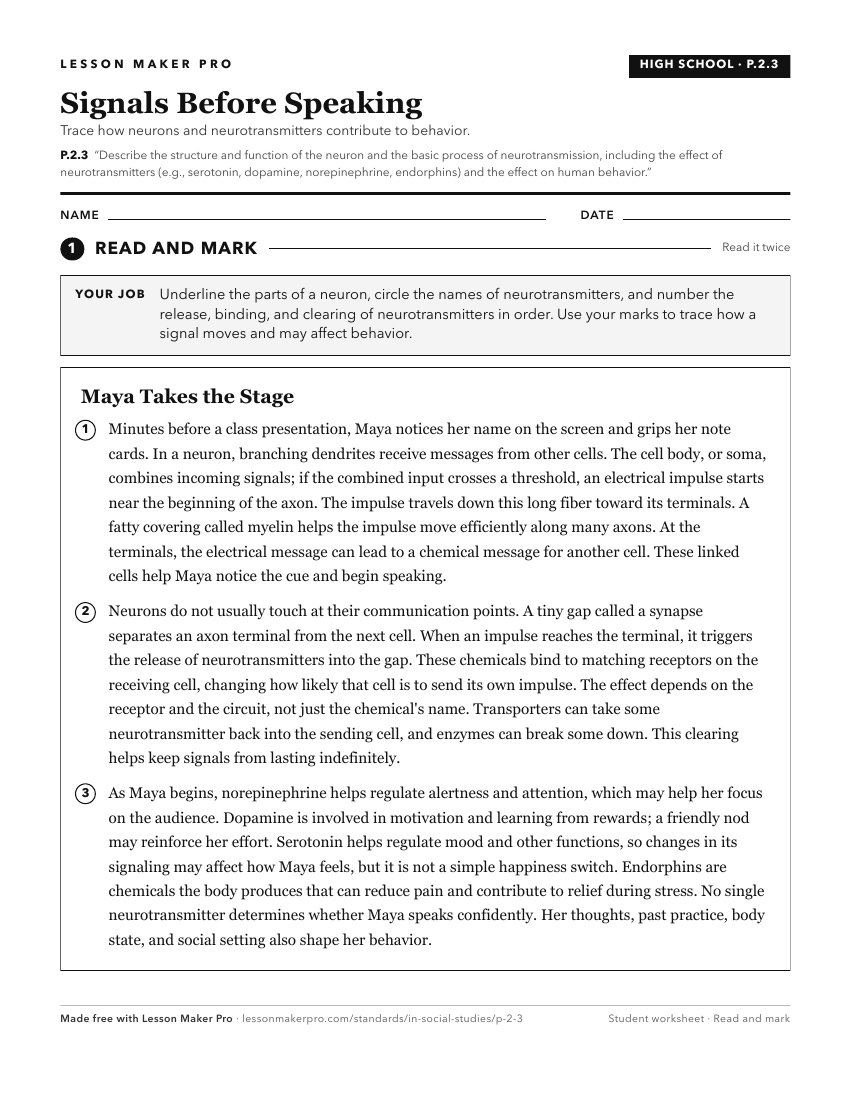
A ready-to-print activity worksheet aligned to P.2.3, with an answer key for the teacher on its own page. No account needed.
PDF, US Letter, prints cleanly in black and white.
Download the worksheetKeep exploring
Related Standards
- P.2.1
Describe the structure and function of the major regions of the brain; specifically the forebrain, hindbrain, midbrain, and the four lobes of the cerebral corte...
- P.2.6
Analyze the structure and function of the endocrine system and its effect on human behavior.
- P.2.5
Identify the major divisions and subdivisions of the nervous system and describe how they function, and their effect on human behavior.
- P.3.1
Explain the roles, effects, and outcomes of prenatal and postnatal development on human behavior.
Turn this exact standard into a lesson
Grade, subject, topic, and the complete standard are prefilled. Create one free, no account needed.
Also for this standard:Make a WorksheetMake a QuizMake a Sub Lesson