Indiana Social Studies 8.H.21
The Standard
Analyze the influence of early individual social reformers and movements such as the abolitionist, feminist, and social reform movements.
2026 Indiana Academic Standards: K-12 Social Studies
Teacher's field guide
What This Standard Means
What Students Need to Do
- Students identify what reformers wanted to change and how they tried to reach the public or lawmakers. They explain how a newspaper, a convention, or a report could build support for change.
What Mastery Looks Like
- A student can explain how Frederick Douglass used an antislavery newspaper, Elizabeth Cady Stanton helped organize a women's rights convention, and Dorothea Dix reported asylum conditions to lawmakers. They can explain why these actions did not bring change overnight.
Common Misconceptions
- Students may treat abolition, women's rights, and asylum reform as one campaign. They may think one speech or meeting ended slavery or gave women the vote right away.
How to Assess It
- Exit ticket: Douglass published an antislavery newspaper, Stanton helped organize Seneca Falls, and Dix reported asylum conditions to lawmakers. Pick two and explain how each action could lead to change.
Lesson moves
Ways to Teach It
Give pairs name, action, and goal cards for Douglass, Stanton, and Dix; have them build three cause-and-effect chains.
Ask: Why might Douglass use a newspaper while Dix presented reports to lawmakers, and who could each method reach?
Read short action cards aloud; have teams sort them under abolition, women's rights, or asylum reform and explain each choice.
Hand out a sample petition asking the school board for longer lunch; have students compare its audience and goal with Dix's appeals to lawmakers.
Free download
Printable 8.H.21 Worksheet
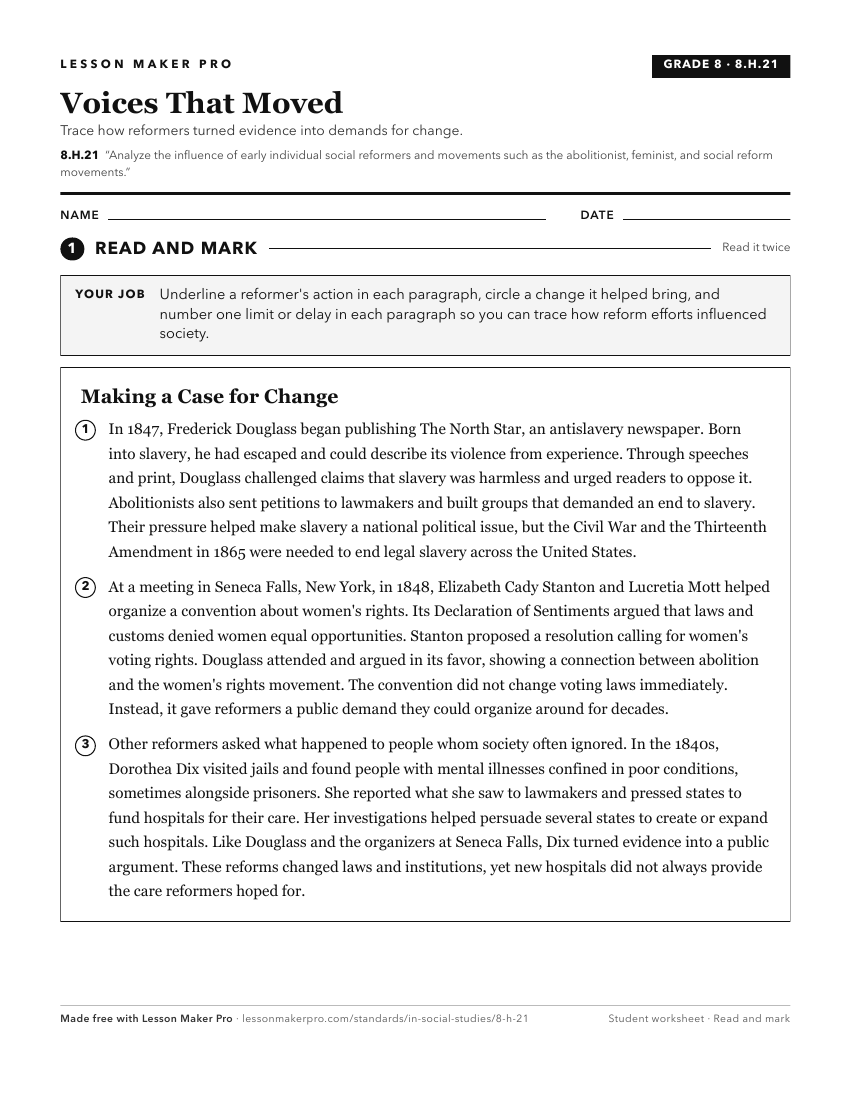
A ready-to-print activity worksheet aligned to 8.H.21, with an answer key for the teacher on its own page. No account needed.
PDF, US Letter, prints cleanly in black and white.
Download the worksheetKeep exploring
Related Standards
- USH.4.2
Assess the causes of the resurgence of social movements, reform movements, and vigilante groups, including the Ku Klux Klan, the Red Scare, and Prohibition.
- 8.H.10
Analyze the influence of important individuals on social and political developments of the time (1775-1800).
- USH.1.2
Identify and summarize the causes and effects of slavery, the Civil War, abolitionism, social reform movements, and Reconstruction.
- USH.3.2
Explain the impact of political, social, and cultural movements of the Progressive Era, including significant individuals/groups such as Booker T. Washington, I...
Turn this exact standard into a lesson
Grade, subject, topic, and the complete standard are prefilled. Create one free, no account needed.
Also for this standard:Make a WorksheetMake a QuizMake a Sub Lesson