Indiana Social Studies 8.E.4
The Standard
Explain and evaluate examples of domestic and international interdependence throughout United States history.
2026 Indiana Academic Standards: K-12 Social Studies
Teacher's field guide
What This Standard Means
What Students Need to Do
- Students explain how people and regions in the United States depended on each other, and how the United States depended on other countries. They use examples from different periods to judge who gained, who was harmed, and what could happen if a supply link broke.
What Mastery Looks Like
- A student can explain how Southern cotton relied on enslaved labor and supplied Northern mills and British buyers. They can compare those links with U.S. oil imports in 1973 and explain what happened when supplies fell.
Common Misconceptions
- Students may call trade between U.S. regions international trade. They may assume everyone benefits equally from trade or overlook how enslaved labor made cotton profits possible. Some see dependence as one-way and forget that sellers also need buyers.
How to Assess It
- Exit ticket: Explain how Southern cotton plantations connected Northern mills and British buyers. Name who profited, who was harmed, and one risk if cotton shipments stopped.
Lesson moves
Ways to Teach It
Pairs link cards for enslaved workers, Southern plantations, Northern mills, and British factories with supply arrows, then label profits and harms.
Ask students to write: How did the 1973 oil embargo expose U.S. dependence on foreign oil, and who faced higher costs?
Have teams match 1800s farmers with railroad companies and 1970s drivers with foreign oil suppliers, then explain one risk for each pair.
Bring a U.S.-grown apple and an imported banana; students trace growers, truckers, and stores, then compare these links with 1800s cotton.
Free download
Printable 8.E.4 Worksheet
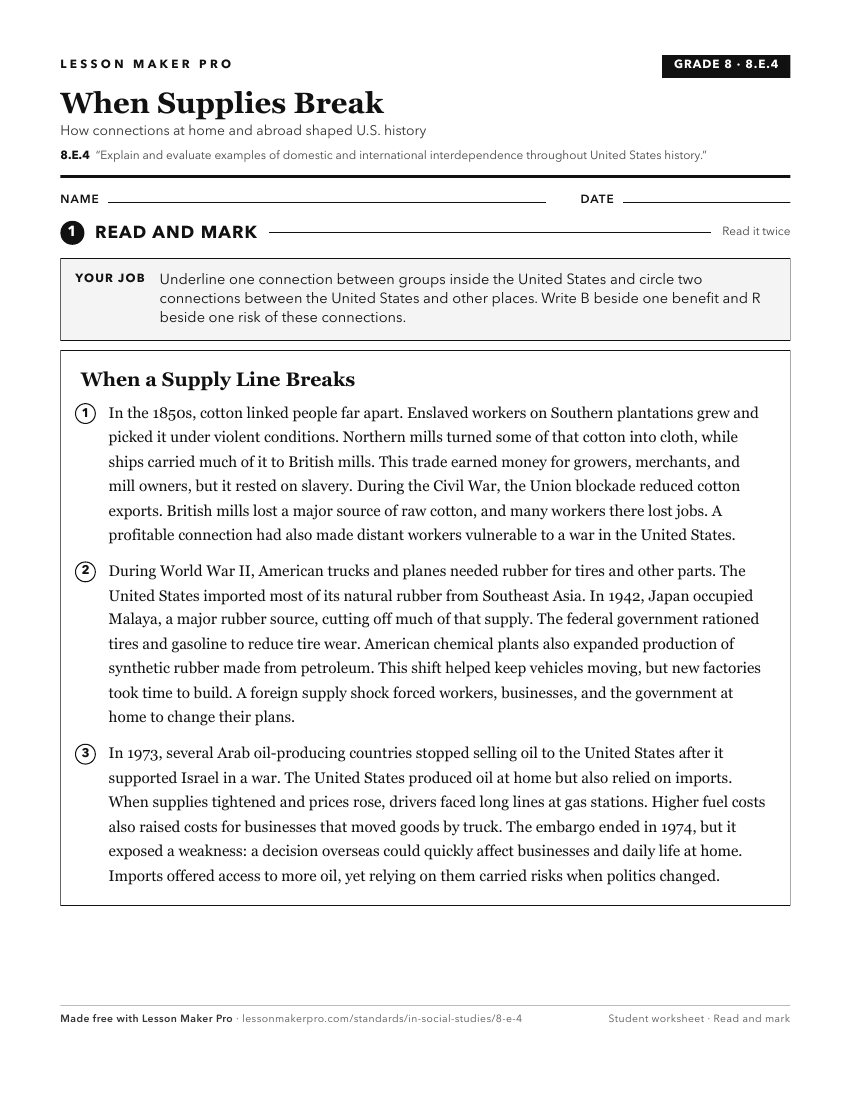
A ready-to-print activity worksheet aligned to 8.E.4, with an answer key for the teacher on its own page. No account needed.
PDF, US Letter, prints cleanly in black and white.
Download the worksheetKeep exploring
Related Standards
- 3.E.4
Define interdependence, and give examples of how people in the local community depend on each other for goods and services.
- WG.4.14
Use global political, economic, cultural, or social flows to describe and illustrate interdependence between places, countries and regions.
- WH.6.1
Identify and explain the impact of nationalism, imperialism, militarism, and alliances on relationships between countries.
- 8.G.6
Analyze human and physical factors that have influenced migration and settlement patterns and relate them to the economic development of the United States.
Turn this exact standard into a lesson
Grade, subject, topic, and the complete standard are prefilled. Create one free, no account needed.
Also for this standard:Make a WorksheetMake a QuizMake a Sub Lesson