Idaho Social Studies 9-12.WC.44
The Standard
Analyze the causes and consequences of the Second Agricultural Revolution and the early Industrial Revolution.
Idaho Content Standards: K-12 Social Studies · The Enlightenment and the Age of Revolution (c. 1600 AD – 1815 AD)
Teacher's field guide
What This Standard Means
What Students Need to Do
- Students explain how better farming raised food supplies and how enclosure pushed some families off land. They connect population growth, coal, investment, and textile machines to early factories. They describe how work and towns changed.
What Mastery Looks Like
- A student can trace a path from crop rotation to larger harvests and from enclosure to rural migration. They can explain why mills grew and name both cheaper cloth and dangerous mill work as results.
Common Misconceptions
- Students may think farming changes and factory growth were unrelated. Some assume enclosure helped every farmer. Others think all early mills ran on steam, though many used water power.
How to Assess It
- Exit ticket: Explain one way farming changes helped factories grow. Then name one benefit and one cost of early factory production.
Lesson moves
Ways to Teach It
Give groups four paper field tiles and crop labels; have them model crop rotation and explain how steadier harvests could support population growth.
Ask students to write: Who gained and who lost when common fields were enclosed? Give one example of each.
Have students match cause-and-effect cards for crop rotation, food surplus, rural migration, coal, textile machines, mills, and crowded housing.
Show a cotton T-shirt label and a picture of an early textile mill; students list two ways cloth production has changed.
Free download
Printable 9-12.WC.44 Worksheet
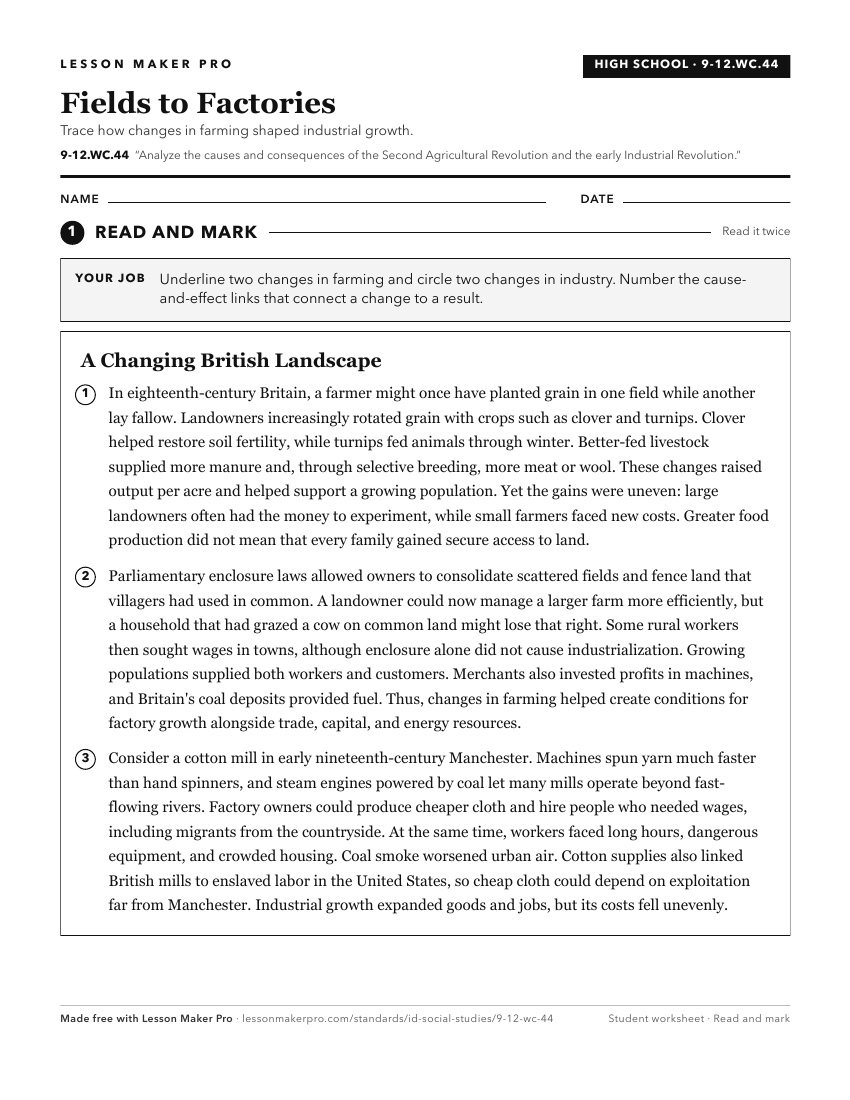
A ready-to-print activity worksheet aligned to 9-12.WC.44, with an answer key for the teacher on its own page. No account needed.
PDF, US Letter, prints cleanly in black and white.
Download the worksheetKeep exploring
Related Standards
- 6-12.US1.32
Analyze the communication, industrial and agricultural changes and their impact on the social and economic lives of people in the North, South, and West.
- 6-12.US1.20
Explain the changes in manufacturing, agriculture, transportation, and communication during the First Industrial Revolution.
- 6-12.US1.47
Explain the changes in manufacturing, agriculture, transportation, and communication during the Second Industrial Revolution.
- 6-12.US1.49
Evaluate how improved use of resources, new technology and inventions, and transportation networks influenced the growth of industrialization and urbanization.
Turn this exact standard into a lesson
Grade, subject, topic, and the complete standard are prefilled. Create one free, no account needed.
Also for this standard:Make a WorksheetMake a QuizMake a Sub Lesson