Idaho Social Studies 6-12.US1.47
The Standard
Explain the changes in manufacturing, agriculture, transportation, and communication during the Second Industrial Revolution.
Idaho Content Standards: K-12 Social Studies · Growth of Industrial World 1877-1890 (Bridge with US History II)
Teacher's field guide
What This Standard Means
What Students Need to Do
- Students explain how factories and farms produced more goods with new machines and methods. They describe how railroads moved goods and how telegraphs and telephones sped up communication.
What Mastery Looks Like
- Students explain how cheaper steel supported manufacturing and railroads, and how reapers helped farmers harvest more acres. They connect railroads to wider markets and faster messages to quicker business decisions.
Common Misconceptions
- Students may think machines made every farmer rich or replaced all factory workers. They may also think telephones replaced telegraphs right away.
How to Assess It
- Exit ticket: A steel mill adds a Bessemer converter, a farm buys a reaper, a town gets a rail stop, and a business installs a telephone. Write one effect of each change.
Lesson moves
Ways to Teach It
Give pairs a paper map, yarn rail lines, and wheat cards; have them trace wheat from a farm to a flour mill and city market.
Ask students to write: How could a reaper and a railroad change a wheat farmer's work and sales?
Run a card sort matching Bessemer steel, mechanical reapers, railroads, and telephones to specific changes in work or trade.
Show an 1880s railroad timetable and a current delivery tracking screen; have students compare how businesses plan shipments.
Free download
Printable 6-12.US1.47 Worksheet
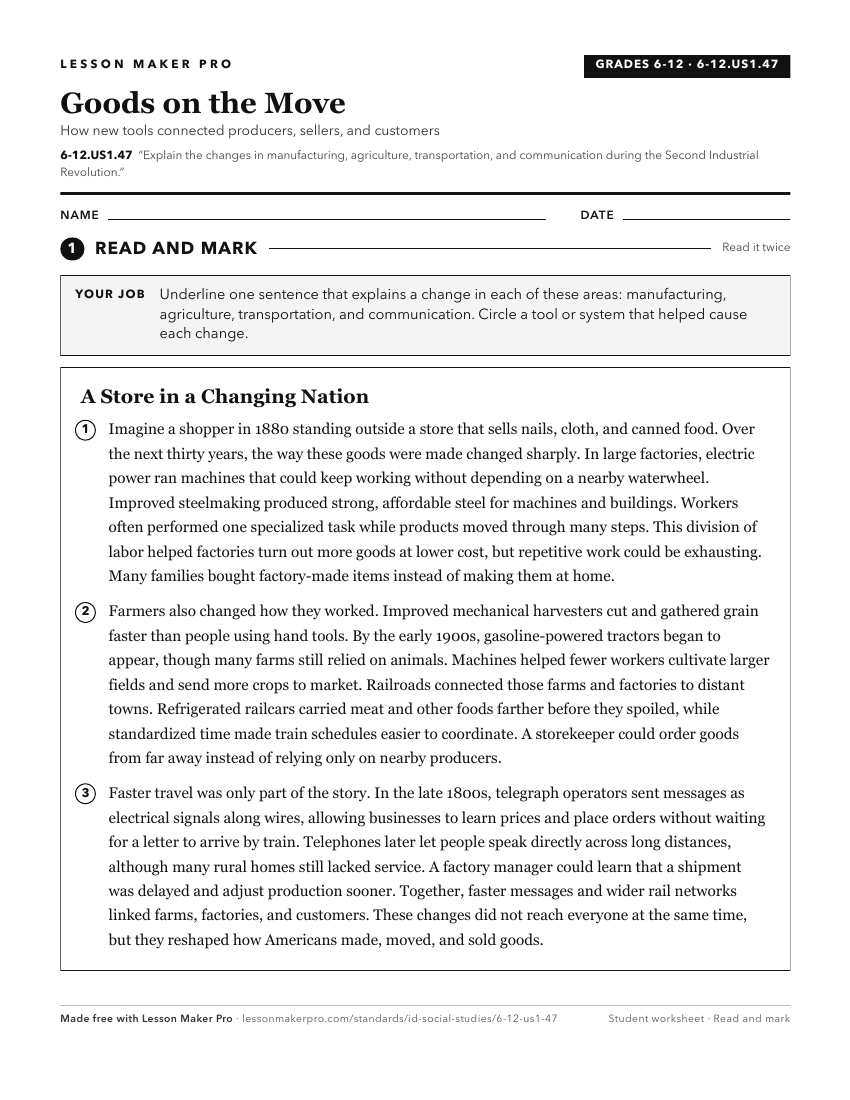
A ready-to-print activity worksheet aligned to 6-12.US1.47, with an answer key for the teacher on its own page. No account needed.
PDF, US Letter, prints cleanly in black and white.
Download the worksheetKeep exploring
Related Standards
- 6-12.US1.32
Analyze the communication, industrial and agricultural changes and their impact on the social and economic lives of people in the North, South, and West.
- 6-12.US1.20
Explain the changes in manufacturing, agriculture, transportation, and communication during the First Industrial Revolution.
- 9-12.WC.44
Analyze the causes and consequences of the Second Agricultural Revolution and the early Industrial Revolution.
- 6-12.US1.49
Evaluate how improved use of resources, new technology and inventions, and transportation networks influenced the growth of industrialization and urbanization.
Turn this exact standard into a lesson
Grade, subject, topic, and the complete standard are prefilled. Create one free, no account needed.
Also for this standard:Make a WorksheetMake a QuizMake a Sub Lesson