Idaho Social Studies 6-12.US1.20
The Standard
Explain the changes in manufacturing, agriculture, transportation, and communication during the First Industrial Revolution.
Idaho Content Standards: K-12 Social Studies · Early Republic 1787-1825
Teacher's field guide
What This Standard Means
What Students Need to Do
- Students describe how textile mills changed cloth making and how the cotton gin changed cotton production. They explain how canals, steamboats, postal routes, and newspapers changed the movement of goods and news.
What Mastery Looks Like
- A student can explain how the cotton gin increased cotton production and demand for enslaved labor. They can trace cotton from a farm to a textile mill and explain how news reached readers by mail.
Common Misconceptions
- Students may think the cotton gin picked cotton or reduced reliance on enslaved labor. They may credit the telegraph with carrying news in the early republic, when mail and newspapers did that work.
How to Assess It
- On an exit ticket, name one change in manufacturing, farming, transportation, and communication. Explain how two of those changes affected each other.
Lesson moves
Ways to Teach It
Give groups picture cards of a cotton gin, textile mill, canal boat, and mail coach; have them sort the cards and connect them with string.
Ask: Why did the cotton gin increase both cotton output and demand for enslaved labor? Have students write two linked sentences.
Play a sorting relay with cards labeled cotton gin, spinning frame, steamboat, and post road; teams explain each placement.
Show an envelope, a phone message, and an 1820 post-road map; have students compare how a message reaches its reader.
Free download
Printable 6-12.US1.20 Worksheet
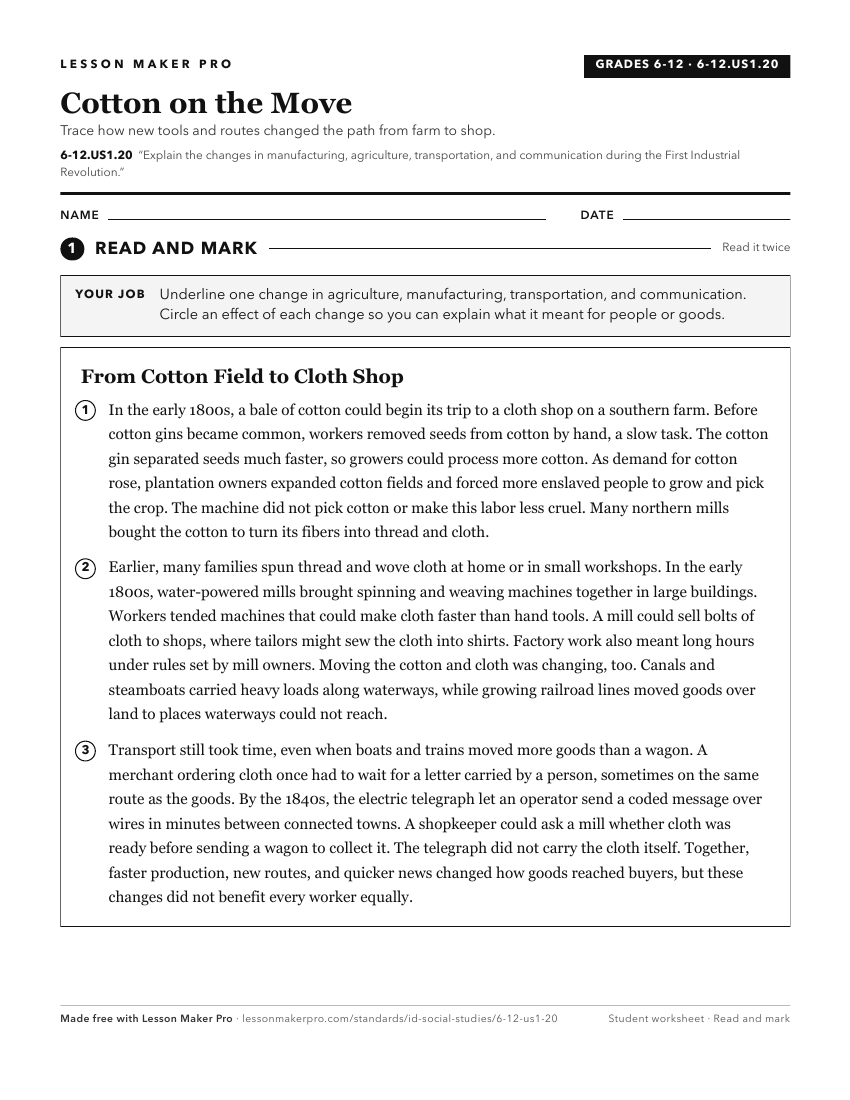
A ready-to-print activity worksheet aligned to 6-12.US1.20, with an answer key for the teacher on its own page. No account needed.
PDF, US Letter, prints cleanly in black and white.
Download the worksheetKeep exploring
Related Standards
- 6-12.US1.32
Analyze the communication, industrial and agricultural changes and their impact on the social and economic lives of people in the North, South, and West.
- 6-12.US1.47
Explain the changes in manufacturing, agriculture, transportation, and communication during the Second Industrial Revolution.
- 9-12.WC.44
Analyze the causes and consequences of the Second Agricultural Revolution and the early Industrial Revolution.
- 6-12.US1.49
Evaluate how improved use of resources, new technology and inventions, and transportation networks influenced the growth of industrialization and urbanization.
Turn this exact standard into a lesson
Grade, subject, topic, and the complete standard are prefilled. Create one free, no account needed.
Also for this standard:Make a WorksheetMake a QuizMake a Sub Lesson