Idaho Social Studies 9-12.US2.19
The Standard
Evaluate the factors that influenced the decision to employ atomic weapons against Japan.
Idaho Content Standards: K-12 Social Studies · World War II 1939-1945
Teacher's field guide
What This Standard Means
What Students Need to Do
- Students weigh military and diplomatic reasons for using atomic bombs against Japan, along with possible alternatives. They use dated sources to explain what the evidence supports and what remains uncertain.
What Mastery Looks Like
- A student can explain how invasion plans, surrender terms, and relations with the Soviet Union shaped the debate. They separate what U.S. leaders knew before Hiroshima from events that came later, then support a judgment with evidence.
Common Misconceptions
- Students may treat predicted invasion casualties as confirmed death counts or assume Japan had already agreed to unconditional surrender. They may place Soviet entry before Hiroshima or claim historians agree on a single reason for the bombings.
How to Assess It
- On an exit ticket, ask: “Name two factors behind the bombings. Did Soviet entry come before or after Hiroshima, and how does that timing affect your explanation?”
Lesson moves
Ways to Teach It
Give pairs dated cards for a July invasion estimate, the Potsdam Declaration, Hiroshima, and Soviet entry; sort them and mark what preceded August 6.
Ask: “What was known before August 6, and what changed by August 9?” Require two dated sources in each response.
Run a claim-match game: pair invasion estimates, surrender demands, and Soviet entry dates with arguments; reject one claim the cards cannot support.
Use a local storm evacuation notice to identify forecasts, unknowns, and people at risk; compare those labels with a 1945 decision chart.
Free download
Printable 9-12.US2.19 Worksheet
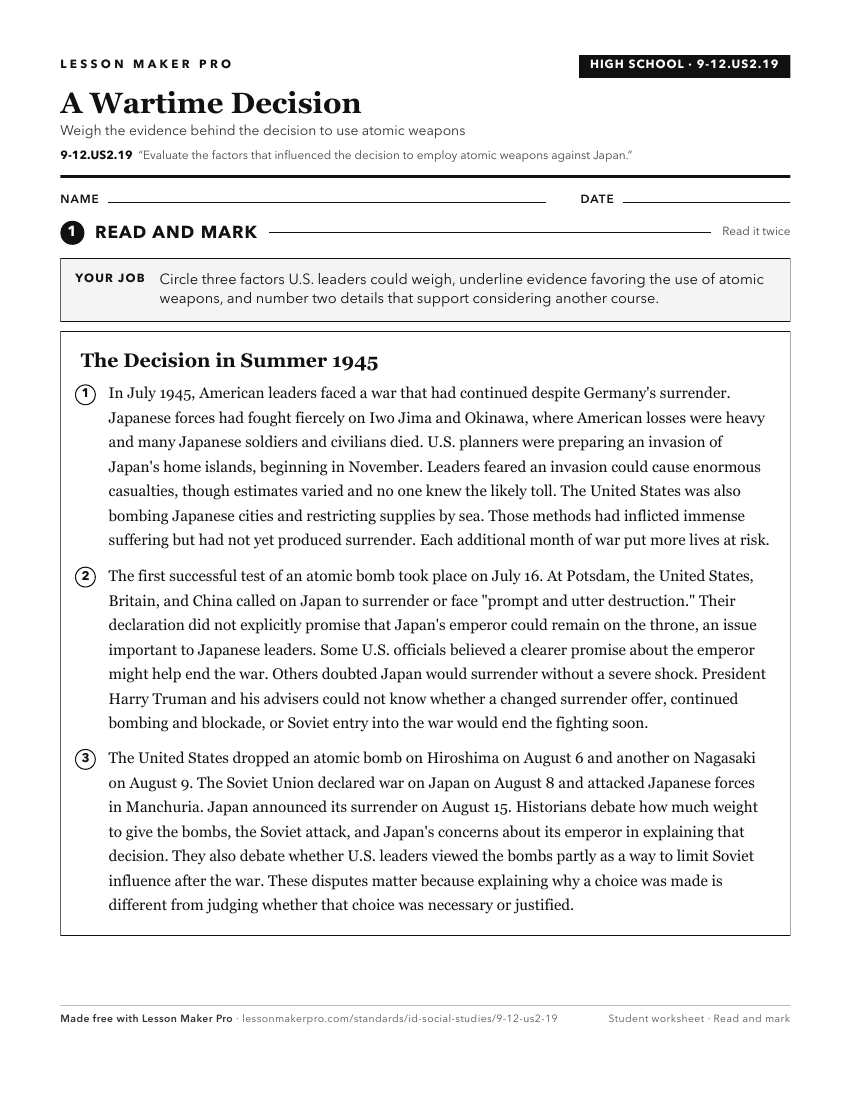
A ready-to-print activity worksheet aligned to 9-12.US2.19, with an answer key for the teacher on its own page. No account needed.
PDF, US Letter, prints cleanly in black and white.
Download the worksheetKeep exploring
Related Standards
- 9-12.US2.20
Analyze the impact of events and policies on the Homefront during World War Two.
- 9-12.US2.3
Evaluate the impact of racial, economic, moral, political, and strategic motives for the United States becoming an imperialist power.
- 9-12.US2.5
Explain the factors that led to World War One and describe the factors that were deterring the United States from involvement as well as the driving forces that...
- 9-12.US2.37
Evaluate the factors that impacted relationships and policies with China, Russia, Latin America, and the Middle East.
Turn this exact standard into a lesson
Grade, subject, topic, and the complete standard are prefilled. Create one free, no account needed.
Also for this standard:Make a WorksheetMake a QuizMake a Sub Lesson