Idaho Social Studies 9-12.US2.5
The Standard
Explain the factors that led to World War One and describe the factors that were deterring the United States from involvement as well as the driving forces that eventually led to the United States' involvement.
Idaho Content Standards: K-12 Social Studies · World War I, 1915-1919
Teacher's field guide
What This Standard Means
What Students Need to Do
- Students explain how alliances, nationalism, imperial rivalry, and military buildup helped turn a Balkan crisis into a wider war. They explain why the United States stayed out at first and what pushed it to enter in 1917.
What Mastery Looks Like
- Students can place the assassination of Archduke Franz Ferdinand, the spread of the war, and key events leading to U.S. entry in order. They can explain reasons for both neutrality and entry without claiming the 1915 Lusitania sinking brought the United States into the war immediately.
Common Misconceptions
- Students may treat the assassination as the only cause of the war, rather than the event that set off existing tensions. Some think the Lusitania sinking caused immediate U.S. entry, or that neutrality meant the United States had no economic ties to the Allies.
How to Assess It
- Exit ticket: Name two factors that widened the war in Europe, one reason the United States stayed out, and two events that pushed it to enter in 1917.
Lesson moves
Ways to Teach It
Give pairs event cards to sort under three headings: causes of war, reasons for U.S. neutrality, and reasons for U.S. entry.
Ask students to write: Why did the United States stay neutral after the Lusitania sank but enter after renewed submarine attacks?
Play a timeline relay with event cards from 1914 to 1917; teams place each card and explain one choice.
Read a news article on U.S. aid to Ukraine; compare its reasons for involvement with U.S. arguments about entering World War I.
Free download
Printable 9-12.US2.5 Worksheet
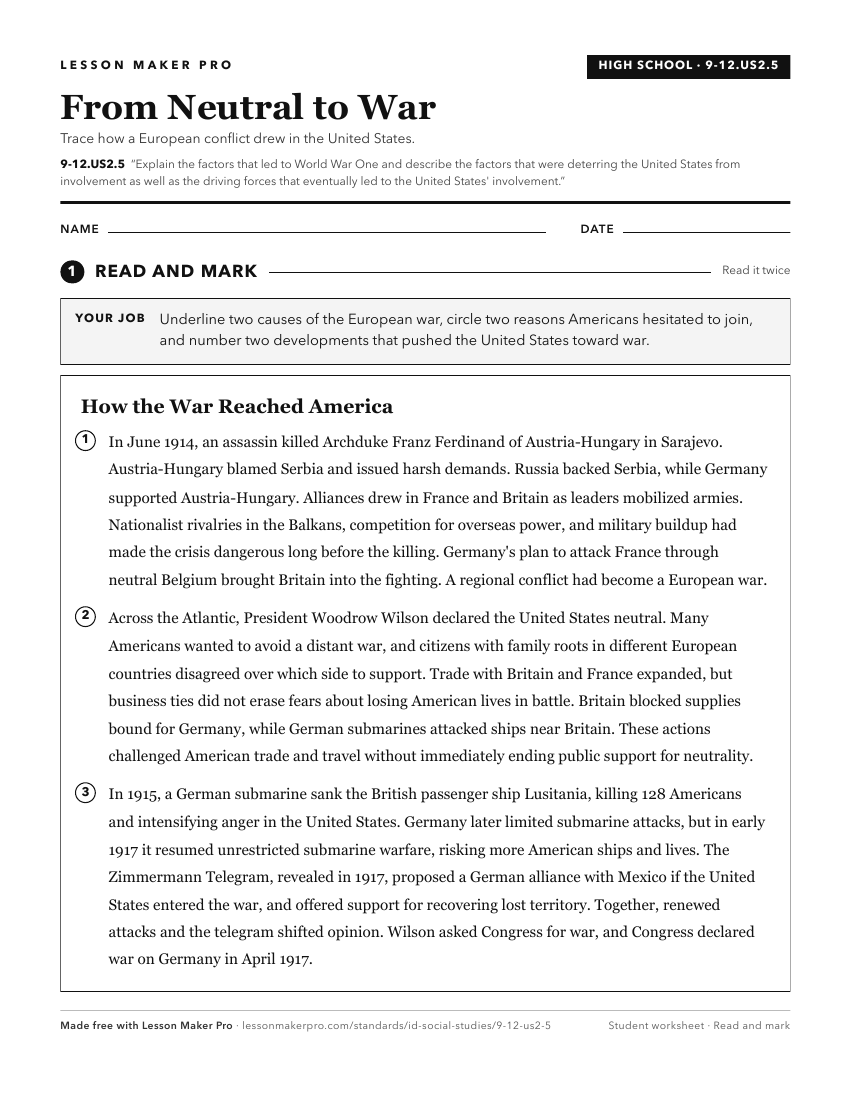
A ready-to-print activity worksheet aligned to 9-12.US2.5, with an answer key for the teacher on its own page. No account needed.
PDF, US Letter, prints cleanly in black and white.
Download the worksheetKeep exploring
Related Standards
- 9-12.US2.19
Evaluate the factors that influenced the decision to employ atomic weapons against Japan.
- 9-12.US2.40
Explain the causes and consequences of the American response to Iraq’s invasion of Kuwait.
- 9-12.US2.3
Evaluate the impact of racial, economic, moral, political, and strategic motives for the United States becoming an imperialist power.
- 9-12.US2.15
Explain the events and actions that led to World War Two, including the rise of fascism and totalitarianism, appeasement, and European and Japanese Imperialism.
Turn this exact standard into a lesson
Grade, subject, topic, and the complete standard are prefilled. Create one free, no account needed.
Also for this standard:Make a WorksheetMake a QuizMake a Sub Lesson