Georgia S3L2.b
The Standard
- S3L2
- Obtain, evaluate, and communicate information about the effects of pollution (air, land, and water) and humans on the environment.
Explore, research, and communicate solutions, such as conservation of resources and recycling of materials, to protect plants and animals.
Georgia Standards of Excellence for Science · Obtain, evaluate, and communicate information about the effects of pollution (air, land, and water) and humans on the environment.
Teacher's field guide
What This Standard Means
What Students Need to Do
- Students identify human actions that harm or help plants and animals. They compare possible solutions and explain how conserving resources, reusing items, or recycling materials can reduce harm.
What Mastery Looks Like
- Students can describe an environmental problem and propose a realistic action. They use facts or observations to explain how their solution protects a specific plant, animal, or habitat.
Common Misconceptions
- Students may think recycling fixes every pollution problem or that all materials can be recycled. They may overlook reducing and reusing, or propose actions without explaining how they help living things.
How to Assess It
- Exit ticket: A park pond is filling with plastic bottles. Name one action people could take and explain how it would protect pond plants or animals.
Lesson moves
Ways to Teach It
Wearing gloves, sort one day of clean classroom waste into reuse, recycle, and trash, then choose one item the class could avoid.
Write: How would using both sides of paper help a tree, a bird, and the school trash bin?
Play a solution-match game by pairing pollution scenario cards with action cards, then defend each match using because.
Walk the school grounds, record three places where plants or animals need protection, and propose one feasible change for the principal.
Free download
Printable S3L2.b Worksheet
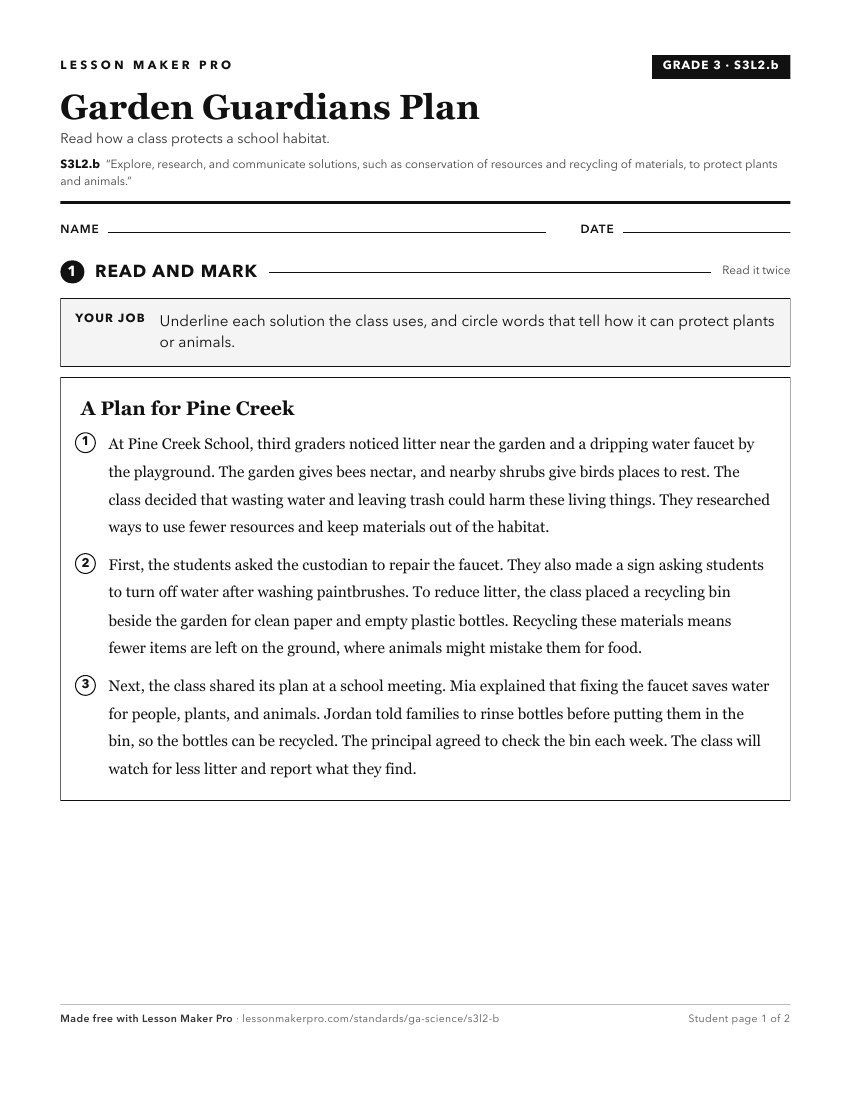
A ready-to-print activity worksheet aligned to S3L2.b, with an answer key for the teacher on its own page. No account needed.
PDF, US Letter, prints cleanly in black and white.
Download the worksheetKeep exploring
Related Standards
- S6E6.b
Design and evaluate solutions for sustaining the quality and supply of natural resources such as water, soil, and air.
- S3L2.a
Ask questions to collect information and create records of sources and effects of pollution on the plants and animals.
- S6E6
Obtain, evaluate, and communicate information about the uses and conservation of various natural resources and how they impact the Earth.
- S1L1
Obtain, evaluate, and communicate information about the basic needs of plants and animals.
Turn this exact standard into a lesson
Grade, subject, topic, and the complete standard are prefilled. Create one free, no account needed.
Also for this standard:Make a WorksheetMake a QuizMake a Sub Lesson