Georgia S3L2.a
The Standard
- S3L2
- Obtain, evaluate, and communicate information about the effects of pollution (air, land, and water) and humans on the environment.
Ask questions to collect information and create records of sources and effects of pollution on the plants and animals.
Georgia Standards of Excellence for Science · Obtain, evaluate, and communicate information about the effects of pollution (air, land, and water) and humans on the environment.
Teacher's field guide
What This Standard Means
What Students Need to Do
- Students ask focused questions about where pollution comes from and how it affects plants and animals. They gather information and record each pollution source, effect, and supporting evidence in a chart or notebook.
What Mastery Looks Like
- Students can tell the difference between a pollution source and its effect. Their records connect a specific source, such as oil runoff, to a supported effect on a plant or animal.
Common Misconceptions
- Students may think pollution means only litter or that all pollution is easy to see. They may confuse the pollution source with the plant or animal harmed, or assume every effect happens immediately.
How to Assess It
- Give students a short paragraph about fertilizer washing into a pond. Ask them to write one question, then complete a chart row naming the source, effect, and evidence.
Lesson moves
Ways to Teach It
Use two soil trays, add clean and colored water, collect the runoff, and record where each liquid travels.
Write a response to: How could litter beside a storm drain affect plants or animals living near a creek?
Match pollution source cards with plant and animal effect cards, then explain each match to a partner.
Conduct a schoolyard litter count, group the items by type, and predict which local plants or animals could be affected.
Free download
Printable S3L2.a Worksheet
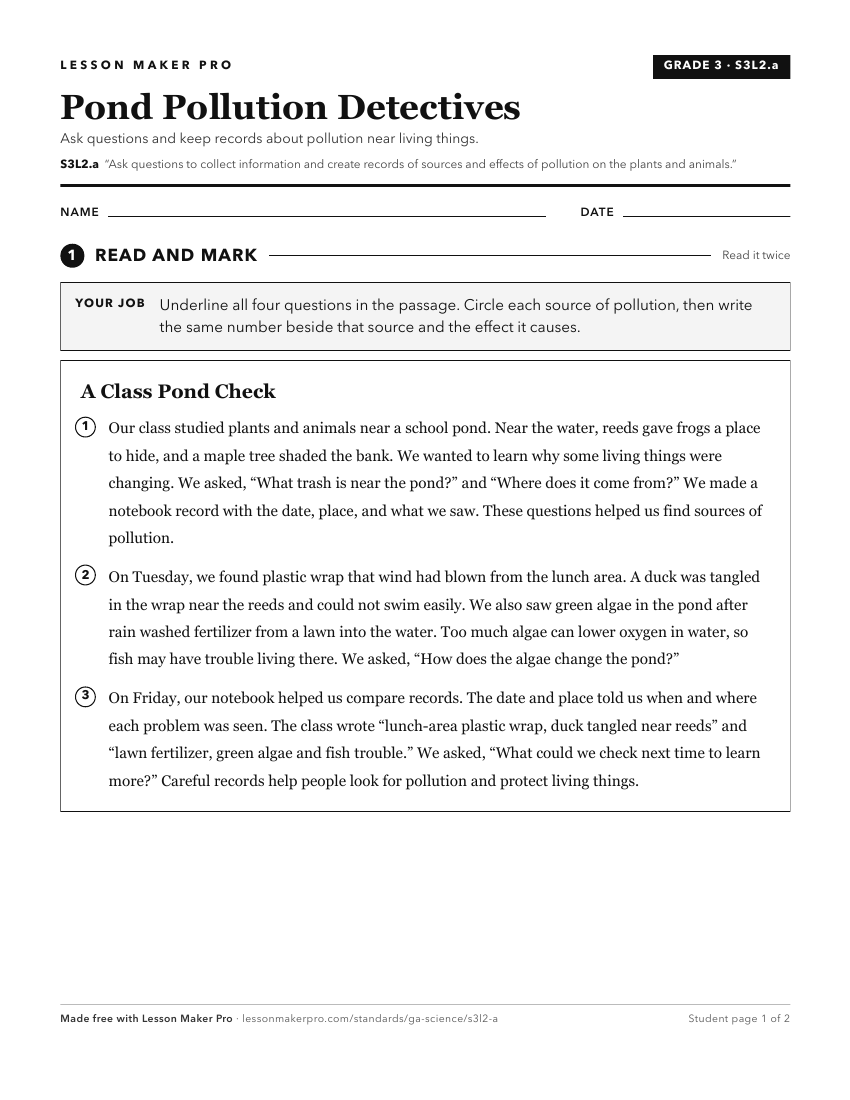
A ready-to-print activity worksheet aligned to S3L2.a, with an answer key for the teacher on its own page. No account needed.
PDF, US Letter, prints cleanly in black and white.
Download the worksheetKeep exploring
Related Standards
- S3L2
Obtain, evaluate, and communicate information about the effects of pollution (air, land, and water) and humans on the environment.
- S3L2.b
Explore, research, and communicate solutions, such as conservation of resources and recycling of materials, to protect plants and animals.
- S1L1
Obtain, evaluate, and communicate information about the basic needs of plants and animals.
- S2E3.a
Ask questions to obtain information about major changes to the environment in your community.
Turn this exact standard into a lesson
Grade, subject, topic, and the complete standard are prefilled. Create one free, no account needed.
Also for this standard:Make a WorksheetMake a QuizMake a Sub Lesson