Georgia S1P1.e
The Standard
- S1P1
- Obtain, evaluate, and communicate information to investigate light and sound.
Design a signal that can serve as an emergency alert using light and/or sound to communicate over a distance.
Georgia Standards of Excellence for Science · Obtain, evaluate, and communicate information to investigate light and sound.
Teacher's field guide
What This Standard Means
What Students Need to Do
- Students design a repeating light, sound, or combined signal that warns others about an emergency. They test whether another person can notice and understand it from a distance.
What Mastery Looks Like
- A student can create a clear signal, explain what emergency it means, and demonstrate it across the classroom. The student uses test results to make the signal easier to detect.
Common Misconceptions
- Students may make a signal once instead of using a repeated pattern, or choose a blocked light or quiet sound. They may think noticing a signal means knowing its message, even when no meaning was agreed on.
How to Assess It
- Exit ticket: Draw a repeating signal for a lost hiker to use after dark and label whether it uses light, sound, or both. Explain how someone far away would recognize it as an emergency.
Lesson moves
Ways to Teach It
Give pairs flashlights, cups, foil, and bells, then have them build and test an alert that a partner can detect across the room.
Ask, “Which signal was easiest to notice from far away, and what evidence from your test supports your answer?”
Play Signal Match: students draw an emergency card, choose a light or sound pattern, and classmates identify the intended message.
Compare a smoke alarm, ambulance siren, and flashing crossing light, then explain why each works when people are far away.
Free download
Printable S1P1.e Worksheet
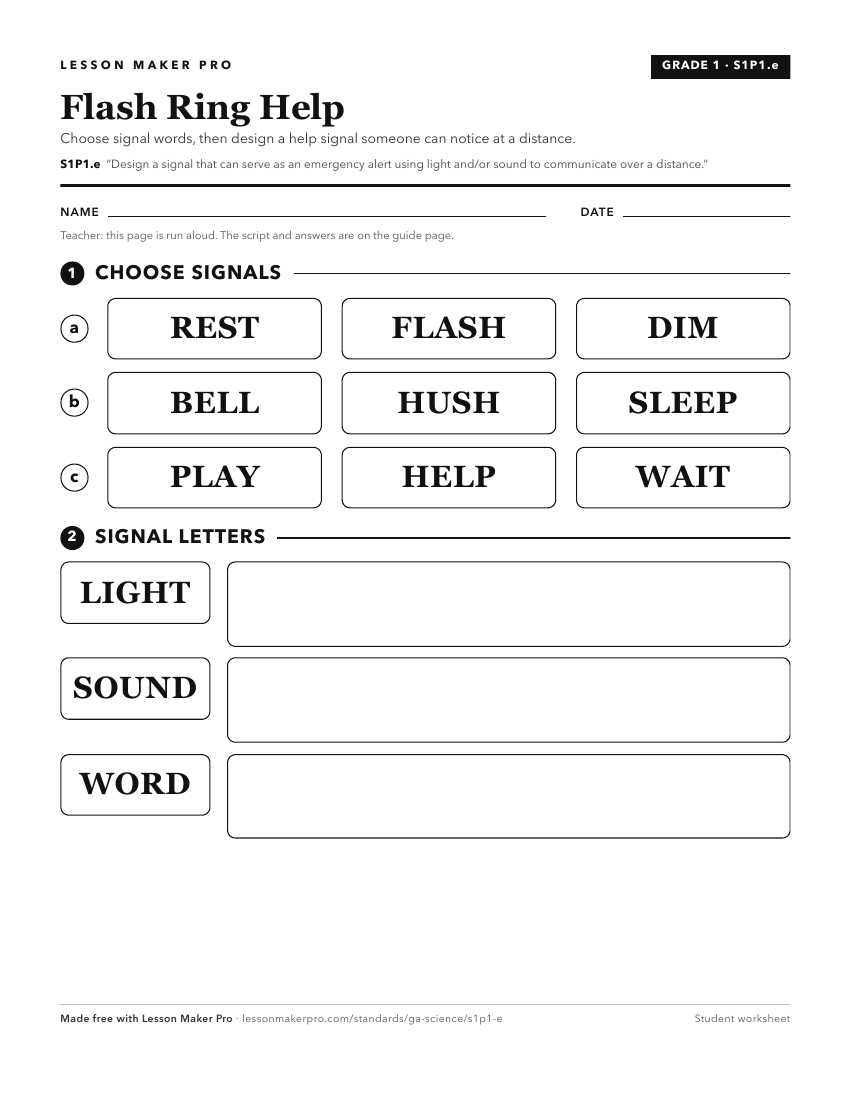
A ready-to-print activity worksheet aligned to S1P1.e, with an answer key for the teacher on its own page. No account needed.
PDF, US Letter, prints cleanly in black and white.
Download the worksheetKeep exploring
Related Standards
- S4P2.b
Design and construct a device to communicate across a distance using light and/or sound.
- S4P2
Obtain, evaluate, and communicate information about how sound is produced and changed and how sound and/or light can be used to communicate.
- S1P1
Obtain, evaluate, and communicate information to investigate light and sound.
- S8P4.c
Design a device to illustrate practical applications of the electromagnetic spectrum (e.g., communication, medical, military).
Turn this exact standard into a lesson
Grade, subject, topic, and the complete standard are prefilled. Create one free, no account needed.
Also for this standard:Make a WorksheetMake a QuizMake a Sub Lesson