Georgia S1E1.a
The Standard
- S1E1
- Obtain, evaluate, and communicate weather data to identify weather patterns.
Represent data in tables and/or graphs to identify and describe different types of weather and the characteristics of each type.
Georgia Standards of Excellence for Science · Obtain, evaluate, and communicate weather data to identify weather patterns.
Teacher's field guide
What This Standard Means
What Students Need to Do
- Record daily weather observations with words, symbols, or numbers. Organize the observations in a simple table or picture graph, then compare weather conditions.
What Mastery Looks Like
- A student can place observations in the correct categories and create a display with accurate totals. They can identify the most common, least common, or equal weather types and describe each one.
Common Misconceptions
- Students may assume hot always means sunny or cold always means snowy. They may count graph symbols incorrectly, ignore the key, or confuse a single day's weather with a season.
How to Assess It
- Give students this five-day record: sunny, rainy, sunny, cloudy, rainy. Ask them to make a picture graph, name two equally common types, and describe one characteristic of rainy weather.
Lesson moves
Ways to Teach It
Observe the sky each morning, record clouds, wind, and precipitation on cards, then add each card to a class weather graph.
Show photographs of sunny, rainy, cloudy, snowy, and windy days, then ask, "What evidence tells you the weather type?"
Give pairs weather cards to sort, tally, and graph, then award a point for each correct comparison statement.
Use a weekly weather graph to choose suitable clothing and decide whether recess activities should happen indoors or outdoors.
Free download
Printable S1E1.a Worksheet
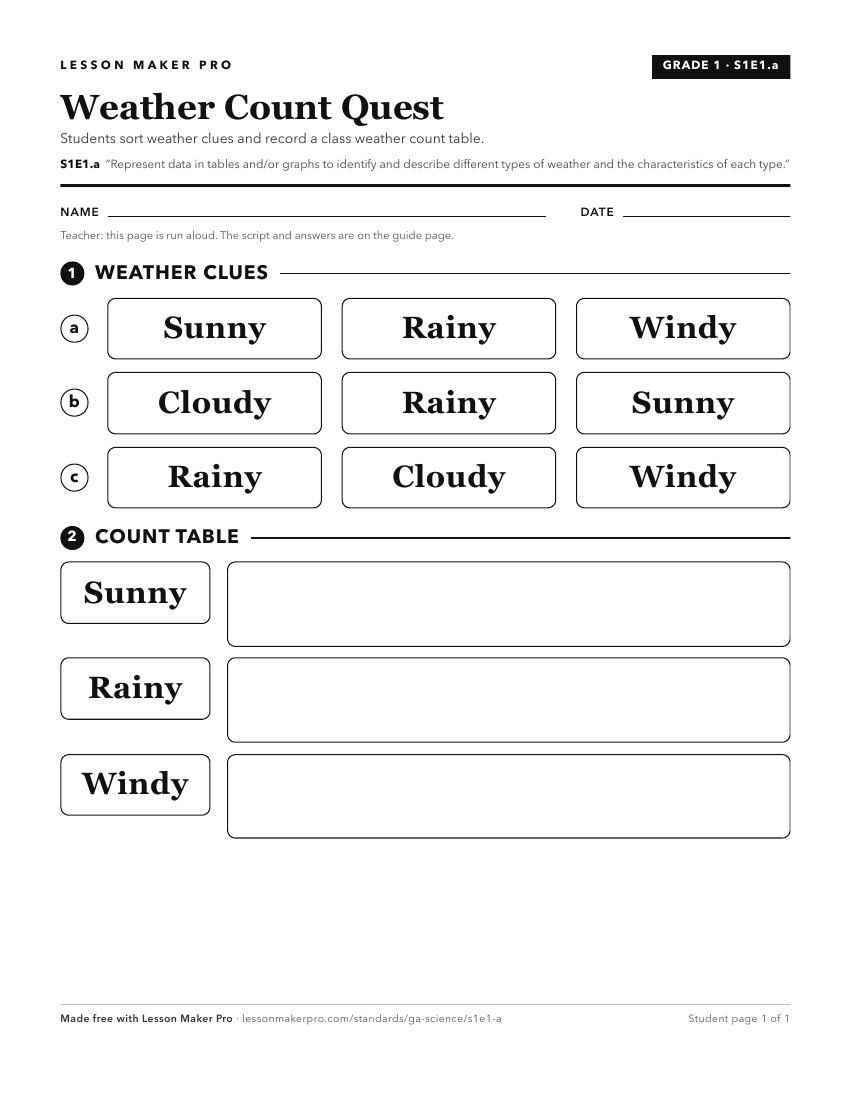
A ready-to-print activity worksheet aligned to S1E1.a, with an answer key for the teacher on its own page. No account needed.
PDF, US Letter, prints cleanly in black and white.
Download the worksheetKeep exploring
Related Standards
- S4E4
Obtain, evaluate, and communicate information to predict weather events and infer weather patterns using weather charts/maps and collected weather data.
- S1E1
Obtain, evaluate, and communicate weather data to identify weather patterns.
- S2E2.c
Represent data in tables and/or graphs of the length of the day and night to recognize the change in seasons.
- S1E1.c
Plan and carry out investigations on current weather conditions by observing, measuring with simple weather instruments (thermometer, wind vane, rain gauge), an...
Turn this exact standard into a lesson
Grade, subject, topic, and the complete standard are prefilled. Create one free, no account needed.
Also for this standard:Make a WorksheetMake a QuizMake a Sub Lesson