Georgia 3.T.SS.2.b
The Standard
Use figurative language, such as similes, metaphors, and idioms, to show relationships between ideas and information. (C)
Georgia's K-12 English Language Arts Standards · Texts (T) · Structure & Style
Teacher's field guide
What This Standard Means
What Students Need to Do
- Students use similes, metaphors, and idioms to connect ideas and make meaning clear. They explain what each phrase suggests and choose language that fits the relationship.
What Mastery Looks Like
- Students choose a simile, metaphor, or idiom that clearly connects two ideas. They can explain the intended meaning and revise wording that is confusing or too literal.
Common Misconceptions
- Students may think every comparison is a simile, even without “like” or “as.” They may read idioms literally or add figurative language that does not fit the ideas being connected.
How to Assess It
- Give students two ideas, such as a busy cafeteria and a beehive. Ask them to write one simile or metaphor and explain the connection.
Lesson moves
Ways to Teach It
Give groups picture cards to pair, then have them write a simile or metaphor showing a clear relationship between each pair.
Ask students to explain how “The classroom was a zoo” connects classroom behavior to a zoo without meaning it literally.
Play Figurative Language Match, where students pair similes, metaphors, and idioms with their meanings and justify each match.
Collect figurative phrases from songs, sports reports, or advertisements, then discuss what connection each phrase helps the audience understand.
Free download
Printable 3.T.SS.2.b Worksheet
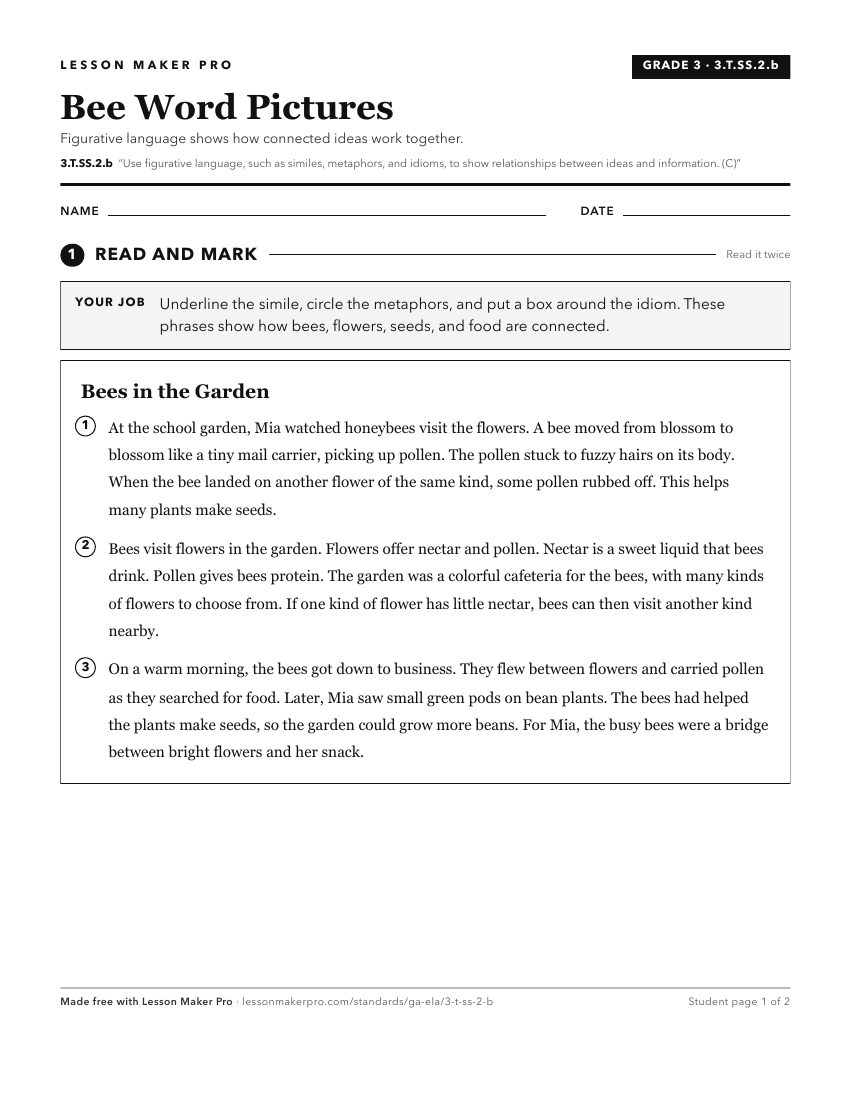
A ready-to-print activity worksheet aligned to 3.T.SS.2.b, with an answer key for the teacher on its own page. No account needed.
PDF, US Letter, prints cleanly in black and white.
Download the worksheetKeep exploring
Related Standards
- 5.T.SS.2.b
Use figurative language for intentional effects when expressing ideas or conveying information. (C)
- 5.T.SS.1.c
Use conjunctions and transition words or phrases, such as similarly and in contrast, to show relationships between ideas and information. (C)
- 4.T.SS.2.b
Use figurative language for intentional effects when expressing ideas or conveying information. (C)
- 3.T.SS.2.a
Identify and describe the use of figurative language, such as similes, metaphors, and idioms in a wide variety of texts. (I)
Turn this exact standard into a lesson
Grade, subject, topic, and the complete standard are prefilled. Create one free, no account needed.
Also for this standard:Make a WorksheetMake a QuizMake a Sub Lesson