Georgia 3.T.SS.2.a
The Standard
Identify and describe the use of figurative language, such as similes, metaphors, and idioms in a wide variety of texts. (I)
Georgia's K-12 English Language Arts Standards · Texts (T) · Structure & Style
Teacher's field guide
What This Standard Means
What Students Need to Do
- Students find similes, metaphors, and idioms in different kinds of texts. They name each type and explain what the phrase means and why the writer used it.
What Mastery Looks Like
- Students correctly label similes, metaphors, and idioms in stories, poems, and informational texts. They explain what each phrase means and how it helps create an image, feeling, or idea.
Common Misconceptions
- Students may treat idioms literally, such as thinking “hold your horses” involves real horses. They may confuse similes with metaphors or label a phrase without explaining its intended meaning.
How to Assess It
- Give students these lines: “The lake was glass,” “She ran like lightning,” and “I have butterflies in my stomach.” Ask them to label each phrase and explain its meaning.
Lesson moves
Ways to Teach It
Have students sort sentence strips into literal language, similes, metaphors, and idioms, then write the intended meaning under each figurative example.
Compare “The rain fell hard” with “The rain fell like pebbles,” then discuss how the simile changes the image and mood.
Play figurative language bingo by reading examples aloud and requiring students to explain one covered square before calling bingo.
Collect idioms from advertisements, sports commentary, or family conversations, then rewrite each one in clear, literal language.
Free download
Printable 3.T.SS.2.a Worksheet
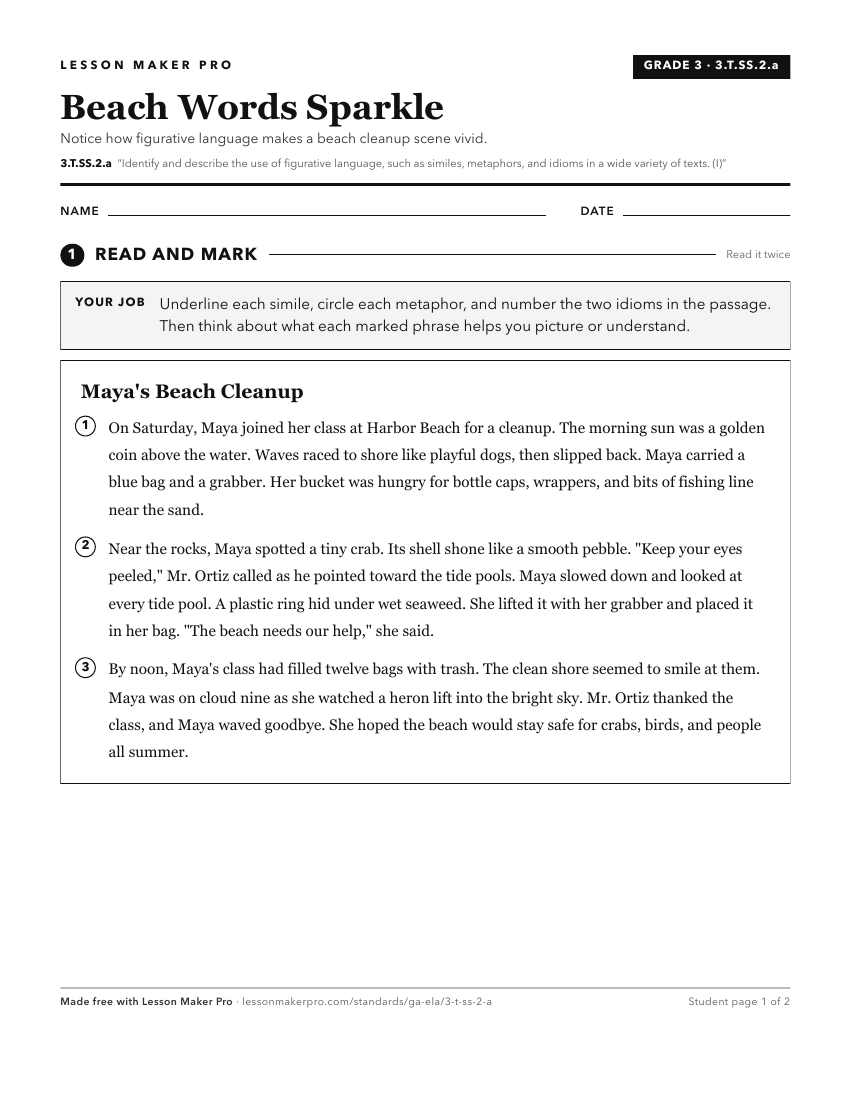
A ready-to-print activity worksheet aligned to 3.T.SS.2.a, with an answer key for the teacher on its own page. No account needed.
PDF, US Letter, prints cleanly in black and white.
Download the worksheetKeep exploring
Related Standards
- 2.T.SS.2.a
Identify the difference between literal and nonliteral or figurative language in texts. (I)
- 4.T.SS.2.a
Identify and explain how figurative language, such as hyperboles and personification, shapes how ideas and information in texts are understood. (I)
- 3.T.SS.2.b
Use figurative language, such as similes, metaphors, and idioms, to show relationships between ideas and information. (C)
- 5.T.SS.2.a
Describe the impact of the use of figurative language such as similes, metaphors, idioms, hyperboles, and personification in response to audience and purpose, i...
Turn this exact standard into a lesson
Grade, subject, topic, and the complete standard are prefilled. Create one free, no account needed.
Also for this standard:Make a WorksheetMake a QuizMake a Sub Lesson