Georgia 2.T.SS.2.a
The Standard
Identify the difference between literal and nonliteral or figurative language in texts. (I)
Georgia's K-12 English Language Arts Standards · Texts (T) · Structure & Style
Teacher's field guide
What This Standard Means
What Students Need to Do
- Students decide whether words mean exactly what they say or create an imaginative comparison or image. They explain familiar figurative phrases in literal language.
What Mastery Looks Like
- Students correctly sort examples as literal or figurative. They explain the intended meaning of a familiar figurative phrase using clear, literal words.
Common Misconceptions
- Students may interpret every phrase word for word, such as picturing actual raining cats and dogs. They may also label any vivid description as figurative language.
How to Assess It
- Give students two sentences: “The baby is a night owl” and “The baby stays awake late.” Ask which is figurative and what it means.
Lesson moves
Ways to Teach It
Have pairs sort sentence cards into literal and figurative hoops, then explain the clue that helped with each choice.
Read “Her smile was sunshine” and ask students to write what the author means and why the phrase is not literal.
Play Figurative Phrase Match by pairing cards such as “busy as a bee” with cards showing their intended meanings.
Collect figurative phrases from songs, ads, or sports reports, then rewrite each phrase as a literal sentence.
Free download
Printable 2.T.SS.2.a Worksheet
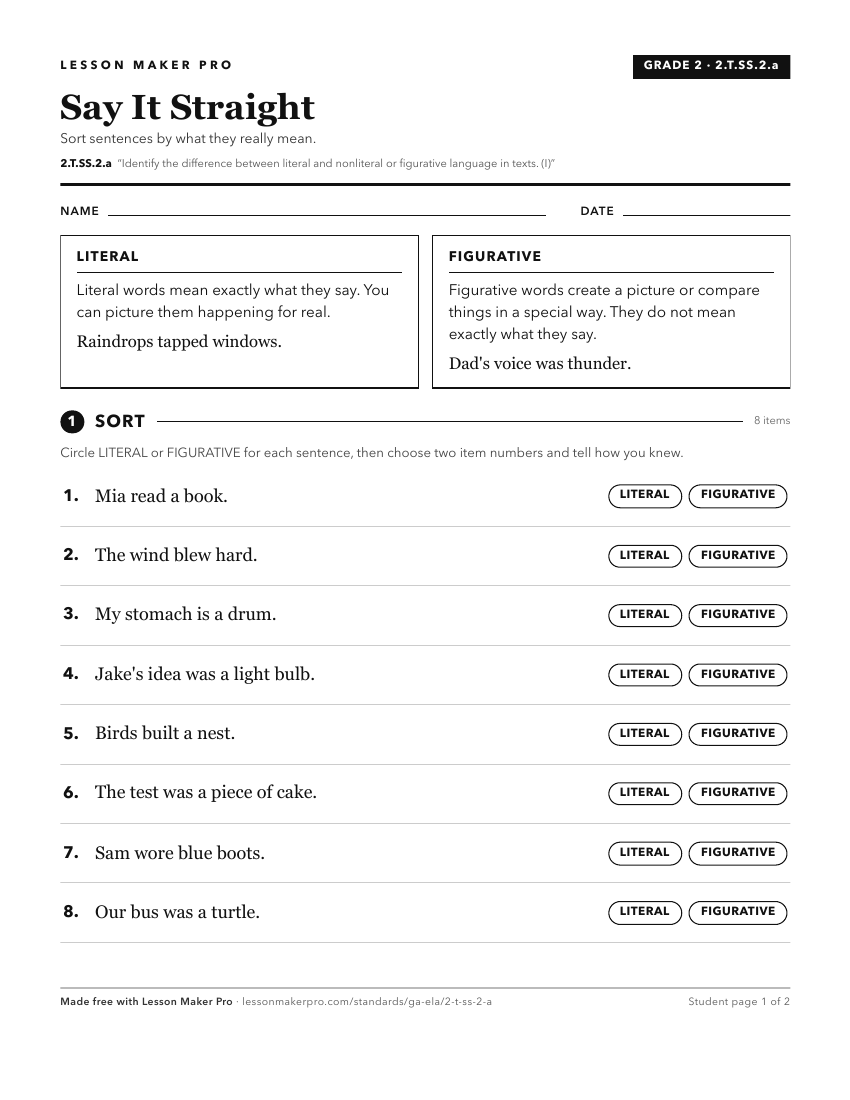
A ready-to-print activity worksheet aligned to 2.T.SS.2.a, with an answer key for the teacher on its own page. No account needed.
PDF, US Letter, prints cleanly in black and white.
Download the worksheetKeep exploring
Related Standards
- 4.T.SS.2.a
Identify and explain how figurative language, such as hyperboles and personification, shapes how ideas and information in texts are understood. (I)
- 6.T.SS.2.a
Determine how figurative and connotative language choices contribute to meaning, mood, or tone in a wide variety of texts. (I)
- 3.T.SS.2.a
Identify and describe the use of figurative language, such as similes, metaphors, and idioms in a wide variety of texts. (I)
- 7.T.SS.2.a
Explain how figurative language, connotative language, and/or literary device choices contribute to meaning, mood, or tone in a wide variety of texts. (I)
Turn this exact standard into a lesson
Grade, subject, topic, and the complete standard are prefilled. Create one free, no account needed.
Also for this standard:Make a WorksheetMake a QuizMake a Sub Lesson