Georgia 6.T.SS.2.a
The Standard
Determine how figurative and connotative language choices contribute to meaning, mood, or tone in a wide variety of texts. (I)
Georgia's K-12 English Language Arts Standards · Texts (T) · Structure & Style
Teacher's field guide
What This Standard Means
What Students Need to Do
- Students interpret figurative phrases and words with strong associations. They explain how those choices shape a text’s message, atmosphere, or speaker’s attitude.
What Mastery Looks Like
- Students select a specific word or phrase and explain both its suggested meaning and its effect. They support their explanation with context from the text.
Common Misconceptions
- Students may label a simile or metaphor without explaining its effect. They may confuse mood with tone, or treat connotations as fixed rather than shaped by context.
How to Assess It
- Give students a four-line poem with one figurative phrase. Ask them to explain what it suggests and how it shapes the mood or tone.
Lesson moves
Ways to Teach It
Give pairs phrase cards and mood cards, then have them match each phrase to a mood and defend the match with textual clues.
Ask students to rewrite a neutral sentence to sound threatening, hopeful, and humorous, then explain which word choices created each tone.
Play Connotation Sort by grouping words such as slim, skinny, and scrawny as positive, neutral, or negative, with points for explanations.
Compare headlines about the same event and identify how loaded words shape readers’ feelings about the people or actions described.
Free download
Printable 6.T.SS.2.a Worksheet
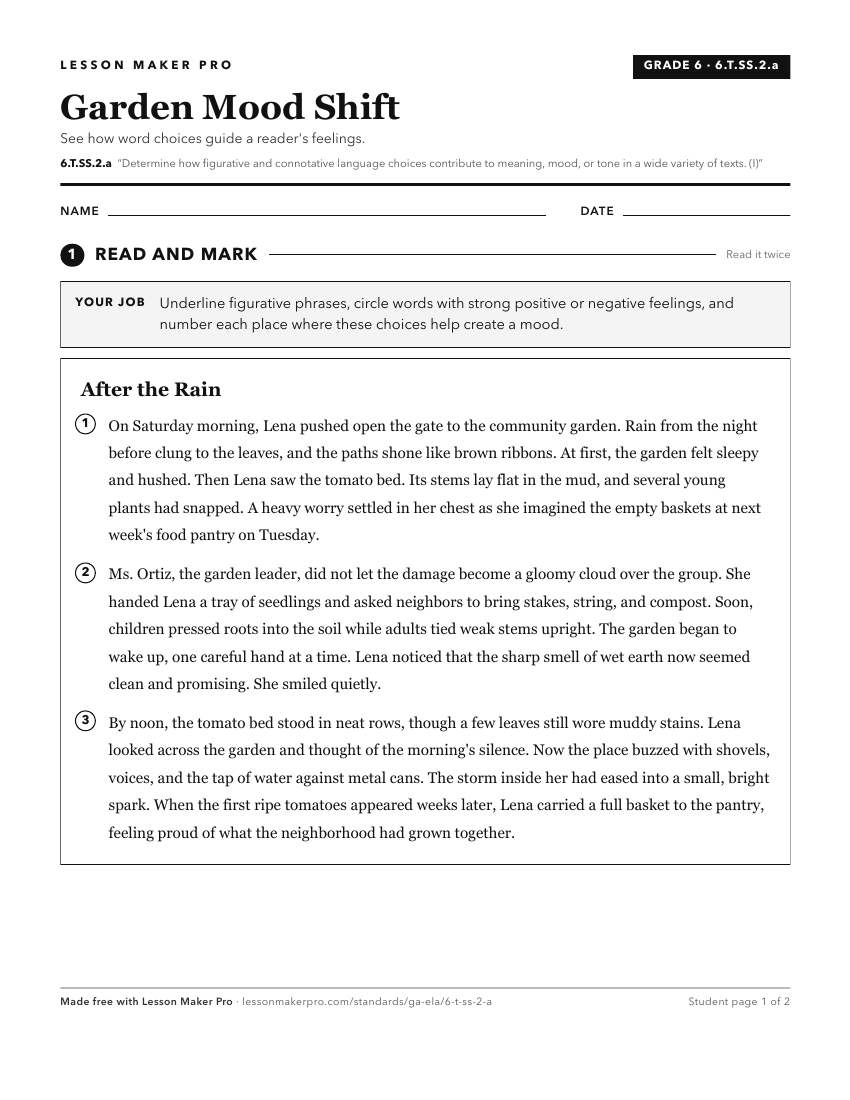
A ready-to-print activity worksheet aligned to 6.T.SS.2.a, with an answer key for the teacher on its own page. No account needed.
PDF, US Letter, prints cleanly in black and white.
Download the worksheetKeep exploring
Related Standards
- 11.T.SS.2.a
Analyze and evaluate how the use of figurative, connotative, and/or rhetorical language contributes to the development of meaning, tone, or mood in line with th...
- 10.T.SS.2.a
Analyze how the use of figurative, connotative, and/or rhetorical language contributes to the development of meaning, tone, or mood in a wide variety of texts. ...
- 7.T.SS.2.a
Explain how figurative language, connotative language, and/or literary device choices contribute to meaning, mood, or tone in a wide variety of texts. (I)
- 9.T.SS.2.a
Analyze how the use of figurative, connotative, and/or rhetorical language contributes to the development of meaning, tone, or mood in a wide variety of texts. ...
Turn this exact standard into a lesson
Grade, subject, topic, and the complete standard are prefilled. Create one free, no account needed.
Also for this standard:Make a WorksheetMake a QuizMake a Sub Lesson