Georgia 9.T.SS.2.a
The Standard
Analyze how the use of figurative, connotative, and/or rhetorical language contributes to the development of meaning, tone, or mood in a wide variety of texts. (I)
Georgia's K-12 English Language Arts Standards · Texts (T) · Structure & Style
Teacher's field guide
What This Standard Means
What Students Need to Do
- Students locate purposeful language choices in poems, stories, speeches, articles, and other texts. They explain how particular words or patterns shape meaning, tone, or mood, using evidence from the text.
What Mastery Looks Like
- A student selects an exact phrase and explains how its associations or pattern affect the reader. The explanation links the language choice to a specific meaning, tone, or mood rather than saying it “adds detail.”
Common Misconceptions
- Students may confuse tone, the writer’s attitude, with mood, the reader’s feeling. They often name a device without explaining its effect, or discuss only a word’s dictionary meaning.
How to Assess It
- Use this exit prompt: “In ‘The city swallowed the last light,’ explain how the wording shapes meaning and mood. Cite one phrase.”
Lesson moves
Ways to Teach It
Give pairs a printed speech to color-code figurative phrases, loaded words, and repeated patterns, then label each effect.
Ask students to compare two versions of a paragraph and write which creates a more tense mood and why.
Play an effect-matching card sort using short quotations and cards labeled with tones, moods, meanings, and supporting explanations.
Have students rewrite an advertisement or headline in neutral language, then explain how the original wording shaped the audience’s response.
Free download
Printable 9.T.SS.2.a Worksheet
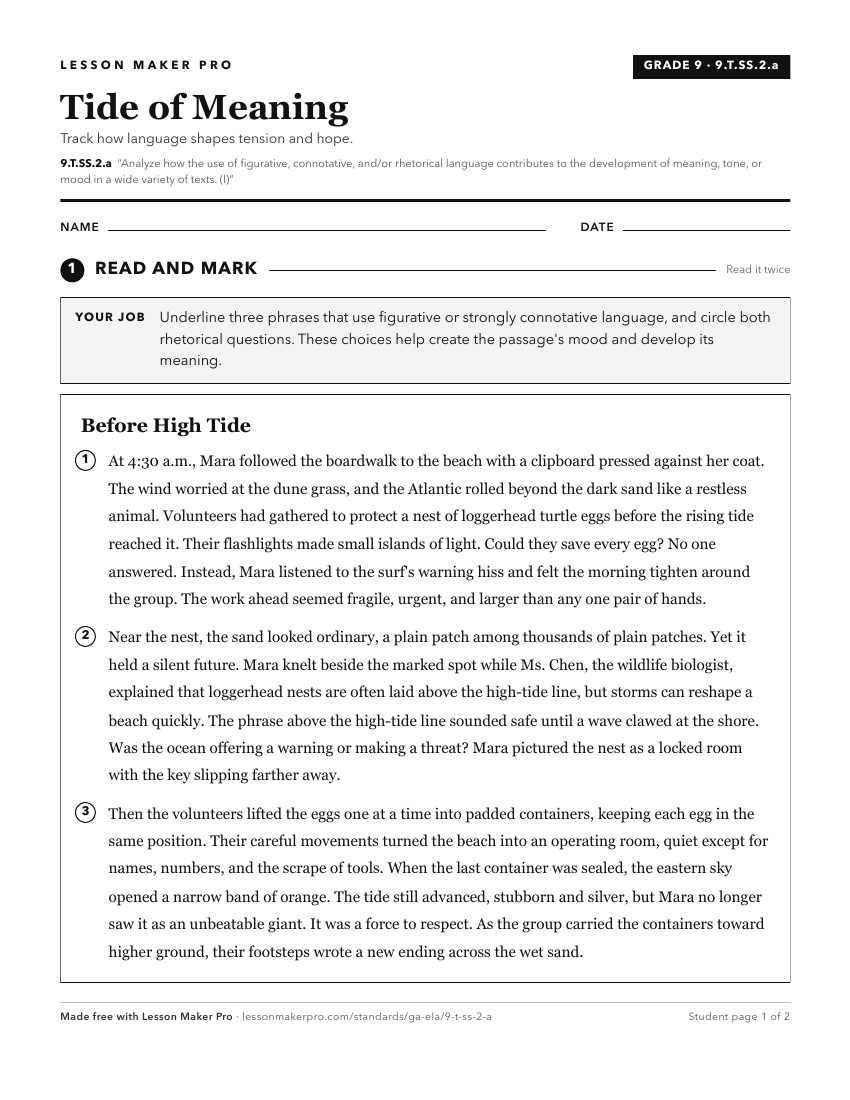
A ready-to-print activity worksheet aligned to 9.T.SS.2.a, with an answer key for the teacher on its own page. No account needed.
PDF, US Letter, prints cleanly in black and white.
Download the worksheetKeep exploring
Related Standards
- 12.T.SS.2.a
Analyze and evaluate how the use of figurative, connotative, and/or rhetorical language contributes to the development of meaning, tone, or mood in line with th...
- 11.T.SS.2.a
Analyze and evaluate how the use of figurative, connotative, and/or rhetorical language contributes to the development of meaning, tone, or mood in line with th...
- 6.T.SS.2.a
Determine how figurative and connotative language choices contribute to meaning, mood, or tone in a wide variety of texts. (I)
- 10.T.SS.2.a
The 10th Grade version of this standard.
Turn this exact standard into a lesson
Grade, subject, topic, and the complete standard are prefilled. Create one free, no account needed.
Also for this standard:Make a WorksheetMake a QuizMake a Sub Lesson