Georgia 12.T.SS.2.a
The Standard
Analyze and evaluate how the use of figurative, connotative, and/or rhetorical language contributes to the development of meaning, tone, or mood in line with the intended purpose. (I)
Georgia's K-12 English Language Arts Standards · Texts (T) · Structure & Style
Teacher's field guide
What This Standard Means
What Students Need to Do
- Students examine how a writer’s language choices shape what a text means and how it feels. They connect specific choices to the writer’s purpose and evaluate whether those choices work.
What Mastery Looks Like
- Students select precise words or phrases and explain their effect in context. They judge whether those choices effectively support the writer’s meaning, tone, mood, and purpose.
Common Misconceptions
- Students may label a device without explaining its effect. They may also confuse tone with mood, or treat connotations as fixed rather than shaped by context.
How to Assess It
- Give students a short speech excerpt with one phrase underlined. Ask: “What does this language suggest, and how does it support the speaker’s tone and purpose?”
Lesson moves
Ways to Teach It
Give pairs three highlighters to mark figurative language, loaded words, and rhetorical moves in a short editorial, then annotate each effect.
Discuss: How would replacing one charged word with a neutral synonym change the writer’s tone, audience response, and purpose?
Play Effect Match by pairing quoted phrases with effect cards, then require teams to defend each match using context.
Compare language from two advertisements for the same product and write which one better influences its intended audience and why.
Free download
Printable 12.T.SS.2.a Worksheet
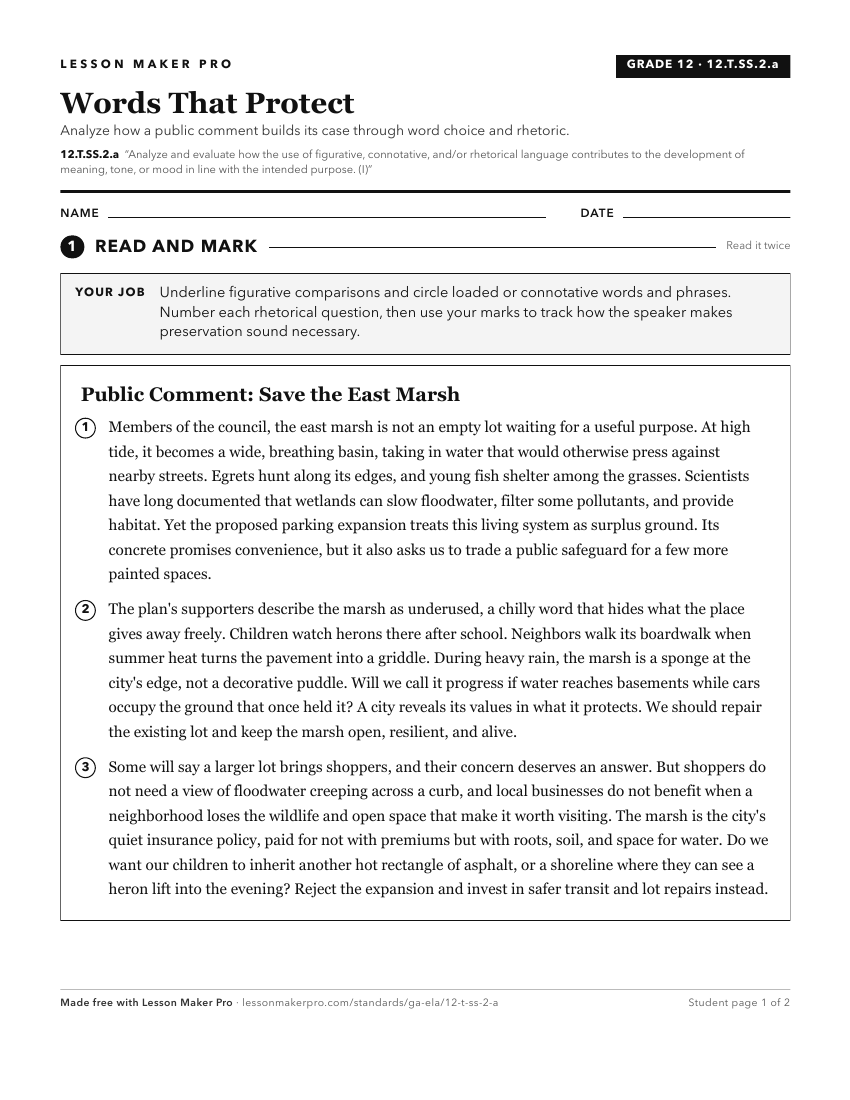
A ready-to-print activity worksheet aligned to 12.T.SS.2.a, with an answer key for the teacher on its own page. No account needed.
PDF, US Letter, prints cleanly in black and white.
Download the worksheetKeep exploring
Related Standards
- 11.T.SS.2.a
The 11th Grade version of this standard.
- 6.T.SS.2.a
Determine how figurative and connotative language choices contribute to meaning, mood, or tone in a wide variety of texts. (I)
- 10.T.SS.2.a
Analyze how the use of figurative, connotative, and/or rhetorical language contributes to the development of meaning, tone, or mood in a wide variety of texts. ...
- 9.T.SS.2.a
Analyze how the use of figurative, connotative, and/or rhetorical language contributes to the development of meaning, tone, or mood in a wide variety of texts. ...
Turn this exact standard into a lesson
Grade, subject, topic, and the complete standard are prefilled. Create one free, no account needed.
Also for this standard:Make a WorksheetMake a QuizMake a Sub Lesson