Georgia 5.T.SS.2.a
The Standard
Describe the impact of the use of figurative language such as similes, metaphors, idioms, hyperboles, and personification in response to audience and purpose, in various modes and genres. (I)
Georgia's K-12 English Language Arts Standards · Texts (T) · Structure & Style
Teacher's field guide
What This Standard Means
What Students Need to Do
- Students find similes, metaphors, idioms, hyperbole, and personification in different kinds of texts. They explain why an author used each phrase and how it shapes the audience’s response.
What Mastery Looks Like
- Students correctly identify common types of figurative language in stories, poems, speeches, and media. They explain how a specific phrase creates an image, mood, emphasis, or appeal for a particular audience and purpose.
Common Misconceptions
- Students may identify a device but only say it makes writing “better” or “more interesting.” They may interpret idioms literally, confuse similes with metaphors, or assume personification applies only to animals.
How to Assess It
- Give students a short advertisement containing one metaphor and one hyperbole. Ask them to name each device and explain how it affects the intended audience.
Lesson moves
Ways to Teach It
Give pairs figurative phrases on cards to sort by type, then match each phrase to its likely effect on a reader.
Ask students to rewrite “The rain fell hard” for a scary story and a weather advertisement, then explain their choices.
Play Figurative Language Detective, where teams identify devices in short passages and earn a point only after explaining each device’s effect.
Compare figurative language in a cereal commercial and a product label, then discuss how each text targets its audience differently.
Free download
Printable 5.T.SS.2.a Worksheet
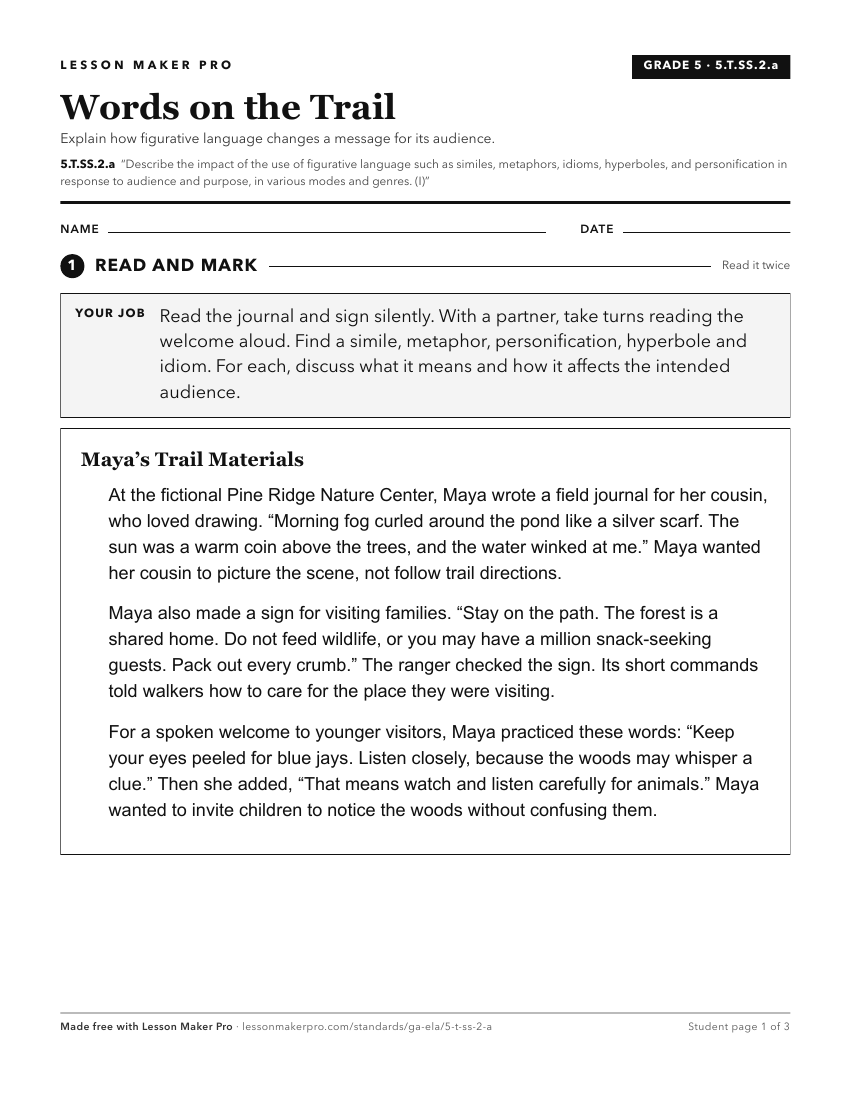
A ready-to-print activity worksheet aligned to 5.T.SS.2.a, with an answer key for the teacher on its own page. No account needed.
PDF, US Letter, prints cleanly in black and white.
Download the worksheetKeep exploring
Related Standards
- 4.T.SS.2.a
Identify and explain how figurative language, such as hyperboles and personification, shapes how ideas and information in texts are understood. (I)
- 8.T.SS.2.a
Analyze how figurative language, connotative language, and/or literary device choices are used strategically to achieve specific purposes for target audiences. ...
- 3.T.SS.2.a
Identify and describe the use of figurative language, such as similes, metaphors, and idioms in a wide variety of texts. (I)
- 10.T.SS.2.a
Analyze how the use of figurative, connotative, and/or rhetorical language contributes to the development of meaning, tone, or mood in a wide variety of texts. ...
Turn this exact standard into a lesson
Grade, subject, topic, and the complete standard are prefilled. Create one free, no account needed.
Also for this standard:Make a WorksheetMake a QuizMake a Sub Lesson