Georgia 8.T.SS.2.a
The Standard
Analyze how figurative language, connotative language, and/or literary device choices are used strategically to achieve specific purposes for target audiences. (I)
Georgia's K-12 English Language Arts Standards · Texts (T) · Structure & Style
Teacher's field guide
What This Standard Means
What Students Need to Do
- Students identify figurative language, loaded words, and literary devices in a text. They explain how each choice shapes meaning, influences a target audience, and supports the author’s purpose.
What Mastery Looks Like
- Students accurately identify a device or loaded word and describe the response it may create. They cite specific language and explain why it fits the author’s purpose and intended audience.
Common Misconceptions
- Students often name a device but do not explain its effect. They may treat connotations as fixed or claim a phrase affects every audience in the same way. Some confuse the author’s purpose with the text’s topic.
How to Assess It
- Exit ticket: Read “The city coughed awake beneath a blanket of smog” from a teen environmental campaign. Explain how one language choice supports the campaign’s purpose and audience.
Lesson moves
Ways to Teach It
Give pairs printed song lyrics and two highlighters; mark figurative phrases in one color and audience effects in the other.
Write: “Why might an author call protesters ‘a wave’ rather than ‘a crowd’ when addressing young activists?” Cite one word.
Play Purpose Match: students pair device cards with audience and purpose cards, then defend each match using a sentence frame.
Compare two public service posters on the same issue and explain how each slogan targets a different audience.
Free download
Printable 8.T.SS.2.a Worksheet
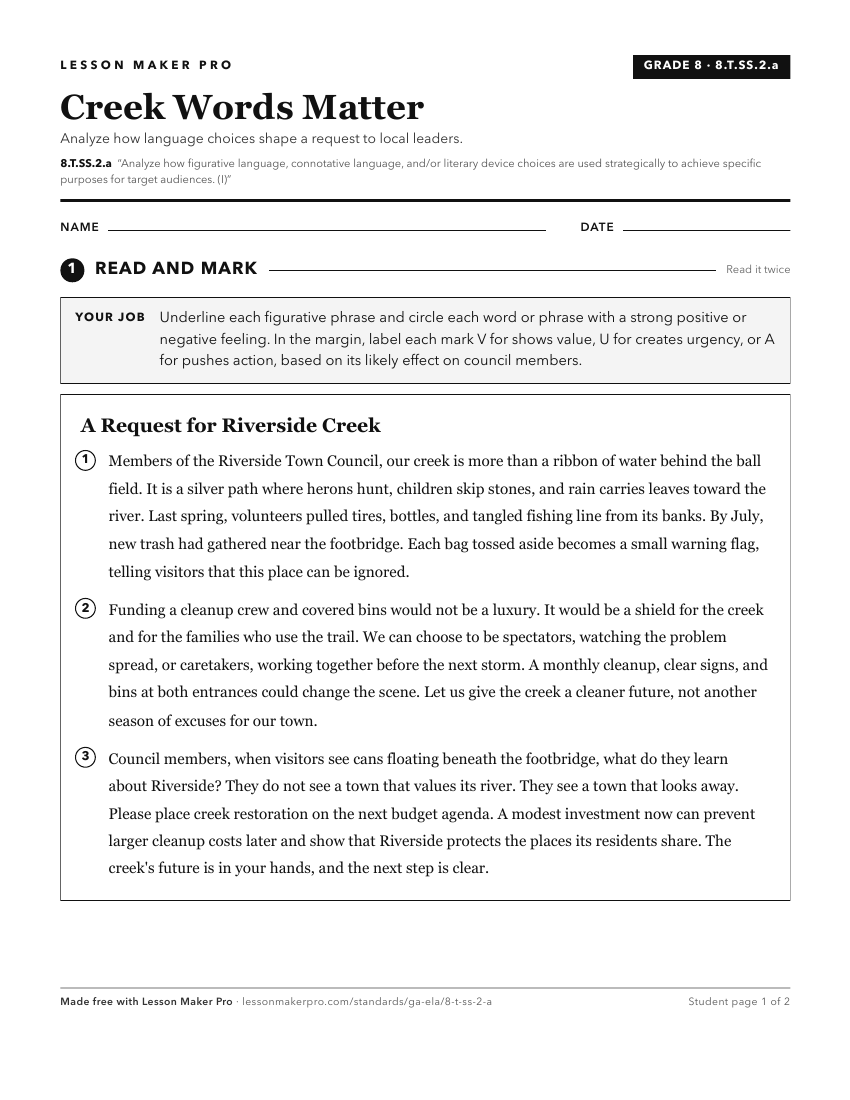
A ready-to-print activity worksheet aligned to 8.T.SS.2.a, with an answer key for the teacher on its own page. No account needed.
PDF, US Letter, prints cleanly in black and white.
Download the worksheetKeep exploring
Related Standards
- 12.T.SS.2.a
Analyze and evaluate how the use of figurative, connotative, and/or rhetorical language contributes to the development of meaning, tone, or mood in line with th...
- 11.T.SS.2.a
Analyze and evaluate how the use of figurative, connotative, and/or rhetorical language contributes to the development of meaning, tone, or mood in line with th...
- 10.T.SS.2.a
Analyze how the use of figurative, connotative, and/or rhetorical language contributes to the development of meaning, tone, or mood in a wide variety of texts. ...
- 9.T.SS.2.a
Analyze how the use of figurative, connotative, and/or rhetorical language contributes to the development of meaning, tone, or mood in a wide variety of texts. ...
Turn this exact standard into a lesson
Grade, subject, topic, and the complete standard are prefilled. Create one free, no account needed.
Also for this standard:Make a WorksheetMake a QuizMake a Sub Lesson