Florida SS.8.A.3.8
The Standard
- SS.8.A.3
- Demonstrate an understanding of the causes, course and consequences of the American Revolution and the founding principles of our nation.
Examine individuals and groups that affected political and social motivations during the American Revolution.
Florida Next Generation Sunshine State Standards for Social Studies
Teacher's field guide
What This Standard Means
What Students Need to Do
- Students identify key people and groups involved in the American Revolution. They explain each viewpoint, motivation, action, and effect using evidence from primary and secondary sources.
What Mastery Looks Like
- Given a short source, a student identifies the viewpoint, states the political or social goal, and cites a phrase as evidence. The student compares viewpoints and explains how actions changed support for independence.
Common Misconceptions
- Students may assume all colonists supported independence or that Patriots shared the same motives. They may treat Native nations, women, and Black Americans as unified groups rather than people with different goals and choices.
How to Assess It
- Give students a short quotation from Thomas Paine, Abigail Adams, or a Loyalist. Ask them to name the viewpoint, identify one motivation, and underline supporting evidence.
Lesson moves
Ways to Teach It
Students sort quotation cards from Thomas Paine, Abigail Adams, Loyalists, enslaved people, and Native nations by speaker, motive, and intended audience.
Discuss: Which person or group most changed support for independence, and what evidence from two sources supports your claim?
Play a matching game that pairs figures and groups with goals, actions, and effects, then defend one disputed match.
Compare a revolutionary pamphlet with a current advocacy post, noting how each uses audience, grievance, and identity to motivate action.
Free download
Printable SS.8.A.3.8 Worksheet
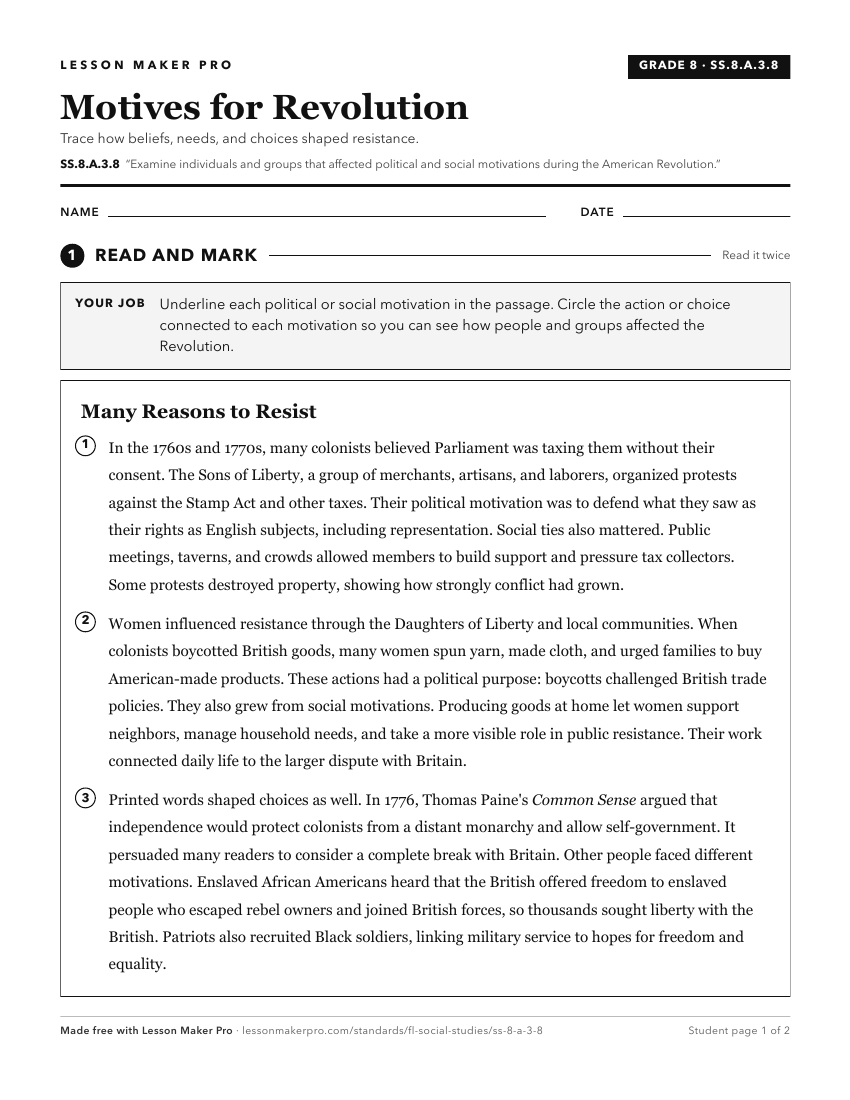
A ready-to-print activity worksheet aligned to SS.8.A.3.8, with an answer key for the teacher on its own page. No account needed.
PDF, US Letter, prints cleanly in black and white.
Download the worksheetKeep exploring
Related Standards
- SS.8.A.3.4
Examine the contributions of influential groups to both the American and British war efforts during the American Revolutionary War and their effects on the outc...
- SS.8.A.3.6
Examine the causes, course, and consequences of the American Revolution.
- SS.5.A.5.4
Examine and explain the changing roles and impact of significant women during the American Revolution.
- SS.5.A.5.2
Identify significant individuals and groups who played a role in the American Revolution.
Turn this exact standard into a lesson
Grade, subject, topic, and the complete standard are prefilled. Create one free, no account needed.
Also for this standard:Make a WorksheetMake a QuizMake a Sub Lesson