Florida SS.5.A.5.4
The Standard
- SS.5.A.5
- American Revolution and Birth of a New Nation
Examine and explain the changing roles and impact of significant women during the American Revolution.
Florida Next Generation Sunshine State Standards for Social Studies
Teacher's field guide
What This Standard Means
What Students Need to Do
- Students identify how women worked as writers, organizers, soldiers, spies, nurses, and managers of farms and businesses. They explain how these roles supported the war and challenged some ideas about women.
What Mastery Looks Like
- Students can describe the contributions of women such as Abigail Adams, Mercy Otis Warren, Phillis Wheatley, and Deborah Sampson. They use source details to explain each woman’s influence and how her role changed during the war.
Common Misconceptions
- Students may think women only stayed home or served as nurses. They may assume all women supported independence or gained equal rights after the war. They may also repeat popular stories without checking the evidence.
How to Assess It
- Exit ticket: Choose one woman studied. Describe her role, explain how it changed during the war, and name one impact she had.
Lesson moves
Ways to Teach It
Have groups sort picture and text cards showing women as writers, soldiers, spies, nurses, and farm managers, then explain each contribution.
Ask students to write: How did war create new responsibilities for women, and which changes lasted after independence?
Play Who Am I? using clue cards for Abigail Adams, Mercy Otis Warren, Phillis Wheatley, Deborah Sampson, and women spies.
Compare women’s wartime work with modern civilian roles during emergencies, then list one similarity and one difference.
Free download
Printable SS.5.A.5.4 Worksheet
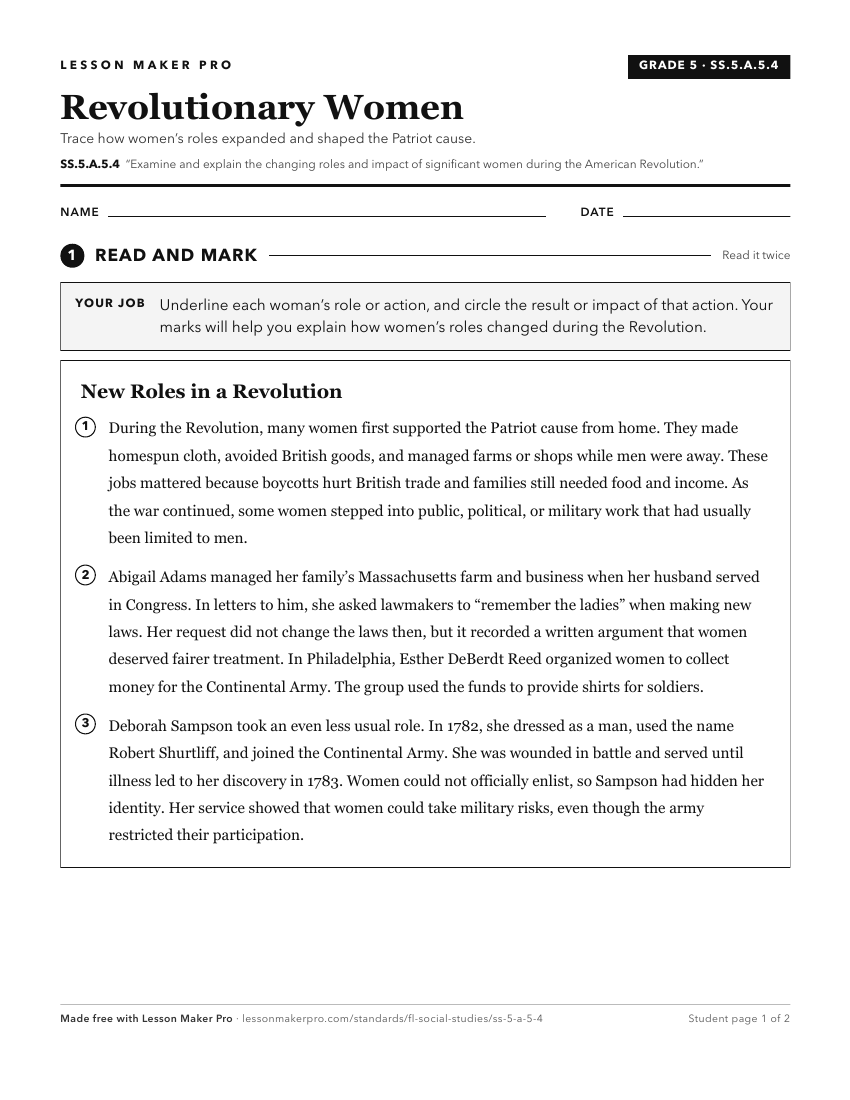
A ready-to-print activity worksheet aligned to SS.5.A.5.4, with an answer key for the teacher on its own page. No account needed.
PDF, US Letter, prints cleanly in black and white.
Download the worksheetKeep exploring
Related Standards
- SS.8.A.3.4
Examine the contributions of influential groups to both the American and British war efforts during the American Revolutionary War and their effects on the outc...
- SS.8.A.3.6
Examine the causes, course, and consequences of the American Revolution.
- SS.5.A.5.2
Identify significant individuals and groups who played a role in the American Revolution.
- SS.8.A.3.8
Examine individuals and groups that affected political and social motivations during the American Revolution.
Turn this exact standard into a lesson
Grade, subject, topic, and the complete standard are prefilled. Create one free, no account needed.
Also for this standard:Make a WorksheetMake a QuizMake a Sub Lesson