Florida SS.5.AA.1.4
The Standard
- SS.5.AA.1
- Resiliency, contributions, and influence of African Americans on the United States beginning in the colonial era through westward expansion.
Identify freedoms and rights secured for and by former slaves.
Florida Next Generation Sunshine State Standards for Social Studies
Teacher's field guide
What This Standard Means
What Students Need to Do
- Students connect emancipation, citizenship, equal protection, and voting protections to Reconstruction laws and amendments. They explain how formerly enslaved people organized, voted, held office, and pressed government to protect these rights.
What Mastery Looks Like
- Students can match the Thirteenth, Fourteenth, and Fifteenth Amendments with the freedom or right each protected. They can give an example of Black Americans working to claim those protections.
Common Misconceptions
- Students may think emancipation automatically provided citizenship, voting rights, and equal treatment. They may also assume the Fifteenth Amendment protected women's voting rights or that new legal rights ended discrimination immediately.
How to Assess It
- Give students three scenarios involving freedom, citizenship, and voting. Ask them to name the amendment connected to each scenario and explain one answer.
Lesson moves
Ways to Teach It
Have pairs sort amendment cards, right cards, and Reconstruction scenario cards into matching groups, then defend each match.
Ask students to write: How did formerly enslaved people help turn legal rights into rights people could actually use?
Play a matching relay where teams connect Reconstruction amendments, protected rights, and examples from short primary source excerpts.
Compare the equal protection clause with a current school policy, then discuss how written rights can shape everyday rules.
Free download
Printable SS.5.AA.1.4 Worksheet
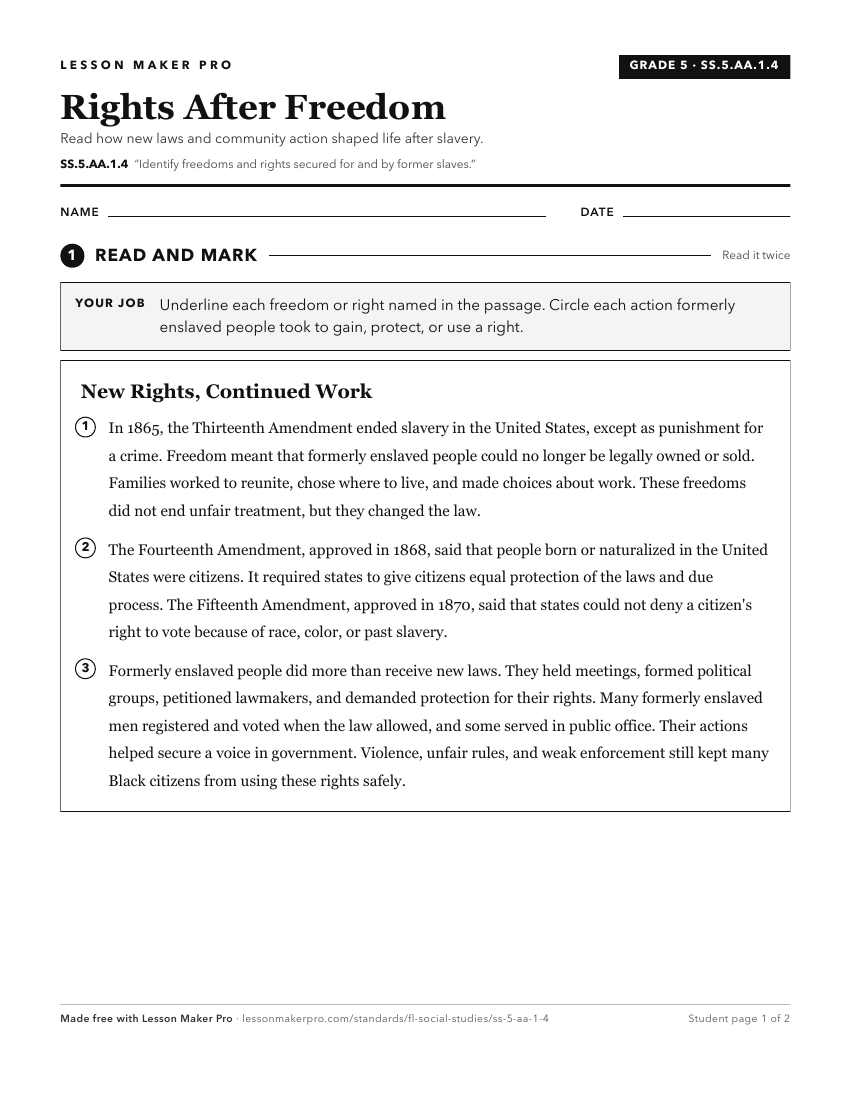
A ready-to-print activity worksheet aligned to SS.5.AA.1.4, with an answer key for the teacher on its own page. No account needed.
PDF, US Letter, prints cleanly in black and white.
Download the worksheetKeep exploring
Related Standards
- SS.68.AA.2.7
Examine how the status of slaves, those who had escaped slavery and free blacks, affected their contributions to the Civil War effort.
- SS.5.AA.1.2
Examine the Underground Railroad and how former slaves partnered with other free people and groups in assisting those escaping from slavery.
- SS.68.AA.2
Analyze events that involved or affected Africans from the founding of the nation through Reconstruction.
- SS.68.AA.2.4
Examine the Underground Railroad and its importance to those seeking freedom.
Turn this exact standard into a lesson
Grade, subject, topic, and the complete standard are prefilled. Create one free, no account needed.
Also for this standard:Make a WorksheetMake a QuizMake a Sub Lesson