Florida SS.5.AA.1.2
The Standard
- SS.5.AA.1
- Resiliency, contributions, and influence of African Americans on the United States beginning in the colonial era through westward expansion.
Examine the Underground Railroad and how former slaves partnered with other free people and groups in assisting those escaping from slavery.
Florida Next Generation Sunshine State Standards for Social Studies
Teacher's field guide
What This Standard Means
What Students Need to Do
- Students explain how enslaved people planned escapes and worked with formerly enslaved conductors, free Black communities, abolitionists, churches, and vigilance committees. They use maps and accounts to describe routes, safe houses, secrecy, risks, and choices.
What Mastery Looks Like
- A student can explain how Harriet Tubman, William Still, free Black communities, and abolitionist groups contributed to escape networks. They support their explanation with details from a map, letter, notice, or recorded account.
Common Misconceptions
- Students may picture a train, tunnels, or one fixed route. They may portray enslaved people as passive and assume white abolitionists organized every escape. They may also think every route led directly to Canada or that all helpers faced the same risks.
How to Assess It
- Give students a simple route map and a short excerpt from William Still's records. Ask: Who acted, what help was provided, and what detail shows cooperation or risk?
Lesson moves
Ways to Teach It
Give groups cards naming people, places, and actions, then have them build and explain a network based on historical evidence.
Discuss: Why does calling the Underground Railroad a partnership give a fuller picture than calling it a rescue effort?
Run a fact or myth card sort using claims about trains, routes, conductors, destinations, and free Black communities.
Use a local map to compare routes, rivers, distance, weather, and surveillance, then explain how geography shaped travel decisions.
Free download
Printable SS.5.AA.1.2 Worksheet
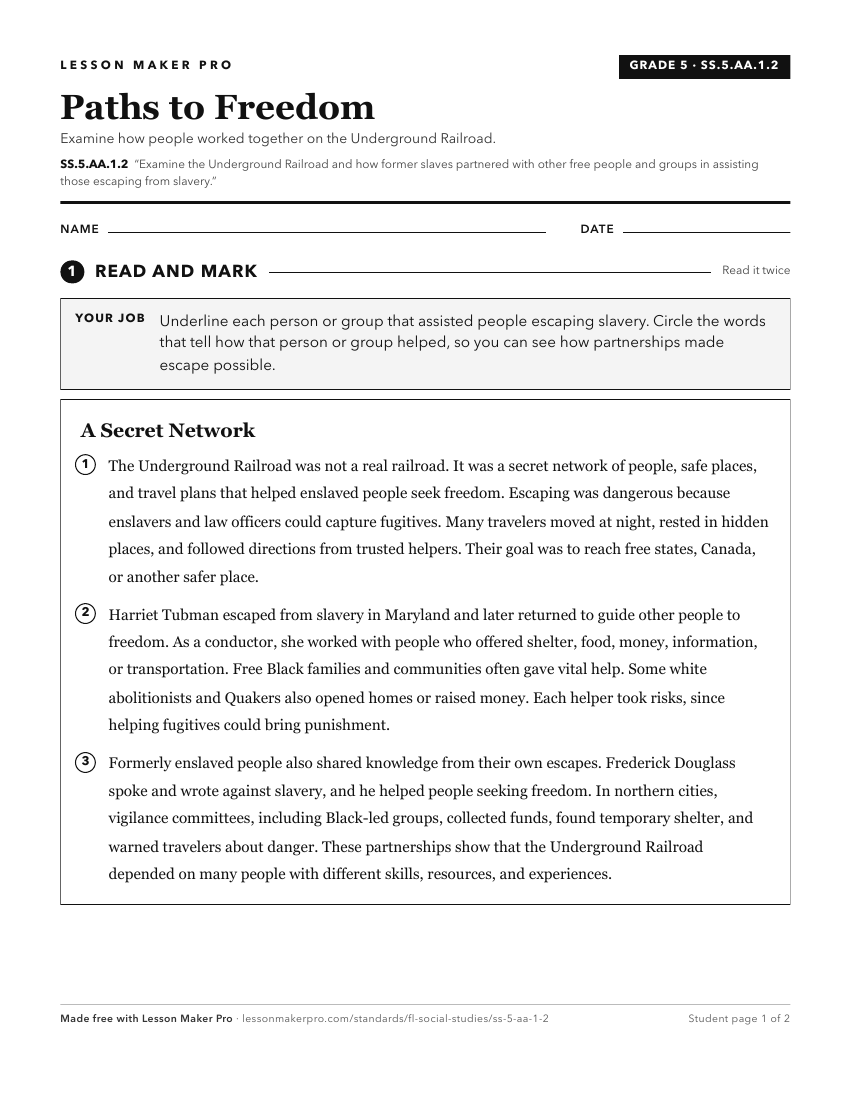
A ready-to-print activity worksheet aligned to SS.5.AA.1.2, with an answer key for the teacher on its own page. No account needed.
PDF, US Letter, prints cleanly in black and white.
Download the worksheetKeep exploring
Related Standards
- SS.68.AA.2.7
Examine how the status of slaves, those who had escaped slavery and free blacks, affected their contributions to the Civil War effort.
- SS.8.A.4.11
Examine the aspects of slave culture including plantation life, resistance efforts, and the role of the slaves' spiritual system.
- SS.68.AA.2.4
Examine the Underground Railroad and its importance to those seeking freedom.
- SS.5.AA.1.3
Examine key figures and events in abolitionist movements.
Turn this exact standard into a lesson
Grade, subject, topic, and the complete standard are prefilled. Create one free, no account needed.
Also for this standard:Make a WorksheetMake a QuizMake a Sub Lesson