Florida SC.5.E.7.3
The Standard
Recognize how air temperature, barometric pressure, humidity, wind speed and direction, and precipitation determine the weather in a particular place and time.
Florida Next Generation Sunshine State Standards for Science
Teacher's field guide
What This Standard Means
What Students Need to Do
- Students read weather measurements and use them together to describe conditions at a specific place and time. They connect pressure and humidity with clouds or rain, and wind data with how air is moving.
What Mastery Looks Like
- Given a weather station report, a student can accurately describe the conditions and cite several readings as evidence. The student can also explain where the wind comes from and whether precipitation occurred.
Common Misconceptions
- Common errors include assuming high pressure means high temperature, or treating high humidity as rainfall. Students may also reverse wind direction or confuse a barometer with a thermometer.
How to Assess It
- Give students these readings: 28°C, 1004 mb, 90% humidity, south wind at 20 km/h, and 6 mm rain. Ask them to describe the weather using at least four measurements.
Lesson moves
Ways to Teach It
Set up stations with a thermometer, barometer, hygrometer, anemometer, wind vane, and rain gauge, then have groups record and interpret readings.
Ask, “Which measurements best explain why recess feels muggy, windy, or stormy today?” and require evidence from a class weather chart.
Play a card sort matching weather reports to scene cards, then let partners defend or revise each match.
Open a local weather app, compare its readings with outdoor observations, and write a two-sentence description for the school announcement.
Free download
Printable SC.5.E.7.3 Worksheet
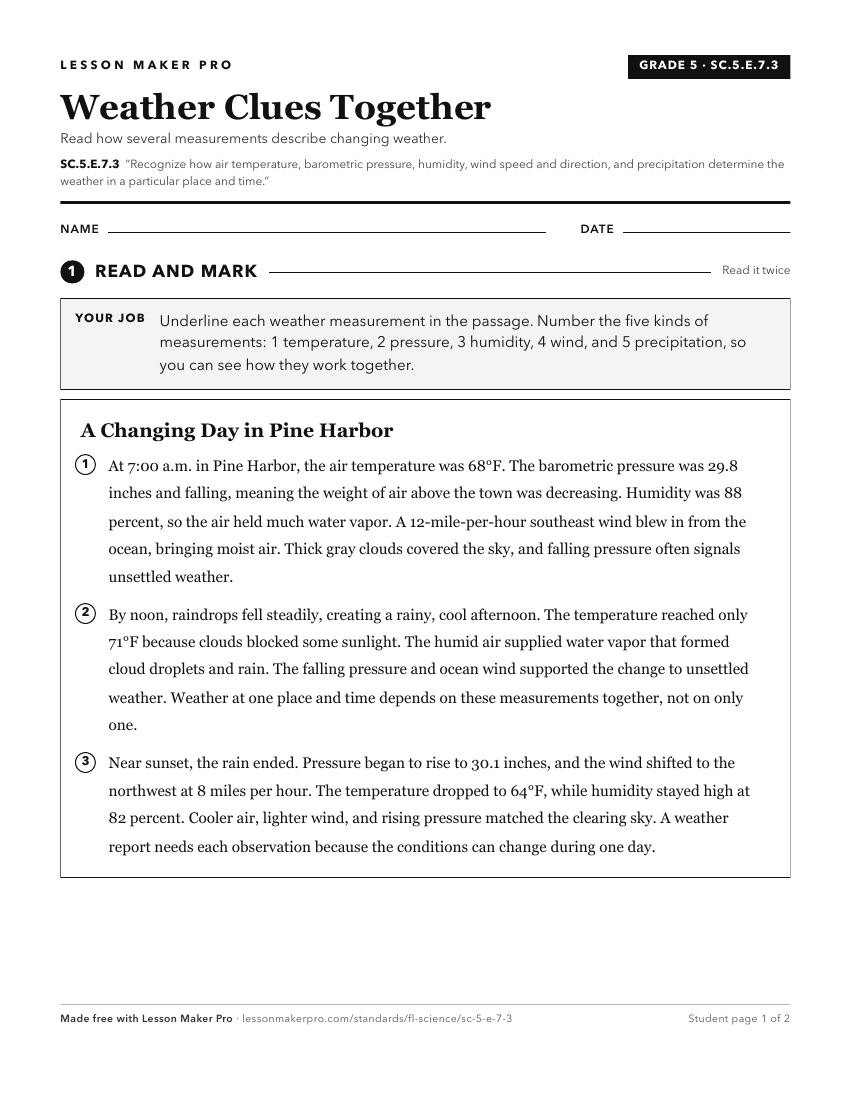
A ready-to-print activity worksheet aligned to SC.5.E.7.3, with an answer key for the teacher on its own page. No account needed.
PDF, US Letter, prints cleanly in black and white.
Download the worksheetKeep exploring
Related Standards
- SC.6.E.7.3
Describe how global patterns such as the jet stream and ocean currents influence local weather in measurable terms such as temperature, air pressure, wind direc...
- SC.5.E.7.4
Distinguish among the various forms of precipitation (rain, snow, sleet, and hail), making connections to the weather in a particular place and time.
- SC.2.E.7.1
Compare and describe changing patterns in nature that repeat themselves, such as weather conditions including temperature and precipitation, day to day and seas...
- SC.5.E.7.5
Recognize that some of the weather-related differences, such as temperature and humidity, are found among different environments, such as swamps, deserts, and m...
Turn this exact standard into a lesson
Grade, subject, topic, and the complete standard are prefilled. Create one free, no account needed.
Also for this standard:Make a WorksheetMake a QuizMake a Sub Lesson