Florida SC.4.P.9.1
The Standard
Identify some familiar changes in materials that result in other materials with different characteristics, such as decaying animal or plant matter, burning, rusting, and cooking.
Florida Next Generation Sunshine State Standards for Science
Teacher's field guide
What This Standard Means
What Students Need to Do
- Students examine everyday transformations and decide whether a different material formed. They support the decision with observable evidence, such as lasting changes in color, texture, odor, or hardness.
What Mastery Looks Like
- A student can classify a rusty nail, cooked egg, burned paper, and rotting leaf as cases where new materials form. The student can explain why melting ice or cutting paper does not fit.
Common Misconceptions
- Students may treat every visible change, including cutting or melting, as producing a new material. They may say burned matter disappears or rust is dirt stuck to metal. They may also assume the change must happen quickly or involve heat.
How to Assess It
- Exit ticket: An ice cube melts, an egg cooks, and a nail rusts. Circle the two cases that form different materials, then name one changed characteristic for each.
Lesson moves
Ways to Teach It
Place a fresh apple slice beside a browned slice, then have students record changes in color, texture, and odor.
Ask students to write: How do you know cooking an egg makes more than a change in shape?
Sort cards showing melting ice, tearing foil, browning toast, leaf decay, and rusting nails into same material or different material.
Compare photographs of a new bicycle chain and a weathered one, then discuss how oil and dry storage slow rust.
Free download
Printable SC.4.P.9.1 Worksheet
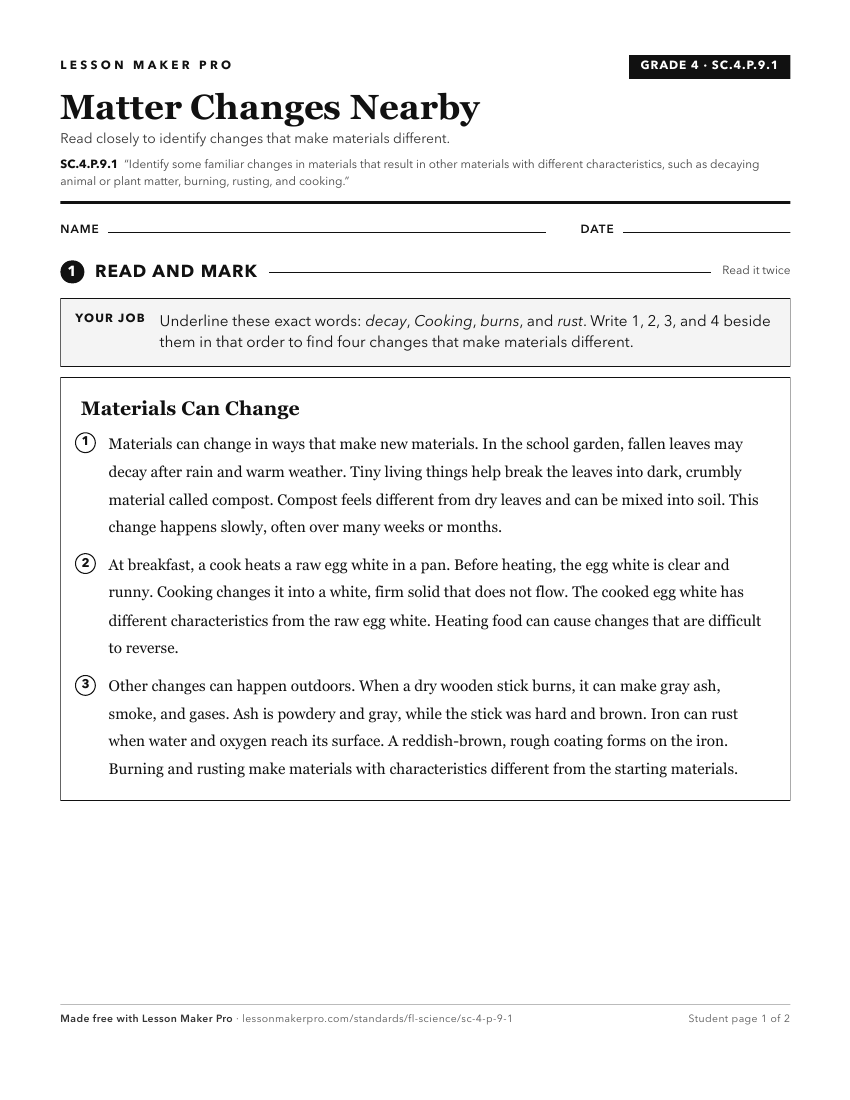
A ready-to-print activity worksheet aligned to SC.4.P.9.1, with an answer key for the teacher on its own page. No account needed.
PDF, US Letter, prints cleanly in black and white.
Download the worksheetKeep exploring
Related Standards
- SC.8.P.9.2
Differentiate between physical changes and chemical changes.
- SC.2.P.9.1
Investigate that materials can be altered to change some of their properties, but not all materials respond the same way to any one alteration.
- SC.K.P.9.1
Recognize that the shape of materials such as paper and clay can be changed by cutting, tearing, crumpling, smashing, or rolling.
- SC.5.P.9.1
Investigate and describe that many physical and chemical changes are affected by temperature.
Turn this exact standard into a lesson
Grade, subject, topic, and the complete standard are prefilled. Create one free, no account needed.
Also for this standard:Make a WorksheetMake a QuizMake a Sub Lesson