Florida SC.2.P.8.5
The Standard
Measure and compare temperatures taken every day at the same time.
Florida Next Generation Sunshine State Standards for Science
Teacher's field guide
What This Standard Means
What Students Need to Do
- Students read a thermometer and record the temperature with the correct unit. They organize daily readings in a table, then identify warmer, cooler, and equal temperatures.
What Mastery Looks Like
- Students read the thermometer scale accurately and keep the observation time and location consistent. They compare recorded values and explain which day was warmer or cooler.
Common Misconceptions
- Students may think a higher number means colder weather or miscount the intervals on a thermometer scale. They may compare readings from different times or locations as if the conditions were equal.
How to Assess It
- Exit ticket: The 1 p.m. temperatures were Monday 72°F, Tuesday 68°F, and Wednesday 75°F. Name the warmest day and compare Tuesday with Wednesday.
Lesson moves
Ways to Teach It
Set an outdoor thermometer in one shaded spot, then have students read and record it at the class's set time.
Ask, “Why should we check temperature at the same time each day?” and have partners defend answers with an example.
Give pairs seven temperature cards to order from coldest to warmest, then identify the hottest day and the temperature difference.
Use five days of noon weather data to plan suitable recess clothing for each day and explain each choice.
Free download
Printable SC.2.P.8.5 Worksheet
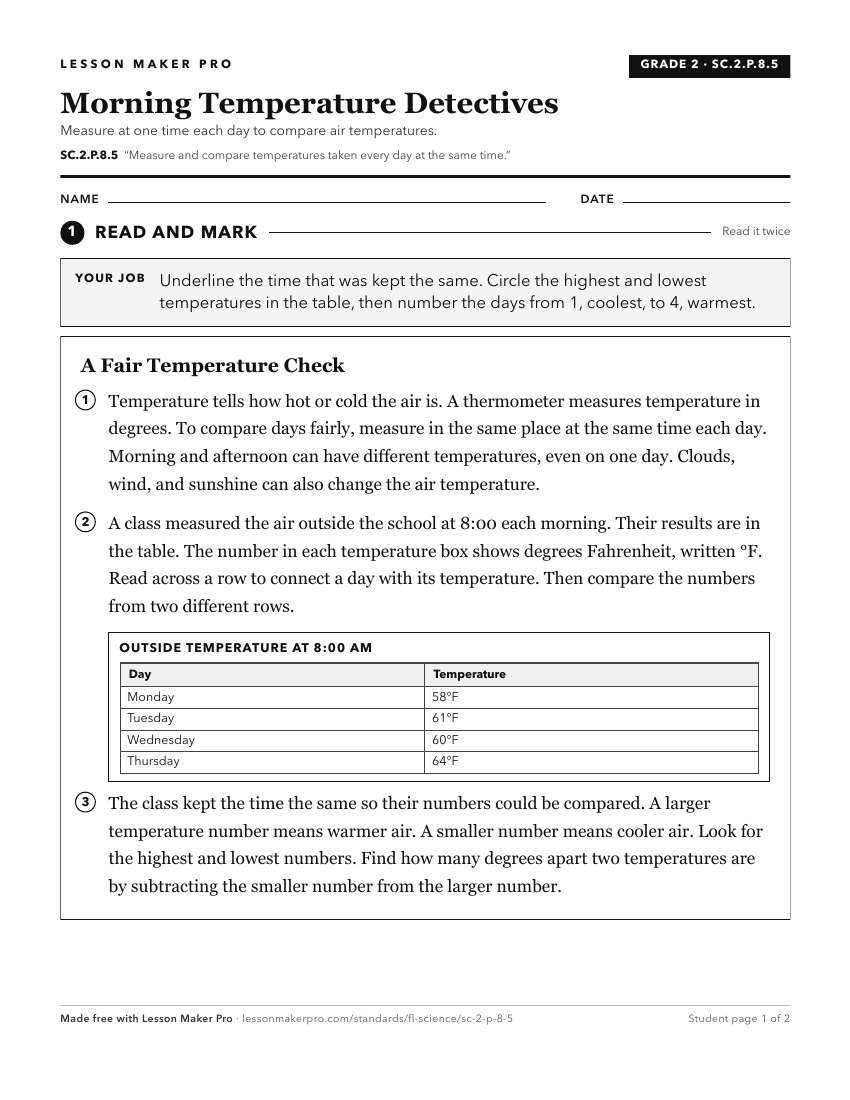
A ready-to-print activity worksheet aligned to SC.2.P.8.5, with an answer key for the teacher on its own page. No account needed.
PDF, US Letter, prints cleanly in black and white.
Download the worksheetKeep exploring
Related Standards
- SC.3.P.8.1
Measure and compare temperatures of various samples of solids and liquids.
- SC.2.N.1.2
Compare the observations made by different groups using the same tools.
- SC.2.E.7.1
Compare and describe changing patterns in nature that repeat themselves, such as weather conditions including temperature and precipitation, day to day and seas...
- SC.7.P.11.4
Observe and describe that heat flows in predictable ways, moving from warmer objects to cooler ones until they reach the same temperature.
Turn this exact standard into a lesson
Grade, subject, topic, and the complete standard are prefilled. Create one free, no account needed.
Also for this standard:Make a WorksheetMake a QuizMake a Sub Lesson