CCSS.
The Standard
Compare two three-digit numbers based on meanings of the hundreds, tens, and ones digits, using >, =, and < symbols to record the results of comparisons.
Common Core State Standards for Mathematics · Number and Operations in Base Ten
Teacher's field guide
What This Standard Means
What Students Need to Do
- Students compare three-digit numbers by looking at hundreds first, then tens, then ones when needed. They record each comparison with <, >, or =.
What Mastery Looks Like
- Students correctly choose <, >, or = for any pair of three-digit numbers. They explain the result by naming the first place where the digits differ.
Common Misconceptions
- Students may compare the ones digits first instead of starting with hundreds. They may reverse < and >, or think numbers with zeros are always smaller.
How to Assess It
- Give this exit ticket: 472 __ 427, 305 __ 350, and 618 __ 618. Students add each symbol and circle the place that decides each comparison.
Lesson moves
Ways to Teach It
Build two numbers with base-ten blocks, compare each place from left to right, then place the correct symbol card between them.
Ask, “Which is greater, 364 or 346, and which place proves it?” Students explain in writing, then compare answers with a partner.
Play Compare and Capture: students draw three digit cards, build numbers, compare them, and the greater number wins the round.
Compare three-digit attendance totals, book counts, or sports scores, then write each comparison using <, >, or =.
Free download
Printable 2.NBT.A.4 Worksheet
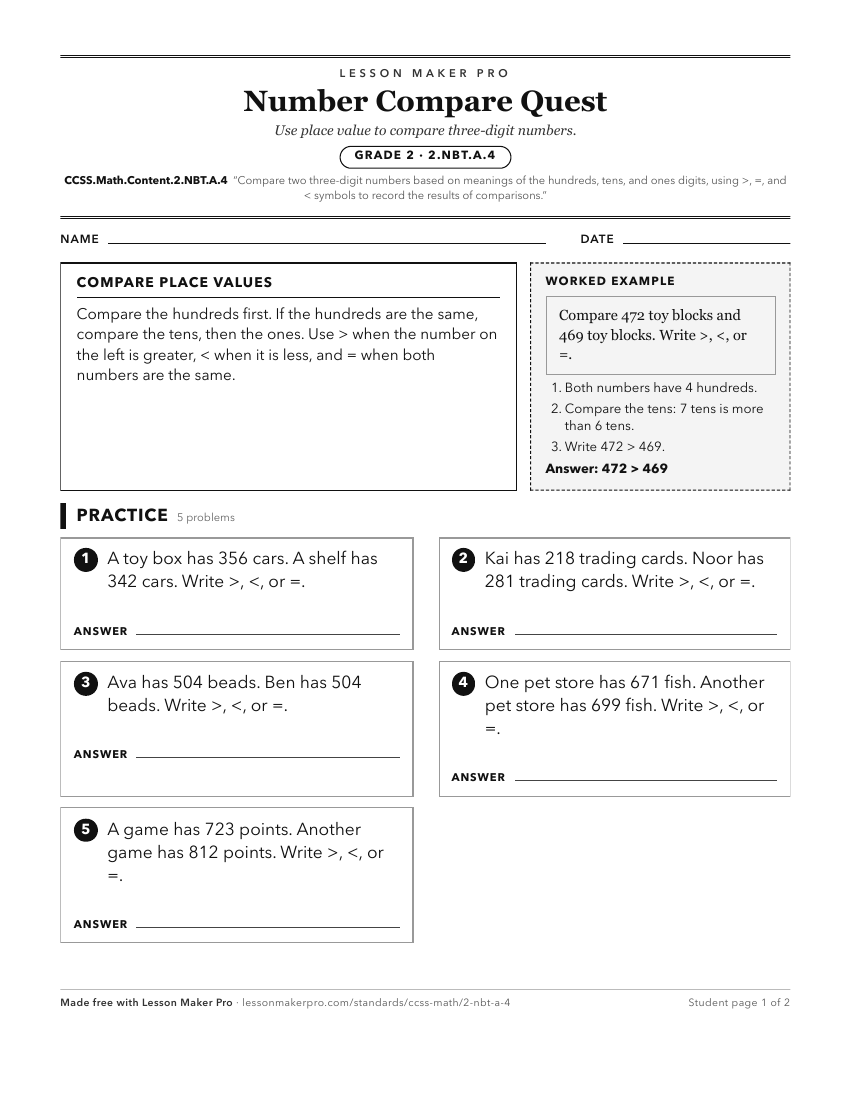
A ready-to-print activity worksheet aligned to CCSS.Math.Content.2.NBT.A.4, with an answer key for the teacher on its own page. No account needed.
PDF, US Letter, prints cleanly in black and white.
Download the worksheetLearning progression
Where This Standard Sits
See the whole path on the Number & Operations in Base Ten progression map.
Before This Standard
If students are struggling here, check these first.
- CCSS.Math.Content.2.NBT.A.1
Comparing three-digit numbers depends on knowing what the hundreds, tens, and ones digits mean in each number.
- CCSS.Math.Content.2.NBT.A.3
Comparing three-digit numerals requires reading the numbers and understanding hundreds, tens, and ones values often shown in expanded form.
- CCSS.Math.Content.1.NBT.B.3
Students extend comparing tens and ones to include hundreds, with the same place-value logic and comparison symbols.
What This Unlocks
Mastery here sets students up for these next.
Keep exploring
Related Standards
Turn this exact standard into a lesson
Grade, subject, topic, and the complete standard are prefilled. Create one free, no account needed.
Also for this standard:Make a WorksheetMake a QuizMake a Sub Lesson