CCSS.
The Standard
Compare two two-digit numbers based on meanings of the tens and ones digits, recording the results of comparisons with the symbols >, =, and <.
Common Core State Standards for Mathematics · Number and Operations in Base Ten
Teacher's field guide
What This Standard Means
What Students Need to Do
- Students decide which of two two-digit numbers is greater, less, or equal. They compare the tens first, then compare the ones when the tens match.
What Mastery Looks Like
- Students compare two-digit numbers accurately, including numbers with equal tens. They choose the correct symbol and explain their choice using tens and ones.
Common Misconceptions
- Students may compare only the ones digits, so they think 39 is greater than 42. They may also reverse < and > or use = for numbers that look similar.
How to Assess It
- Give an exit ticket with 47 __ 42 and 36 __ 63. Students add the correct symbol and explain one answer using tens and ones.
Lesson moves
Ways to Teach It
Build two numbers with base-ten blocks, compare the tens and ones, then place a >, <, or = card between them.
Ask, “Which is greater, 58 or 53?” and have students write an explanation using the words tens and ones.
Play Compare and Capture by drawing two digit cards, making a number, and winning the round with the greater number.
Label two classroom collections with their item counts, then have students compare the totals and write a matching number sentence.
Free download
Printable 1.NBT.B.3 Worksheet
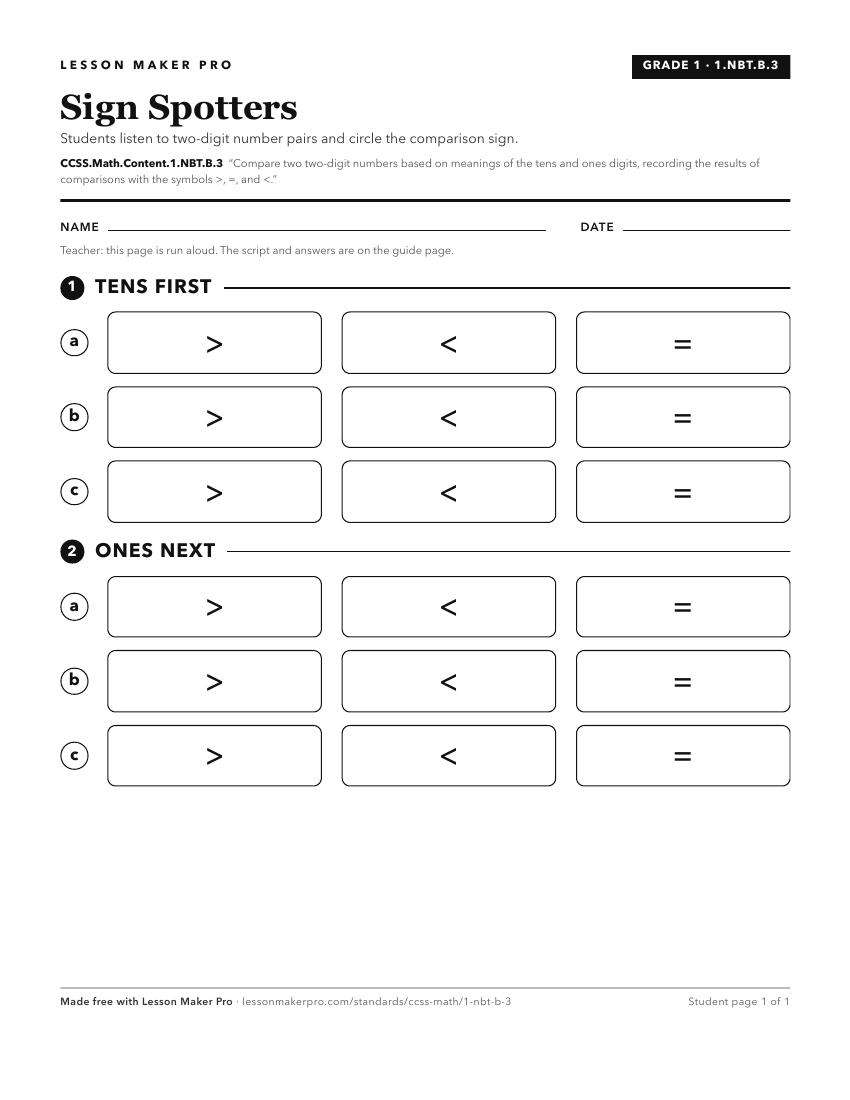
A ready-to-print activity worksheet aligned to CCSS.Math.Content.1.NBT.B.3, with an answer key for the teacher on its own page. No account needed.
PDF, US Letter, prints cleanly in black and white.
Download the worksheetLearning progression
Where This Standard Sits
See the whole path on the Number & Operations in Base Ten progression map.
Before This Standard
If students are struggling here, check these first.
- CCSS.Math.Content.1.NBT.B.2
Comparing two-digit numbers by tens and ones requires knowing that each digit represents tens or ones.
- CCSS.Math.Content.K.CC.C.6
Comparing object groups develops greater than, less than, and equal ideas later applied to two-digit numbers using tens and ones.
- CCSS.Math.Content.K.CC.C.7
Comparing written numbers 1 to 10 supports the greater, less, and equal decisions later applied to tens and ones.
What This Unlocks
Mastery here sets students up for these next.
Keep exploring
Related Standards
- CCSS.Math.Content.5.NBT.A.3b
Compare two decimals to thousandths based on meanings of the digits in each place, using >, =, and < symbols to record the results of comparisons.
- CCSS.Math.Content.4.NBT.A.2
Read and write multi-digit whole numbers using base-ten numerals, number names, and expanded form. Compare two multi-digit numbers based on meanings of the digi...
Turn this exact standard into a lesson
Grade, subject, topic, and the complete standard are prefilled. Create one free, no account needed.
Also for this standard:Make a WorksheetMake a QuizMake a Sub Lesson