Alabama Social Studies SS24.US2.10a
The Standard
- SS24.US2.10
- Evaluate the influence of events, organizations, and individual actions on the expansion of the Civil Rights Movement nationally.
Identify and explain key events from 1945 to 1955 that brought about the emergence of a large-scale movement for civil rights.
2024 Alabama Course of Study: Social Studies
Teacher's field guide
What This Standard Means
What Students Need to Do
- Students identify key events from 1945 to 1955 and put them in order. They explain how federal action, court rulings, and local organizing helped build a larger civil rights movement.
What Mastery Looks Like
- A student can explain how Truman's military order, Brown v. Board of Education, Emmett Till's murder, and the Montgomery bus boycott affected the movement. They can explain why a court ruling alone did not end segregation.
Common Misconceptions
- Students may think Brown immediately integrated schools. They may think Rosa Parks acted alone, without the local organizers who sustained the bus boycott.
How to Assess It
- Exit ticket: Name two events between 1945 and 1955. For each, explain one way it helped build a larger civil rights movement.
Lesson moves
Ways to Teach It
Arrange cards for returning Black veterans, Truman's military order, Brown, Till's murder, and the Montgomery boycott; draw arrows showing two connections.
Ask: Why did Brown's ruling not end school segregation overnight, and what could families and organizers do next?
Play event-impact bingo: read clues about four events, then have students mark each match and explain its effect.
Use a local bus schedule to map a work commute, then explain why Montgomery boycott organizers set up carpools.
Free download
Printable SS24.US2.10a Worksheet
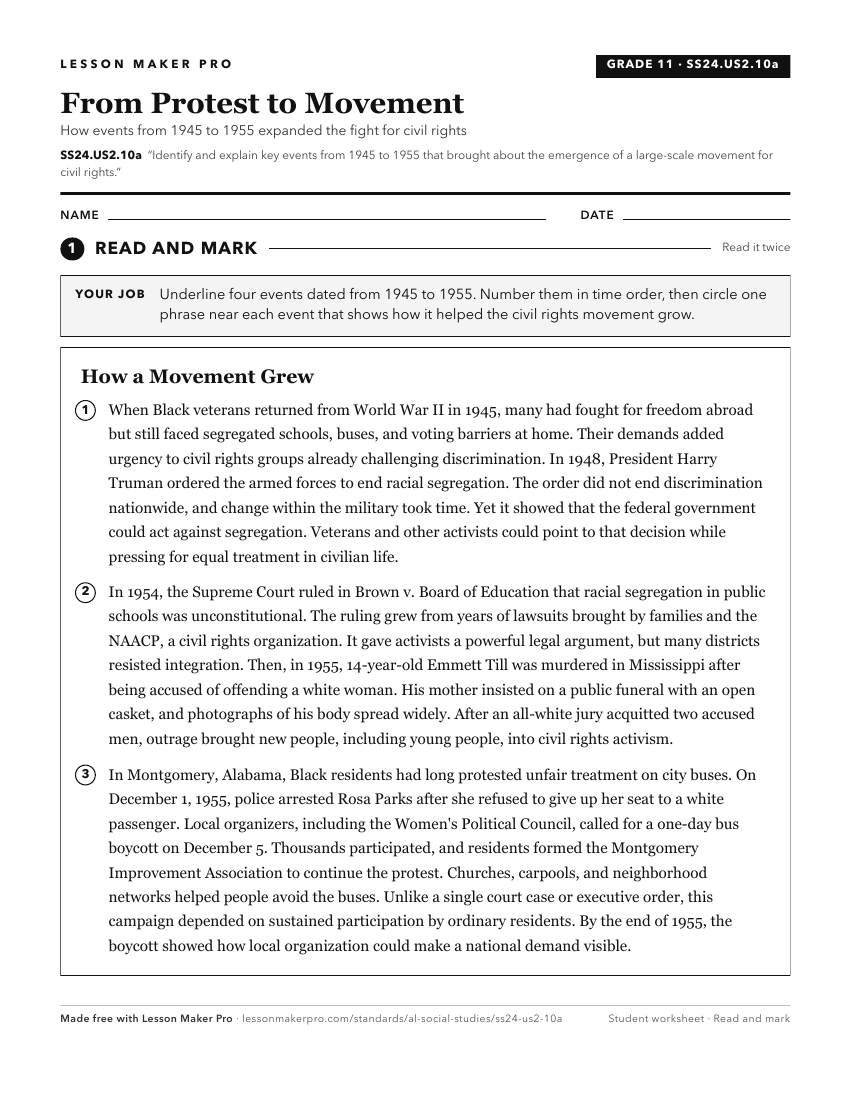
A ready-to-print activity worksheet aligned to SS24.US2.10a, with an answer key for the teacher on its own page. No account needed.
PDF, US Letter, prints cleanly in black and white.
Download the worksheetKeep exploring
Related Standards
- SS24.US2.10
Evaluate the influence of events, organizations, and individual actions on the expansion of the Civil Rights Movement nationally.
- SS24.US2.10b
Analyze the extent to which the actions and campaigns of civil rights activists and organizations from 1954 to 1965 prompted federal measures to advance civil a...
- SS24.US2.14
Explain shifts in the scope of the Civil Rights Movement from the mid-1960s into the 1970s, including geographic regions, issues of focus, and participation.
- SS24.5.12
Outline key events and campaigns of the Civil Rights Movement and identify significant organizations and their contributions within the Movement.
Turn this exact standard into a lesson
Grade, subject, topic, and the complete standard are prefilled. Create one free, no account needed.
Also for this standard:Make a WorksheetMake a QuizMake a Sub Lesson