Alabama Social Studies SS24.US2.10
Standard Cluster
Evaluate the influence of events, organizations, and individual actions on the expansion of the Civil Rights Movement nationally. 10a Identify and explain key events from 1945 to 1955 that brought about the emergence of a large-scale movement for civil rights. 10b Analyze the extent to which the actions and campaigns of civil rights activists and organizations from 1954 to 1965 prompted federal measures to advance civil and human rights. 10c Compare and contrast the actions and philosophies of key civil rights leaders and organizations, including Reverend Dr. Martin Luther King, Jr. and Malcolm X. 10d Summarize the political, economic, and physical means by which opponents of the Civil Rights Movement sought to limit its achievements. 10e Describe how key Alabamians provided leadership, generated change, or demonstrated resistance to the Civil Rights Movement.
2024 Alabama Course of Study: Social Studies
Cluster contents
Standards in This Cluster
SS24.US2.10 is a cluster heading. These are the individual standards under it.
- SS24.US2.10a
Identify and explain key events from 1945 to 1955 that brought about the emergence of a large-scale movement for civil rights.
- SS24.US2.10b
Analyze the extent to which the actions and campaigns of civil rights activists and organizations from 1954 to 1965 prompted federal measures to advance civil a...
- SS24.US2.10c
Compare and contrast the actions and philosophies of key civil rights leaders and organizations, including Reverend Dr. Martin Luther King, Jr. and Malcolm X.
- SS24.US2.10d
Summarize the political, economic, and physical means by which opponents of the Civil Rights Movement sought to limit its achievements.
- SS24.US2.10e
Describe how key Alabamians provided leadership, generated change, or demonstrated resistance to the Civil Rights Movement.
Teacher's field guide
What This Cluster Means
What Students Need to Do
- Students explain how military desegregation, Brown, and Montgomery grew a national movement. They link NAACP, SCLC, and SNCC campaigns to federal action. They compare King and Malcolm X and explain Alabama leadership and resistance.
What Mastery Looks Like
- Students connect Rosa Parks and Fred Shuttlesworth to organized protest and George Wallace to state resistance. They explain how Birmingham helped spur the 1964 Civil Rights Act and Selma helped spur the 1965 Voting Rights Act.
Common Misconceptions
- Students may think Brown ended school segregation at once or that King and Malcolm X held identical views. They may overlook job threats, intimidation, and violence that continued after federal laws passed.
How to Assess It
- Exit ticket: Explain how the Selma marches affected the 1965 Voting Rights Act. Name one Alabama activist and one tactic opponents used to stop voting rights.
Lesson moves
Ways to Teach It
Sort cards for Truman's 1948 order, Brown, Montgomery, Birmingham, and Selma; build a timeline and flag when federal action followed protest.
Give students excerpts from King's Letter from Birmingham Jail and Malcolm X's The Ballot or the Bullet; ask which tactics each favors.
Play a three-column sort: place Wallace's schoolhouse stand, threatened firings, and mob attacks under political, economic, or physical resistance.
Compare today's Alabama voter registration form with a 1960s literacy test; circle each form's requirements and discuss how voting access changed.
Free download
Printable SS24.US2.10 Worksheet
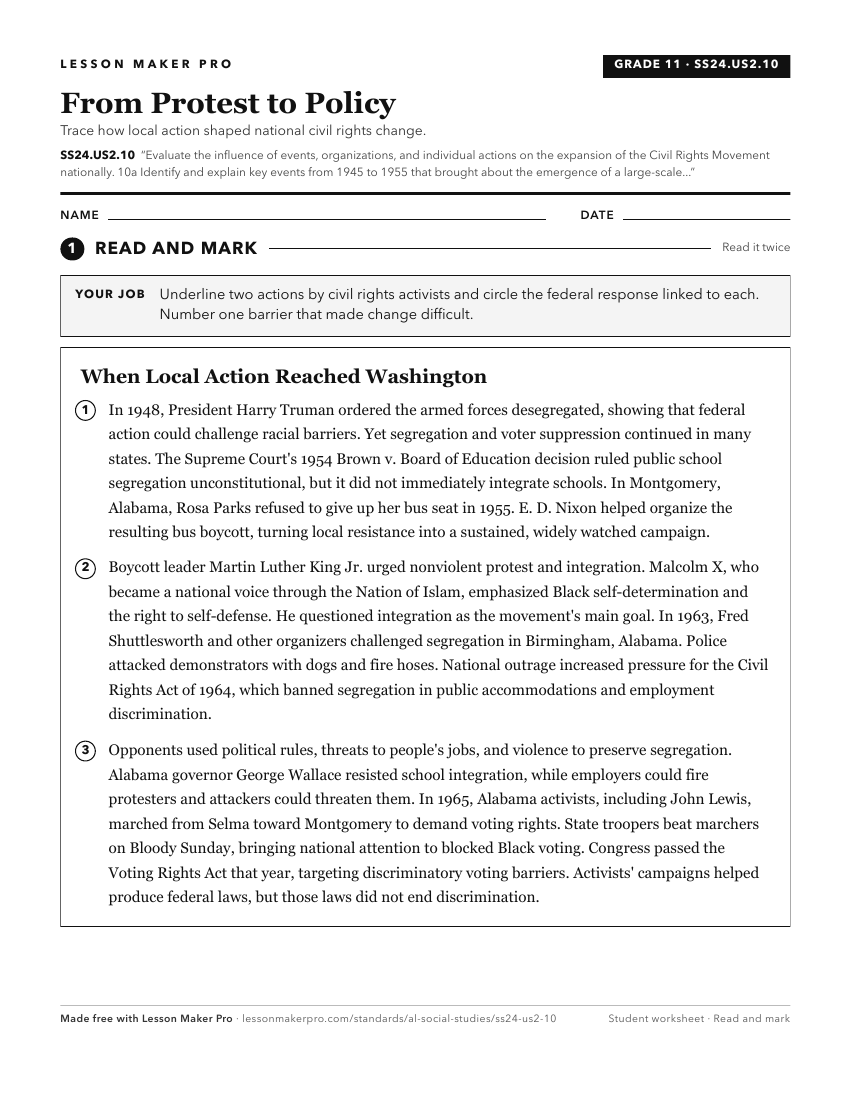
A ready-to-print activity worksheet aligned to SS24.US2.10, with an answer key for the teacher on its own page. No account needed.
PDF, US Letter, prints cleanly in black and white.
Download the worksheetKeep exploring
Related Standards
Turn this cluster into a lesson
Grade, subject, topic, and the complete cluster are prefilled. Create one free, no account needed.
Also for this cluster:Make a WorksheetMake a QuizMake a Sub Lesson