Alabama Social Studies SS24.P.19
Standard Cluster
Describe different types of biomedical and psychological treatments for mental disorders. 19a Explain how mental health professionals determine the appropriate treatment from the variety of psychological treatments available for various mental health issues and disorders.* 19b Identify differences among licensed mental health providers and outline legal and ethical requirements for mental health providers. 19c Explain the significance of Wyatt v. Stickney (1972) and explain how the Wyatt Standards improved mental health codes and federal regulations regarding the treatment of mental disorders.
2024 Alabama Course of Study: Social Studies
Cluster contents
Standards in This Cluster
SS24.P.19 is a cluster heading. These are the individual standards under it.
- SS24.P.19a
Explain how mental health professionals determine the appropriate treatment from the variety of psychological treatments available for various mental health iss...
- SS24.P.19b
Identify differences among licensed mental health providers and outline legal and ethical requirements for mental health providers.
- SS24.P.19c
Explain the significance of Wyatt v. Stickney (1972) and explain how the Wyatt Standards improved mental health codes and federal regulations regarding the trea...
Teacher's field guide
What This Cluster Means
What Students Need to Do
- Students distinguish medication and electroconvulsive therapy from CBT and exposure therapy. They explain how symptoms, evidence, patient choice, and risks guide treatment. They compare provider roles and legal duties, then explain how Wyatt v. Stickney changed hospital care.
What Mastery Looks Like
- Students choose a treatment and qualified provider for a sample case, using the person's symptoms and preferences to explain why. They name a consent or confidentiality rule that applies. They explain how Wyatt's standards for staffing, care plans, and living conditions shaped later state and federal care rules.
Common Misconceptions
- Students may think every mental health provider can prescribe medication, or that medication is always the first choice. Some think confidentiality has no exceptions, or that patients in state psychiatric hospitals have no right to adequate treatment.
How to Assess It
- Exit ticket: An adult with panic attacks asks for help. Name one treatment, a provider qualified to offer it, one consent or privacy rule, and one hospital care requirement linked to Wyatt v. Stickney.
Lesson moves
Ways to Teach It
Sort cards labeled medication, electroconvulsive therapy, CBT, and exposure therapy into biomedical or psychological treatments, then match each to a sample case.
Give students a case of severe depression and ask: Which treatments should a clinician discuss, and how should patient choice affect the plan?
Play provider match: read four client cards and choose a psychiatrist, psychologist, counselor, or clinical social worker, noting each provider's qualifications.
Read a short Wyatt v. Stickney summary, then write a three-item patient-rights checklist for a state psychiatric hospital.
Free download
Printable SS24.P.19 Worksheet
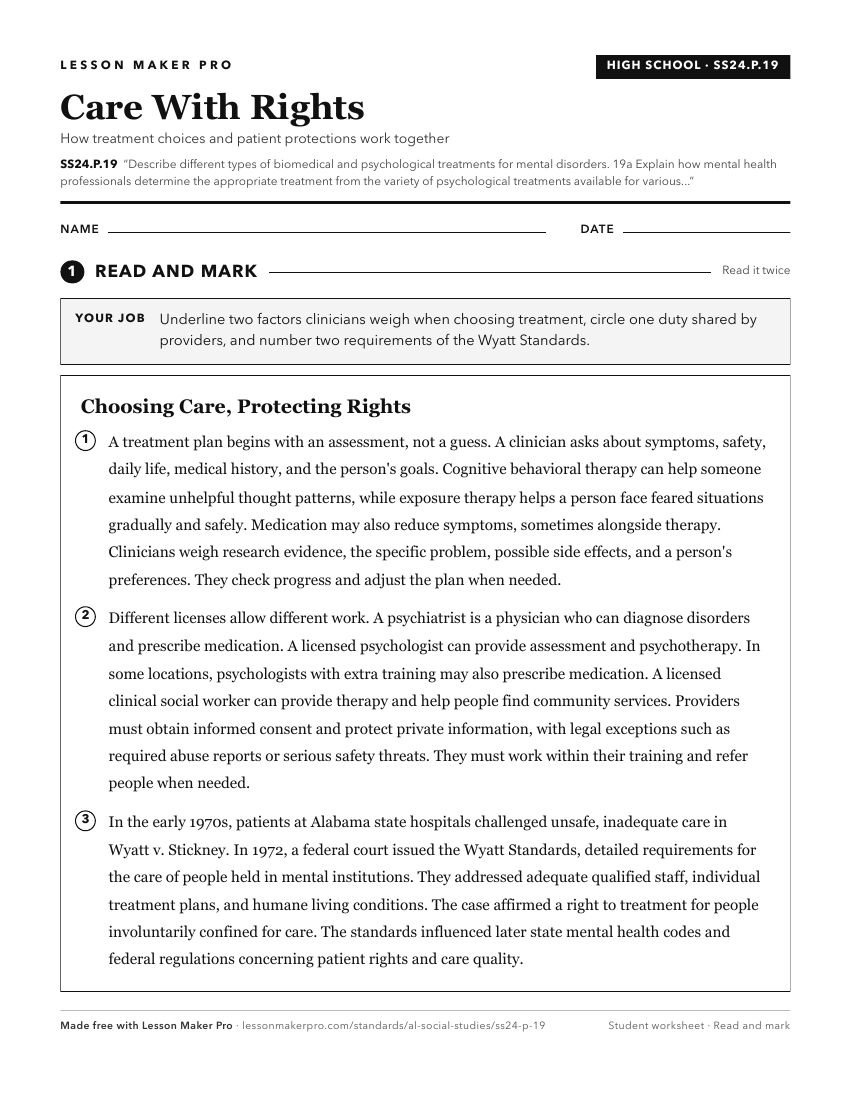
A ready-to-print activity worksheet aligned to SS24.P.19, with an answer key for the teacher on its own page. No account needed.
PDF, US Letter, prints cleanly in black and white.
Download the worksheetKeep exploring
Related Standards
- SS24.P.16b
Differentiate among types of mental illness, including mood, anxiety, somatoform, schizophrenic, dissociative, and personality disorders.
- SS24.P.16
Describe major psychological disorders and their treatments and explain how examples of abnormal behavior differ from normal behavior.*
- SS24.P.16a
Describe various approaches for explaining mental illness, including biological and medical, cognitive, and sociocultural models.
Turn this cluster into a lesson
Grade, subject, topic, and the complete cluster are prefilled. Create one free, no account needed.
Also for this cluster:Make a WorksheetMake a QuizMake a Sub Lesson