Alabama Social Studies SS24.P.16b
The Standard
- SS24.P.16
- Describe major psychological disorders and their treatments and explain how examples of abnormal behavior differ from normal behavior.*
Differentiate among types of mental illness, including mood, anxiety, somatoform, schizophrenic, dissociative, and personality disorders.
2024 Alabama Course of Study: Social Studies · Clinical Psychology
Teacher's field guide
What This Standard Means
What Students Need to Do
- Students compare patterns of mood, fear, physical symptoms, perception, memory, and behavior across six disorder groups. They use clues in fictional cases to tell the groups apart, not to diagnose real people.
What Mastery Looks Like
- A student can match each group to a fictional symptom pattern and point to the clue that fits. They can tell hallucinations or delusions from memory gaps, and long-term personality patterns from brief mood changes. They know one symptom alone does not prove a diagnosis.
Common Misconceptions
- Students may mistake schizophrenia for a split personality or assume physical symptoms are fake. They may label ordinary stress as an anxiety disorder or a bad day as a mood disorder. They may treat a personality disorder as a character flaw.
How to Assess It
- Exit ticket: “One fictional person hears voices others do not. Another has gaps in personal memory. Which disorder group fits each pattern, and what clue helped you decide?”
Lesson moves
Ways to Teach It
Give pairs six fictional case cards and six category cards; have them sort by symptom pattern and underline one clue on each case.
Ask: “Why does hearing voices suggest a different group than losing personal memories?” Have students write a two-sentence answer.
Play symptom-clue bingo with six category labels; read fictional patterns and have students cover a label after explaining their choice.
Mark sleep, worry, body symptoms, memory, and relationships on a sample clinic intake form; discuss why clinicians ask several questions before diagnosing.
Free download
Printable SS24.P.16b Worksheet
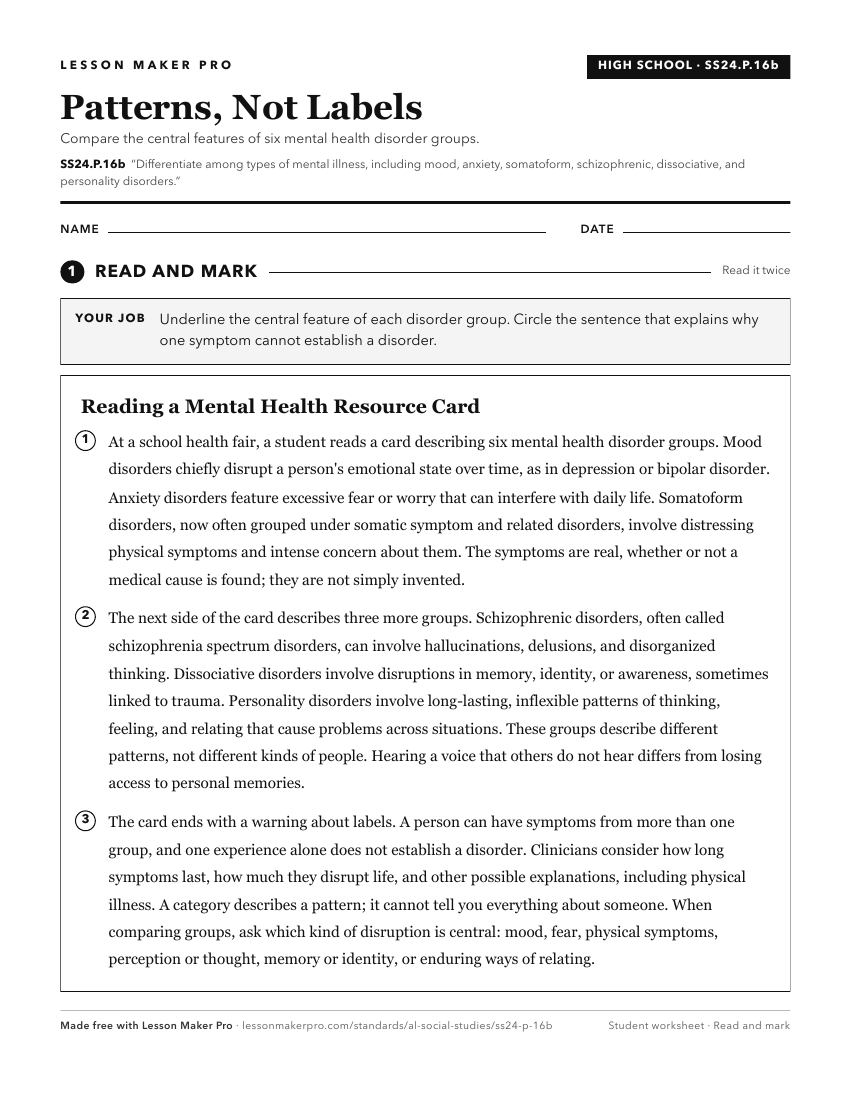
A ready-to-print activity worksheet aligned to SS24.P.16b, with an answer key for the teacher on its own page. No account needed.
PDF, US Letter, prints cleanly in black and white.
Download the worksheetKeep exploring
Related Standards
- SS24.P.19
Describe different types of biomedical and psychological treatments for mental disorders.
- SS24.P.16
Describe major psychological disorders and their treatments and explain how examples of abnormal behavior differ from normal behavior.*
- SS24.P.19a
Explain how mental health professionals determine the appropriate treatment from the variety of psychological treatments available for various mental health iss...
- SS24.P.16a
Describe various approaches for explaining mental illness, including biological and medical, cognitive, and sociocultural models.
Turn this exact standard into a lesson
Grade, subject, topic, and the complete standard are prefilled. Create one free, no account needed.
Also for this standard:Make a WorksheetMake a QuizMake a Sub Lesson