Alabama Social Studies SS24.P.18a
The Standard
- SS24.P.18
- Summarize ways to promote psychological wellness.*
Identify sources of stress across the human lifespan and explain the physiological and psychological consequences of stress for health and wellness.*
2024 Alabama Course of Study: Social Studies · Clinical Psychology
Teacher's field guide
What This Standard Means
What Students Need to Do
- Students name sources of stress for children, teens, adults, and older adults. They explain how stress can change heart rate, sleep, thoughts, and mood. They compare brief stress responses with the effects of stress that lasts for weeks.
What Mastery Looks Like
- Given a case, a student identifies the stressor and explains a likely body response and a likely change in mood or thinking. They can tell a brief rise in heart rate apart from possible effects of ongoing stress, such as poor sleep or high blood pressure.
Common Misconceptions
- Students may think only adults face stress, or that stress comes only from bad events. They may treat a short rise in heart rate as lasting harm, or assume every stressed person develops an illness.
How to Assess It
- Exit ticket: A 10-year-old changes schools, and a 70-year-old begins caring for a spouse. For each person, name one possible body effect and one thought or mood effect if the stress lasts for weeks.
Lesson moves
Ways to Teach It
Have pairs sort cards showing age groups, stressors, body responses, and mood changes, then explain two matches.
Ask: How might moving to a new city affect a 15-year-old and a 65-year-old differently? Include one body response for each.
Play a case-card match game: teams pair stressors with immediate responses and possible effects of ongoing stress, then defend their matches.
Give students a sample rotating work schedule and a school exam calendar; have them mark likely effects on sleep and attention.
Free download
Printable SS24.P.18a Worksheet
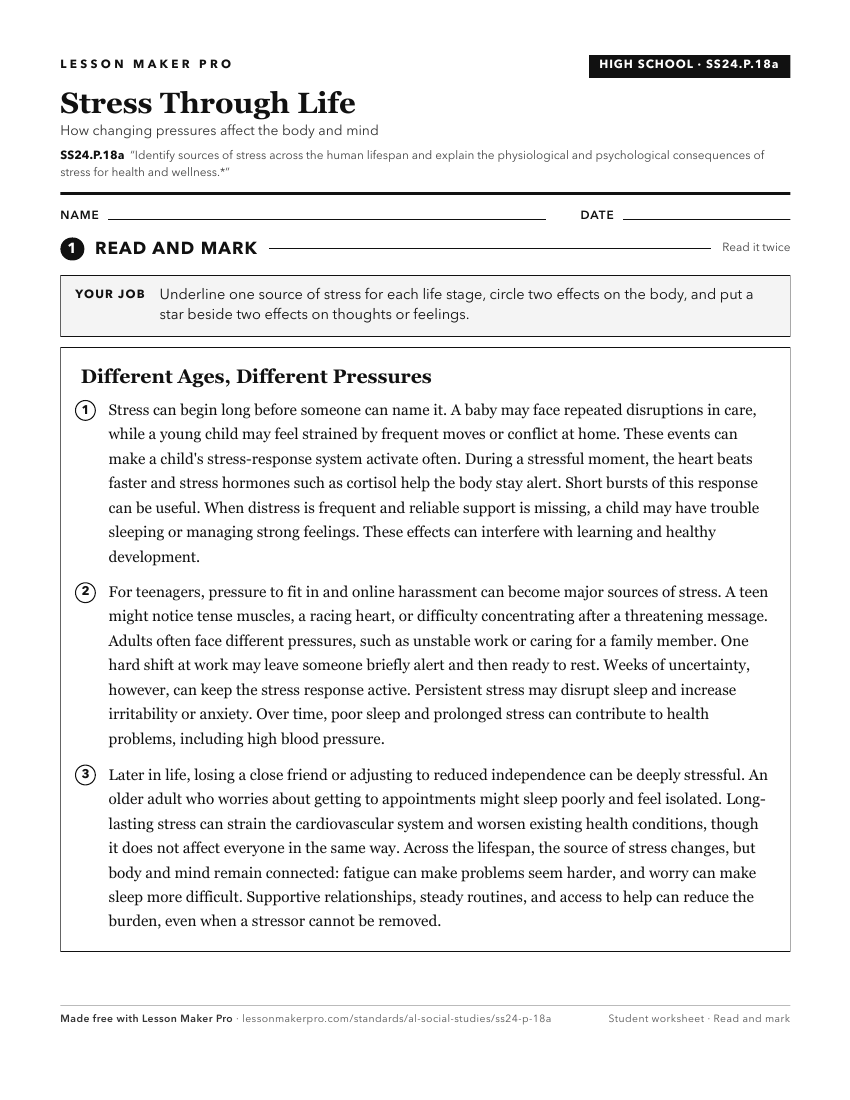
A ready-to-print activity worksheet aligned to SS24.P.18a, with an answer key for the teacher on its own page. No account needed.
PDF, US Letter, prints cleanly in black and white.
Download the worksheetKeep exploring
Related Standards
- SS24.P.9
Describe cognitive, physical, and social development across the human lifespan, citing theories of Carol Gilligan, Erik H. Erikson, Jean Piaget, and Lawrence Ko...
- SS24.P.18b
Explain physiological, cognitive, and behavioral strategies to deal with stress, and contrast positive and negative ways of coping with stress.
- SS24.S.5c
Investigate and explain the impact of psychological theories that influence sociology, including Erikson’s Psychosocial Development, Kohlberg’s Stages of Moral ...
- SS24.P.18
Summarize ways to promote psychological wellness.*
Turn this exact standard into a lesson
Grade, subject, topic, and the complete standard are prefilled. Create one free, no account needed.
Also for this standard:Make a WorksheetMake a QuizMake a Sub Lesson