Alabama Social Studies SS24.P.18
Standard Cluster
Summarize ways to promote psychological wellness.* 18a Identify sources of stress across the human lifespan and explain the physiological and psychological consequences of stress for health and wellness.* 18b Explain physiological, cognitive, and behavioral strategies to deal with stress, and contrast positive and negative ways of coping with stress.
2024 Alabama Course of Study: Social Studies
Cluster contents
Standards in This Cluster
SS24.P.18 is a cluster heading. These are the individual standards under it.
- SS24.P.18a
Identify sources of stress across the human lifespan and explain the physiological and psychological consequences of stress for health and wellness.*
- SS24.P.18b
Explain physiological, cognitive, and behavioral strategies to deal with stress, and contrast positive and negative ways of coping with stress.
Teacher's field guide
What This Cluster Means
What Students Need to Do
- Students identify stressors at different ages, from changing schools to job loss or caregiving. They explain how stress affects the body, thoughts, mood, and behavior. They compare breathing, changing unhelpful thoughts, and seeking support with avoidance or substance use.
What Mastery Looks Like
- Given a made-up person, a student links a stressor to a body response, such as a faster heart rate, and a mental effect, such as trouble concentrating. They suggest a breathing exercise, a more accurate thought, and a step to get help. They explain why these choices work better than avoiding the problem.
Common Misconceptions
- Students may think stress affects only adults or only changes mood. They may think avoiding a problem removes the stressor. Some assume slow breathing can fix the cause of stress by itself.
How to Assess It
- Exit ticket: A teen faces exams, and an older adult cares for a spouse. For each, name one body effect and one thought or mood effect. For either person, suggest a breathing step, a thought change, and an action that helps more than avoiding the problem.
Lesson moves
Ways to Teach It
Give groups cards with school moves, job loss, and caregiving; have them place each on a lifespan timeline and attach body and mood effects.
Ask: How could a teen rethink “I will fail” before a test, and what action could help more than skipping class?
Run a coping sort: students label paced breathing, asking for help, skipping sleep, and drinking alcohol as helpful or harmful, then explain one choice.
Use a sample work schedule and bus timetable to plan sleep, a short walk, and a check-in with a friend after a late shift.
Free download
Printable SS24.P.18 Worksheet
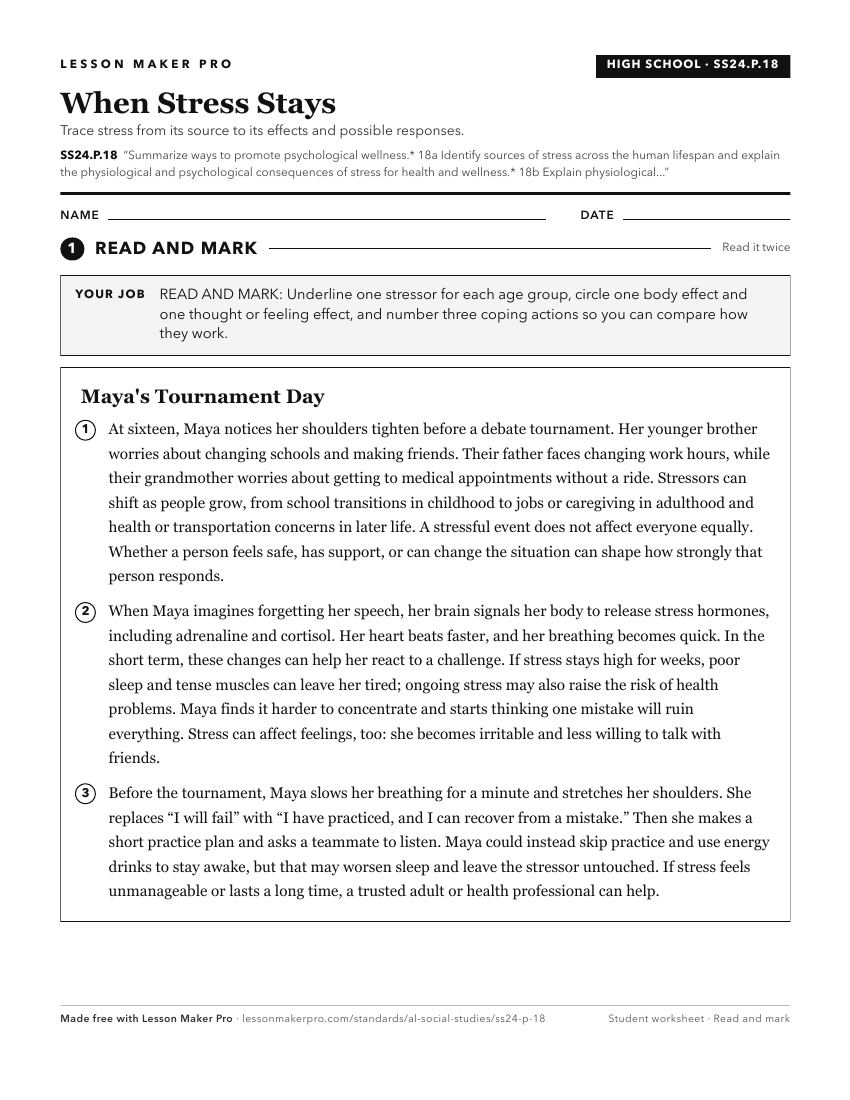
A ready-to-print activity worksheet aligned to SS24.P.18, with an answer key for the teacher on its own page. No account needed.
PDF, US Letter, prints cleanly in black and white.
Download the worksheetKeep exploring
Related Standards
- SS24.P.19a
Explain how mental health professionals determine the appropriate treatment from the variety of psychological treatments available for various mental health iss...
- SS24.P.1c
Describe how modern psychologists utilize multiple perspectives to understand behavior and mental processes, citing examples.*
Turn this cluster into a lesson
Grade, subject, topic, and the complete cluster are prefilled. Create one free, no account needed.
Also for this cluster:Make a WorksheetMake a QuizMake a Sub Lesson